

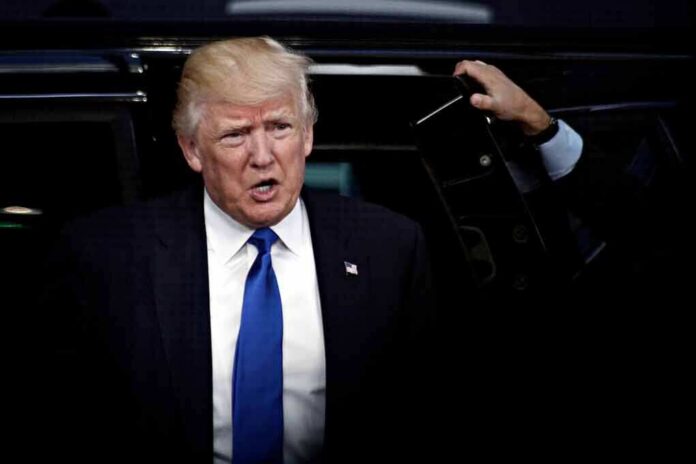
When a sitting president trades his own lawsuit for a $1.776 billion payout pool to alleged victims of “weaponization,” he is not just settling a case – he is rewriting what justice looks like in American politics.
Story Snapshot
- Justice Department creates a $1.776 billion Anti-Weaponization Fund as part of settling President Trump’s IRS leak lawsuit.
- The fund is designed to compensate people who claim they were victims of government “weaponization” or “lawfare,” with no stated partisan limits.
- Trump and his family get no cash from the fund but do secure an apology and protection from future IRS audits in the settlement.
- Supporters hail the fund as overdue restitution, while critics warn it could become a political rewards program paid for by taxpayers.
How Trump Turned His IRS Leak Fight Into A Billion-Dollar Restitution Push
President Trump’s tax returns were leaked in 2019, triggering a rare presidential lawsuit against the Internal Revenue Service that sought $10 billion in damages. That case, President Donald J. Trump v. Internal Revenue Service, accused the tax agency and the Treasury Department of failing to protect confidential records and demanded serious accountability. Rather than ending with a courtroom verdict, the fight produced a giant settlement: Trump agreed to drop his suit, and the Department of Justice created a new $1.776 billion “Anti-Weaponization Fund.”
The Justice Department’s official announcement frames the fund as a way to “hear and redress claims” from people who say they suffered government “weaponization and lawfare.” The money comes from the federal Judgment Fund, a permanent pot Congress set up to pay judgments and settlements against the government. That means taxpayers, not Trump, bankroll this effort. As part of the deal, Trump and his co-plaintiffs receive a formal apology but no personal monetary damages. For many conservatives, that trade signals he put broader restitution ahead of his own payday.
What The Anti-Weaponization Fund Promises Victims Of Government Overreach
The new fund is built to operate like a special claims court for politicized prosecutions and investigations. The Department of Justice says the Anti-Weaponization Fund can issue formal apologies and cash payments to claimants who prove they were victims of government weaponization. Submission is voluntary, and the department stresses there are “no partisan requirements to file a claim,” meaning Democrats, Republicans, independents, and others can all apply. A five-member commission will set guidelines and decide who qualifies, with four appointed by the Attorney General and one chosen with input from Congress.
The size of the fund is pointed symbolism. At $1.776 billion, the amount nods to 1776, the year of America’s founding, and signals that the administration sees this as a kind of modern redress for abuses of power. Acting Attorney General Todd Blanche told lawmakers that anyone who believes they were a victim of weaponization can apply, and the commission may award anything from an apology to substantial monetary compensation. The program is scheduled to stop processing claims by December 1, 2028, giving it a clear window before Trump is set to leave office.
Conservative Hopes For Accountability Collide With Fears Of A Political Slush Fund
For many on the right, the core idea aligns with common sense and conservative values. When government uses its massive power to punish political opponents instead of enforcing neutral laws, those targeted should have a way to be made whole. Supporters argue that Biden-era prosecutions and investigations crossed that line, and a structured fund is better than random pardons or backroom deals. They see this as a way to restore trust by admitting past wrongs and compensating citizens hurt by politicized justice.
Yet even some Republicans in Congress are uneasy about how the fund works. Several lawmakers have criticized the Anti-Weaponization Fund as unnecessary or risky, warning that large payouts might go to Trump allies and even figures like Hunter Biden. A House Judiciary Committee release by Democrats brands it a “slush fund” and questions its constitutionality, arguing it could shield Trump’s businesses while rewarding his circle. Their concern is not the principle of restitution itself but who decides what counts as “weaponization,” and whether that standard will track real abuse or simple political grievance.
The Battle Over Who Counts As A Victim Of Weaponization
Legal experts say the most explosive question is eligibility. Reports note that some January 6 defendants, including those convicted of violence, could try to claim they were targeted unfairly and seek payouts. Acting Attorney General Blanche would not rule out that possibility, saying that anyone who believes they were a victim can apply. Critics argue that paying people who attacked police officers or stormed the Capitol would turn justice upside down and insult real victims of political persecution.
When government unlawfully weaponizes its power against citizens, those victims deserve restitution. Trump waived his own claim to the benefit of others targeted by Biden's DOJ. Cornyn’s objection surfaced only after his political defeat. Accountability should not depend on party… pic.twitter.com/rWyMVtbzDN
— Jared Matthew Sewell (@JaredMSewell) July 31, 2026
Neutral analysts point out a recurring policy pattern: broad moral language without tight definitions invites fights over who qualifies. The Department of Justice talks about “weaponization” and “lawfare” but has not spelled out a clear legal test. That vagueness raises the stakes for the commission. If the commissioners stick to genuine abuses of government power, the fund could correct wrongs and set a precedent for constrained, fair state action. If they stretch “weaponization” to cover every unpopular case, the program risks becoming the very thing conservatives oppose: a politicized use of public money. The core conservative test will be simple—does this fund reward people for breaking the law, or does it make amends for the government breaking it?
Sources:
facebook.com, justice.gov, youtube.com, nypost.com, nbcnews.com, wral.com, cbsnews.com, abcnews.com
© restoreamericanglory.com 2026. All rights reserved.