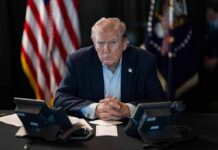

A routine vetting question from Senator Mazie Hirono collided with Hung Cao’s refugee-hardened resolve, and the room temperature spiked.
Story Snapshot
- The Senate held a formal hearing to vet Hung Cao for Navy Secretary on November 17, 2026.
- Senator Mazie Hirono pressed Cao on sexual misconduct, sailor welfare, and the Iran war.
- Cao acknowledged strain on the fleet but argued Iran operations set China back on its heels.
- Conservative outlets said Hirono tried to corner Cao; clips fueled a swift backlash.
A confirmation built for heat, not comfort
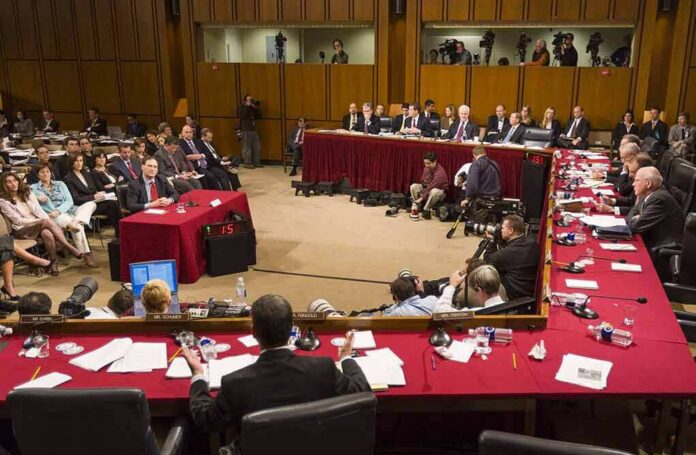
The Senate Armed Services Committee convened to consider Hung Cao’s nomination to be Secretary of the Navy on November 17, 2026, in room SD‑G50 of the Dirksen Building. The calendar entry and hearing record frame the basics: full committee, open session, big job at stake. The timing could not have been tighter. The Navy faced sustained operations tied to the Iran war, contested waters in the Indo‑Pacific, and an aging fleet that strains under long deployments.
Senator Mazie Hirono used her time to probe three lanes: personal conduct, sailor well‑being, and strategic judgment. Her office later said Cao conceded the war in Iran had stressed naval resources, then argued it set China “back on their heels,” a framing Hirono rejected as too rosy. That clash set the tone. One side pressed risk. The other sold resolve. The exchange landed because readiness is real policy, not theater, and it will define the next Navy budget cycle.
The sexual-misconduct question that changed the air
Hirono asked Cao whether he had ever engaged in sexual misconduct. Her allies see this as standard due diligence for a top cabinet slot. Her critics called it a rote question with no case‑specific basis that smeared by suggestion. Conservative coverage cast it as “her usual shtick,” and said the point was to rattle Cao, not to surface facts. That read resonated with viewers who are tired of performative gotchas. Americans expect clean conduct, but they also expect focus on ships, sailors, and China.
Cao swatted at the premise and moved back to readiness. That pivot worked because the Navy’s stress is documented. Government watchdogs have tracked long deployments, training gaps, maintenance backlogs, and crew fatigue across years, not months. Those conditions lower margins for error and push leaders to trade today’s missions against tomorrow’s repairs. Any nominee who cannot speak plainly about that tension should not run the department. Cao, to his credit, did not duck the word “strain”.
Readiness, Iran, and the China yardstick
Cao said the Iran fight is stressing the fleet yet weakening China’s position. That is a bold claim, but not absurd on its face. If Iran pulls United States naval power into the Middle East, China can probe the gaps. If Iran burns through its partners and exposes its missile playbook, China studies the lessons. Which effect dominates depends on force availability and manufacturing speed. Hirono pressed that first point hard, and the doubt she raised has teeth given the fleet’s known shortfalls.
Independent reviews have warned for years that the Navy cannot meet all demands with current ships, crews, and yards. Analysts recorded longer deployments, deferred maintenance, and eroded training pipelines that will take years to rebuild. They also found sailors lack sleep at rates that would get any airline grounded. Those facts do not settle the Iran‑versus‑China balance. They do explain why senators from both parties leaned into attrition, stockpiles, and shipyard output during this hearing.
Why the exchange hit a cultural nerve
Supporters highlighted Cao’s backstory. He fled South Vietnam as a child and says that loss shaped his duty to the flag. When pressed on stress and risk, he spoke about never losing a country again. Conservative outlets praised the poise and framed Hirono’s response as dismissive theater. That critique aligns with common sense and conservative values: judge character, demand evidence, and keep the mission first. Voters over forty hear that and think of deterrence, not hashtags.
The US Navy has resorted to using expired munitions amid mounting shortages caused by the US-Israeli war on Iran, Acting Navy Secretary Hung Cao admitted during his Senate confirmation hearing on November 17, AP reported.
■ Testifying before the US Senate Armed Services… pic.twitter.com/XTVGLs12qG
— VPol (@VocalPolitics1) November 18, 2026
The politics will pass, but the math will not. If the Navy is short workers at public shipyards and cannot rotate crews for rest, rhetoric will not move hulls or missiles. If China’s navy keeps growing while United States yards slip schedules, the Indo‑Pacific gets harder, not easier. The Senate’s job is to press nominees until those trade‑offs are clear. This hearing, weird moments and all, forced that clarity. That alone made it time well spent.
Sources:
townhall.com, armed-services.senate.gov, congress.gov, theblaze.com, btw.co, gao.gov
© restoreamericanglory.com 2026. All rights reserved.