
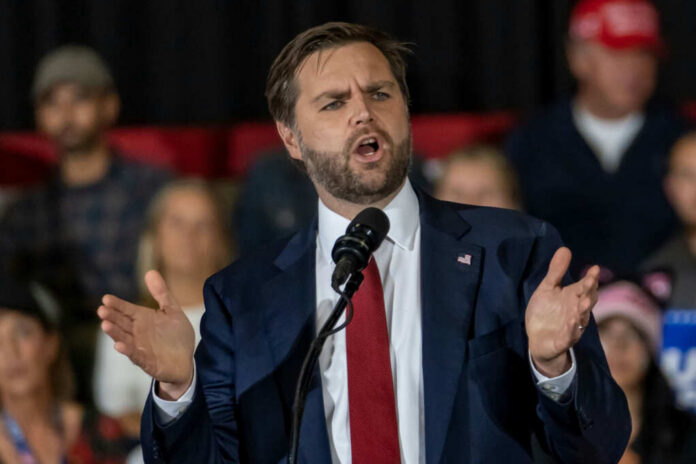
President Trump ended JD Vance’s Iran role and said the United States does not need an Iran deal, all in one stroke.
Story Snapshot
- Trump told Vice President Vance to shift from Iran diplomacy to domestic corruption work.
- Trump said U.S. leverage makes an Iran deal unnecessary and cited control over “money” and the Strait.
- Reports said the administration plans to keep pressure on Iran, including a naval blockade and sanctions.
- Vance had said talks with Iran showed progress days earlier, creating a clear pivot.
Trump’s Directive: Pivot From Tehran To U.S. Cities
President Trump announced on November 12, 2026, that Vice President JD Vance will leave his Iran-related efforts and focus on uncovering domestic corruption in Democratic-led cities and states. He posted that instruction directly and framed it as a total shift of Vance’s attention. The message was explicit and time-stamped, leaving little doubt about his intent and the chain of command. Major outlets reported the redirection as immediate and categorical.
Trump linked the pivot to a promise about money and order at home. He claimed that rooting out large-scale criminal activity in those jurisdictions could quickly balance the federal budget. He also asserted that Democratic leadership breeds corruption. Those claims did not include named cases or a scored plan, but he tied them to a focused mission for the vice president. The posts set the tone for how he wants the next phase to look and where he wants headlines to land.
No Iran Deal: Leverage Over Diplomacy
Trump declared that the United States does not need an Iran agreement. He argued that Washington already holds decisive leverage, citing “Hundreds of Billions of Dollars” in frozen or controlled assets and control over the Strait. He paired that with a strategy of continued pressure rather than tradeoffs at a negotiating table. Reporting said the White House favored keeping a naval blockade and strong economic pressure in place while putting talks on ice.
The move maps cleanly onto a pressure-first doctrine. Pressure avoids the trade of sanctions relief for promises on paper, but it also carries costs and risks. Shipping lanes affect fuel prices and global markets. Longer standoffs can invite miscalculation. From a conservative, peace-through-strength view, sustained leverage can work if enforcement holds and red lines are clear. From a prudence view, leaders must track blowback and mission creep. Trump chose the leverage lane, eyes open to force and finance.
The Vance Whiplash: From “Good Conversations” To Stand Down
Vice President Vance had recently sounded upbeat about diplomacy. He said the United States and Iran had made progress and “good conversations” toward a settlement. He also stressed the need for a firm, verifiable nuclear commitment. That is the standard anytime inspections and enrichment limits come up. Less than two weeks later, Trump told him to stand down from Iran and focus on domestic cases instead. The contrast is stark on the calendar and on the message.
Administrations adjust course when facts change or strategy shifts. This one did it in public and fast. The lesson is operational: a president sets priorities, and staff moves. The question that follows is tactical. If Vance’s Iran work was real and advancing, who now carries that folder? If the plan is pressure without a deal, who tracks compliance risk? Clear lanes and metrics matter when the stakes include war and the economy. The public readout so far emphasizes direction more than process.
Domestic Corruption Drive: Goals, Gaps, And Guardrails
Trump’s domestic tilt centers on a promise to expose criminal activity in Democratic-run areas and to claw back major sums. Reports list named states and cities, echoing his claims. The promise is sweeping and urgent. The documented plan, as reported, includes no formal mandate, case list, or budget score. That does not negate the mission, but it invites a follow-up: who leads investigations, by what authority, and with what standard across all jurisdictions?
It's more important to cover his tracks than reach an Iran peace settlement….. @nytimes Trump Says He’s Pulling Vance Off Iran Talks to Focus on Fraud Campaign https://t.co/ZRdAoQyYDF
— John Goodman (@SoxfaninNY) November 12, 2026
Conservative priorities fit a simple test here. Equal law enforcement, clear authority, and measurable results build trust. A national corruption push should name the rules and apply them to everyone. If the White House wants speed and scale, it needs prosecutors, auditors, and a scoreboard the public can see. If the goal is to cut waste and crime, then sunlight, not slogans, will do the heavy lifting. Voters favor order when they can watch the work, count the wins, and see the money return.
Sources:
pjmedia.com, thenewstribune.com, nytimes.com, straitstimes.com, cleveland.com, newsobserver.com, axios.com, washingtonpost.com, telegraph.co.uk
© restoreamericanglory.com 2026. All rights reserved.