

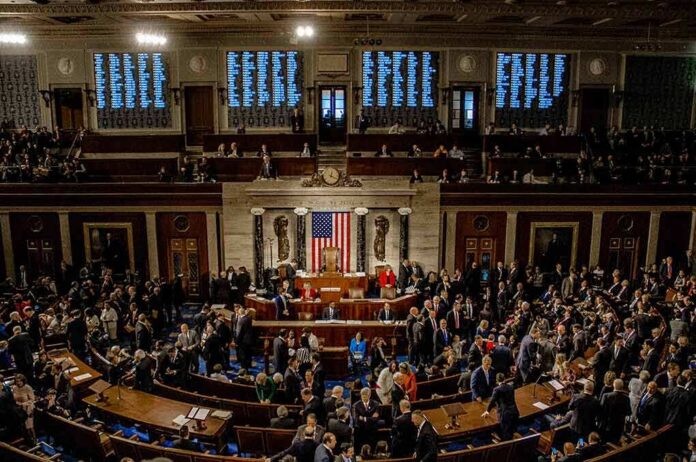
Seventy-three senators just swung open a long-stuck door, and the energy build-out rushed a step closer to real.
Story Snapshot
- The Senate advanced S.5653, the Bipartisan American Affordability and Jobs Act, in a 73-25 vote.
- The bill aims to speed permits for energy and infrastructure projects across the country.
- The measure has bipartisan sponsors and President Trump’s support, signaling a wide coalition.
- The vote likely cleared a key debate hurdle and set up final action under Senate rules.
What The Senate Just Did And Why It Matters
The Senate advanced the Bipartisan American Affordability and Jobs Act of 2026 by a 73-25 vote on November 9. The Senate Environment and Public Works Committee said the vote moved the bill forward on the floor. The measure is S.5653 on Congress.gov, introduced on September 30 by Senator Shelley Moore Capito, with cross-party co-sponsors. The bill’s core goal is simple to state and hard to do: cut permitting delays that stall energy, industrial, and infrastructure projects nationwide.
The text released by Senate committees frames a broad tune-up of federal reviews and timelines. The focus is not one fuel or one industry. It covers how agencies coordinate, how long they take, and how courts handle disputes. That is where real time and cost hide. Backers argue this means more American steel in the ground, faster. That point lands with voters every time a factory or pipeline sits at a standstill for years while costs climb.
Where The Votes Came From And What Comes Next
The 73 votes show the center of the Senate wants a faster, clearer process. That tally beats the sixty votes often needed to limit debate under Senate Rule XXII. A step like this usually sets up limited hours of floor time and then a final vote. Even if this was a cloture vote, it signals the chamber has the will to move the bill. Cross-party leaders, including Senators Capito, Lee, Whitehouse, and Heinrich, are attached to the effort.
The bipartisan shape matters. Presidents from both parties have chased permit reform by rule and by law for more than a decade. The cycle has been steady: shave delay, tighten coordination, and keep reviews focused. Critics often warn about rushed oversight. Supporters answer that delay is not scrutiny; it is drift. A strong Senate vote suggests the public’s patience with drift has run out and that jobs and cheaper power need a clearer path.
What The Bill Touches In Real Life
The bill would speed up federal environmental reviews and related approvals so projects can break ground sooner. That includes energy lines, power plants, industrial sites, and roads. Families do not read the Federal Register, but they feel the results on their power bill and at the job site. When a gas plant or a high-voltage line is stuck for years, rates rise and factories wait. When decisions come faster, builders can plan, hire, and deliver at lower cost.
Senate just advanced the Bipartisan American Affordability and Jobs Act 73-25.
Permitting reform + data centers pay their own transmission/grid costs instead of dumping them on everyone else.
Years of stalled energy and infrastructure projects could finally move. That’s the… https://t.co/HXYu0bYCEF— Terrance Drew📊📈 (@DrewTheChart) November 10, 2026
One hot front is the power demand from new data centers. States have approved billions in grid upgrades to handle that surge in only a few years. Those costs push into everyone’s monthly bill in some regions. Streamlined permits can bring new generation and wires online sooner. Some proposals also shift more costs to the companies that drive the demand. That matches common sense and basic fairness: growth should pay its own way, not hide in your bill.
How This Aligns With American Energy And Work
The case for this bill rests on three simple claims. First, energy abundance lowers prices and lifts wages. Second, long waits help no one except lawyers. Third, the United States should build the future here, with our workers and our standards. This package aims to cut red tape without cutting corners. That approach lines up with conservative values: accountability, local jobs, and a federal government that serves, not stalls. The Senate’s vote suggests that message is winning.
What To Watch Before The Finish Line
Watch for the final vote timing and any floor amendments that shape court timelines, agency deadlines, and who pays for grid hookups. Keep an eye on how leaders balance speed with clear, public input. The 73-25 show of force gives cover to keep the core intact. The bill text is posted through official channels, so details are not a mystery. The docket on Congress.gov will mark each step, title, and action with the bill number S.5653.
Sources:
thegatewaypundit.com, congress.gov, epw.senate.gov, capito.senate.gov, govinfo.gov, argusmedia.com, senate.gov
© restoreamericanglory.com 2026. All rights reserved.