
A federal judge froze Homeland Security’s door-to-door voter sweeps in nine states because the government’s own data could misfire on U.S. citizens.
Story Snapshot
- A preliminary injunction limits Homeland Security’s election-related field interviews in nine states through Election Day.
- The court cited unreliable data that could wrongly sweep in eligible U.S. citizens.
- Agents had asked residents at home about citizenship and recent voting, raising intimidation concerns under the Voting Rights Act.
- The ruling weighs voter protection against the government’s election-integrity claims during the active voting period.
What The Judge Stopped And Where It Matters
U.S. District Judge Araceli Martínez-Olguín issued a temporary order on October 21 that curbs Department of Homeland Security field operations tied to election activity in nine battleground and coastal states through Election Day. Reports identify California, Connecticut, Georgia, Missouri, Nevada, New York, Pennsylvania, Washington, and Wisconsin. The judge’s order targets in-person interviews that officials could aim at people who are, or are likely to be, U.S. citizens, shutting down that approach in the run-up to voting.
The ruling does not erase federal laws against noncitizen voting. It pauses a specific method while ballots are being cast. That distinction matters. Courts often protect current voters from even a small risk of intimidation during the final stretch before an election. The judge delayed enforcement to allow appeal, but the restrictions hold for now in the listed states, creating a clear stop sign for door-knock interviews tied to voter status until voting ends.
Why The Court Called The Data A Problem
The court focused on the reliability of the lists used to pick targets for home interviews. Reporting on the order says the government’s datasets flag “hundreds of thousands” of possible illegal voters but are widely known to include citizens by mistake. That kind of false hit can chill lawful voters, especially when the contact comes from federal agents asking about immigration status and voting history at the doorstep. The judge treated that risk as serious during an active election.
Homeland Security says its teams work carefully. Officials describe a process that pulls from agency files, state voter rolls, and other data, then matches against citizenship records from United States Citizenship and Immigration Services. They argue there is no quota, and every illegal vote will be pursued. They also say the mission protects citizen voting power. The intent is clear, but the court’s concern is the error rate when those matches turn into knocks on real doors.
The Voting Rights Act Hook: Intimidation Without A Shout
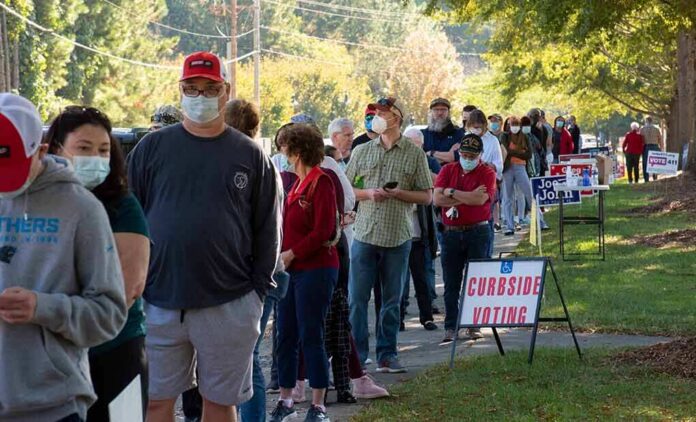
The judge tied the pause to the Voting Rights Act’s section that bans intimidation, threats, or coercion related to voting. That standard does not require violence. It covers conduct that would reasonably scare or pressure people who vote or help others vote. Field interviews at home about citizenship and recent voting cross close to that line when fueled by error-prone lists, especially during voting. That is the legal hinge for this injunction and explains its narrow timing window.
The court weighed two public goods: free voting versus rooting out illegal ballots. It found the first outweighs the second during the election period given the data risks. That aligns with a common-sense conservative principle: government should be precise before it shows up on a citizen’s porch. If the inputs are messy, the method should wait. There is no final ruling yet on whether the practice breaks the law; this is a temporary brake to prevent harm now.
How Big Is The Underlying Problem Of Noncitizen Voting?
Homeland Security and the Department of Justice stress that noncitizen voting is illegal and can bring criminal penalties. That is black letter law, and it should be enforced. The question is frequency and proof. Past reviews of large jurisdictions found very few confirmed noncitizen votes among tens of millions cast, while many scary leads traced back to clerical errors or bad matching. That backdrop helps explain why a judge would demand better filters before field interviews.
🇺🇸 BREAKING: A federal judge has ordered DHS to stop its door-to-door voter fraud investigations in 9 states, finding that the agency relied on faulty data that could wrongly target American citizens.
The restrictions are set to remain through the Nov. 3 midterms, although the… https://t.co/tbUyj6rl5Q pic.twitter.com/x6LPmzaJUo
— NewsForce (@Newsforce) October 22, 2026
Conservatives want clean rolls and tough enforcement. They also want limited, competent government. Both can fit here. Keep building strong cases, but tighten the data. Use verified records and narrower triggers before contact. Reserve in-person interviews for situations with corroboration beyond a name match. That approach protects citizen voters from intimidation and preserves resources for the real violators. When the tool is a hammer, the nail must be certain, not guessed.
Sources:
cbsnews.com, theepochtimes.com, ground.news, newsfromthestates.com, mezha.net, nytimes.com, independent.co.uk, cnn.com, npr.org
© restoreamericanglory.com 2026. All rights reserved.