A brutal knife attack on a Belfast street has turned into a fight over facts, fear, and what “attempted beheading” really means.
Story Snapshot
- A Sudanese man in his 30s was arrested on suspicion of attempted murder after a savage knife attack in north Belfast.[1]
- The victim, a man in his 40s, suffered serious injuries to his face, neck, eyes, and back and remains in hospital.[1][2]
- Police quickly ruled out terrorism for now, but admitted they still do not know the motive.[1]
- Confusion over the suspect’s nationality and immigration status has fueled outrage, protests, and political point-scoring.[1][2][3]
What Police Say Happened On That Belfast Street
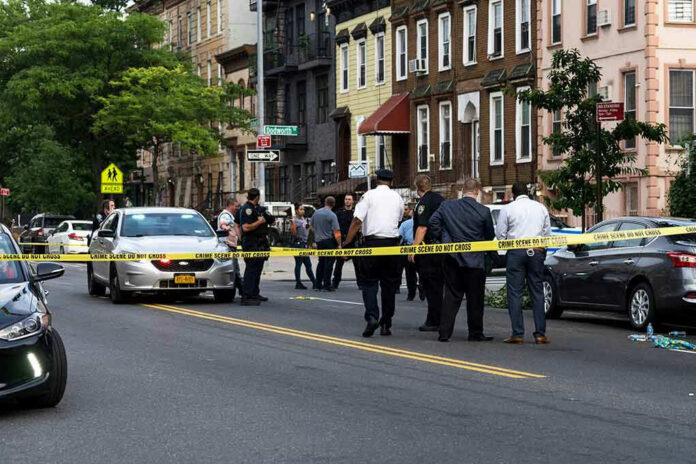
Police Service of Northern Ireland officers rushed to Kinnaird Avenue in north Belfast at about 10:30 p.m. after reports of a serious stabbing.[1] They found a man in his 40s on the ground with what senior officers later called “significant injuries” to his eyes, face, neck, and back.[1] Footage shared online appears to show a man pinned down while another man stabs toward his head and upper body several times.[1] Medics took the victim to hospital, where he remains in serious condition.[1][2]
Officers arrested a man in his 30s at the scene on suspicion of attempted murder.[1] Police said they recovered what is believed to be a kitchen knife nearby.[1] At the press conference, the North Belfast district commander stressed that they are “not seeking anyone else” and that this is a single-suspect investigation at this stage.[1] He called it a “brutal attack” that shocked local communities and confirmed this has been declared a critical incident for the force.[1]
From Somali To Sudanese: How Identity Confusion Fed The Fire
Police first told reporters that they believed the suspect was Somali, based on early checks right after the arrest.[1] By the time of the press conference, they corrected themselves and said they now believe he is from Sudan.[1][2] That shift from Somali to Sudanese, plus some outlets still saying “Somalian,” created a mess of headlines that many people read as official fact rather than fast-moving guesswork.[2][3]
The district commander admitted this confusion and said they were working with the United Kingdom Home Office to firm up the man’s identity and immigration status.[1] Reports in major outlets now state that he had leave to remain or a five-year visa and had come into Northern Ireland from Dublin.[1][2][3] That one detail lit up the immigration debate, with commentators tying a still-developing case to wider claims about border control and “imported” violence.[2][3]
‘Attempted Beheading’ Versus What We Actually Know
Television and newspaper coverage leaned hard into the phrase “attempted beheading,” helped along by shocking video clips and emotional language from some politicians.[2][3] Police, however, have not said the suspect tried to remove the victim’s head. Their confirmed description is serious slash and stab wounds to the face, eyes, neck, and back, and an arrest on suspicion of attempted murder.[1] That is bad enough on its own, but it is not the same as a proven attempt at decapitation in a forensic sense.
American conservatives value both clear language and due process. From that lens, jumping from “horrific knife attack to the head and neck” to “attempted beheading” without a medical report or a police statement saying that is a stretch. The wounds sound consistent with a possible attempt to kill by targeting the neck, but so far, no hospital or forensic record in public confirms that specific claim.[1][2] The headline is running ahead of the evidence.
Politics, Protests, And The Risk Of Letting Outrage Write The Story
Within hours, national politicians and media figures were linking the Belfast attack to immigration failures and calling for tougher border controls and faster deportations.[2][3] Some described the suspect as an asylum seeker, others as a foreign national on a visa, while police were still double-checking basic facts.[2][3] The Secretary of State for Northern Ireland told Parliament that motive was unknown and that terrorism was not suspected at this stage, but those cautious lines competed with far louder voices online.[1][2]
Reform MPs Demand Information After Attempted Beheading in North Belfast https://t.co/SAFplCEQra pic.twitter.com/1qhydXtGQH
— Guido Fawkes (@GuidoFawkes) June 9, 2026
Shops in Belfast closed early over fears of unrest, and social media filled with anger and calls for protests after the graphic video spread. Police urged people not to share the footage and warned that speculation about both the suspect and the victim was getting ahead of the investigation.[1] A pattern seen across the West repeats here: one real and awful crime becomes fuel for every preexisting argument about borders, crime, and multiculturalism, long before a judge sees a single piece of evidence.[1][2][3]
Why Details Matter If You Care About Law, Order, And Fairness
The facts that hold up are serious enough. A Sudanese man, living nearby, is under arrest on suspicion of attempted murder after a savage knife attack that left an Irishman in his 40s badly hurt and in hospital.[1][2] Police say they are not looking for anyone else, they recovered a knife, and they still do not know why this happened.[1] They have also said clearly that they do not treat this as terrorism, at least based on what they know so far.[1]
From a common-sense conservative view, this raises two separate questions. First, did the state let in and grant status to someone who went on to commit very serious violence, and if so, how do we fix that system.[1][2][3] Second, will we judge this specific man and this specific case on real evidence in court, or on viral headlines and rage. Demanding secure borders and tough policing is right; letting sloppy facts drive that debate is not.
Sources:
[1] Web – Somali Man Attempts to Behead Irishman in ‘Systemic Mutilation’ on …
[2] YouTube – Sudanese man arrested after ‘sickening’ knife attack in Belfast
[3] YouTube – Stormont in FURY after Somali man arrested for ‘SICKENING’ knife …
© restoreamericanglory.com 2026. All rights reserved.