
An “explosion” shut a major Chicago artery for nine hours, drew a bomb squad and federal agents, and still left the public with a harder question: what actually blew up, and why?
Story Snapshot
- Illinois State Police labeled the event an “explosion,” prompting a bomb-squad approach and a full freeway shutdown on I-290 near Mannheim Road [2].
- Reporters on scene said the deceased was found in an SUV amid shell casings, raising the possibility of a gun-related death rather than a planted bomb [7].
- Federal Bureau of Investigation (FBI), Drug Enforcement Administration (DEA), and Bureau of Alcohol, Tobacco, Firearms and Explosives (ATF) joined the response, standard for uncertain blast scenes [8][9].
- All lanes later reopened as investigators cautioned that early “explosion” language does not equal a confirmed bombing [7][9].
A freeway goes silent, and the language gets loud
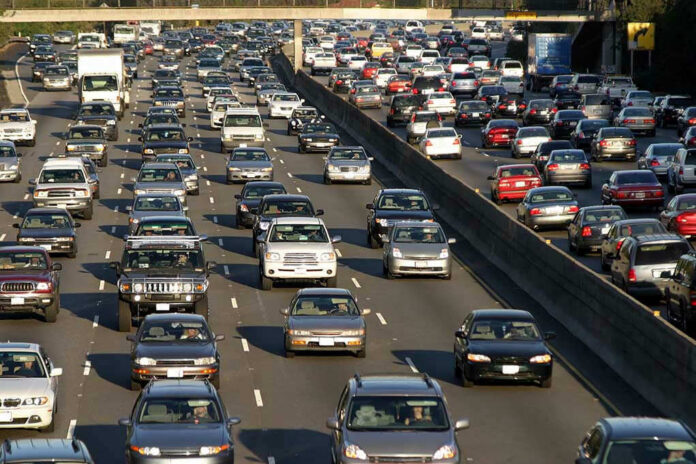
Illinois State Police dispatchers used the word “explosion,” and the highway went dark: traffic halted, cameras rolled, and a bomb squad moved on an SUV in a careful stack, long guns shouldered and tools staged [2]. The Eisenhower Expressway closure stretched for miles in both directions, disrupting midday and bleeding into the evening rush as officers widened the perimeter and staged technicians [3][4]. That posture signaled uncertainty more than conclusion: responders secure first and diagnose later when lives and infrastructure sit in the blast radius [2][10].
Television helicopters caught the choreography: a robot teased the vehicle, bomb technicians huddled, and police kept motorists far back from a potential secondary device [2][3]. The term “explosion” locked into headlines, which makes sense from a safety standpoint and a newsroom clock. Yet investigators on scene confronted a tangle that rarely fits one word. A man was dead inside the SUV. Shell casings reportedly ringed the vehicle. Fire-damaged metal and shattered glass shared the stage with ballistic clues [7][3].
Conflicting clues: blast posture versus gunfire evidence
Scanner traffic and local reporting pointed to a likely gunshot-wound death, not a victim felled by a planted bomb, which would reframe the blast as either secondary, accidental, or unrelated to intent to harm others [7]. That split matters. Explosive devices imply premeditation and public targeting; accidental ignition suggests tragic happenstance; gunfire plus rapid fire-damage could reflect a suicide or a shootout compounded by a small ignition source. Newsrooms noted possibilities that ranged from fireworks to a battery device without naming a definitive cause [9].
Federal engagement did not prove a bomb. The FBI, DEA, and ATF often surge to ambiguous blast-adjacent scenes to separate crime from accident, terrorism from local violence, and to secure specialized forensics before evidence degrades [8][9]. Conservative readers should welcome that rigor. Public roads are lifelines for work and commerce; when risk is unknown, authorities over-protect until facts catch up. That is not theatrical government; it is disciplined triage that respects life, property, and the right to get home safe.
Why early “explosion” headlines so often evolve
Early operational talk describes hazard, not final cause. “Explosion” can mean a pressure event from a fuel system, a lithium battery failure, or a pyrotechnic popping under heat. The public hears “bomb,” but responders hear “energy release—treat as worst case.” Chicago outlets emphasized the duration of the shutdown and the layered response because those are visible facts, while cause stayed officially unconfirmed as lanes reopened later that day [7][9]. The video record preserves that humility: plenty of flashing lights, no definitive device announced [2][9].
(VIDEO) Bomb Squad Called in Amid Reported Explosion on Chicago Highway – Person Found Dead in SUV Surrounded by Shell Casings
— 🇺🇸🇨🇿🇸🇪 PENNSYLVANIA IS TRUMP™ (@RED_IN_PA) June 5, 2026
Gun-related indicators complicate the narrative but also clarify priorities. If shell casings surrounded the SUV and the victim suffered a gunshot wound, then the core inquiry shifts from terrorism prevention to violent-death investigation and accidental ignition analysis. That pivot determines which labs get priority, which statutes apply, and what the public deserves to know next. Until that ruling lands, the most honest headline is the least sensational one: a freeway blast response with a death and conflicting evidence under active review [7][9].
What common sense says to do next
Transparency should follow triage. Authorities should release a timeline of the shutdown, the criteria that triggered bomb-squad deployment, and the preliminary read on the casings and ignition source once lab work clears. That candor honors commuters who lost hours, reassures families that streets remain safe, and starves wild speculation. Media should stop treating operational words as verdicts. “Explosion” starts the safety drill; evidence ends it. The Eisenhower reopened. The truth should, too—with specifics tied to tested facts, not adrenaline [7].
Sources:
[2] Web – All lanes reopen after death investigation shuts down I-290 …
[3] YouTube – Bomb squad surrounds vehicle with Eisenhower …
[4] YouTube – Massive police presence continues on Eisenhower Expy. …
[7] Web – Truck explodes in Chicago’s western suburbs after crash, injuring …
[8] Web – Eisenhower Expressway reopens after person found dead …
[9] YouTube – DEA, ATF and FBI involved in investigation into explosion …
[10] YouTube – Authorities investigate explosion on Chicago expressway
© restoreamericanglory.com 2026. All rights reserved.