
Two days after California’s polls closed, a flood of late-counted mail ballots quietly turned Xavier Becerra’s shaky primary lead into a locked-in ticket to the governor’s race showdown—and millions of voters are only now realizing how that actually happened.
Story Snapshot
- California’s governor primary was still “too close to call” as late mail-in ballots kept shifting margins.
- Xavier Becerra sat in the critical top-two slot while a large share of votes remained uncounted.
- California’s routine late-count process, not a sudden twist, explains why results moved after election night.
- The real fight is over trust: are voters comfortable with elections where the story only becomes clear days later?
How Xavier Becerra Survived Election Night And Lived Off The Late Count
Election night told a suspense story, not a finished one. With just over half the votes counted, ABC7 reported Steve Hilton at 28 percent, Xavier Becerra at 26 percent, and Tom Steyer in third at 20 percent, with everyone acknowledging that a huge chunk of ballots remained uncounted.[1] Under California’s top-two primary, that second-place spot is everything; whether Becerra kept it or lost it would decide who faces voters in November. The scoreboard looked fragile, but the structure of the rules did not.
Television coverage and online updates hammered the same point: Hilton and Becerra led, but the race remained “too close to call,” and the runoff “not quite set.”[2] CalMatters, which focuses heavily on California politics, noted that Hilton and Becerra “hold the top two spots needed to progress to the November election,” while stressing that Tom Steyer was still “technically viable” and that the Associated Press had not called the race.[3] That language signaled two truths at once: Becerra was ahead where it counts, and the math was not yet finished.
Why California’s Vote Count Always Looks Slow And Suspicious
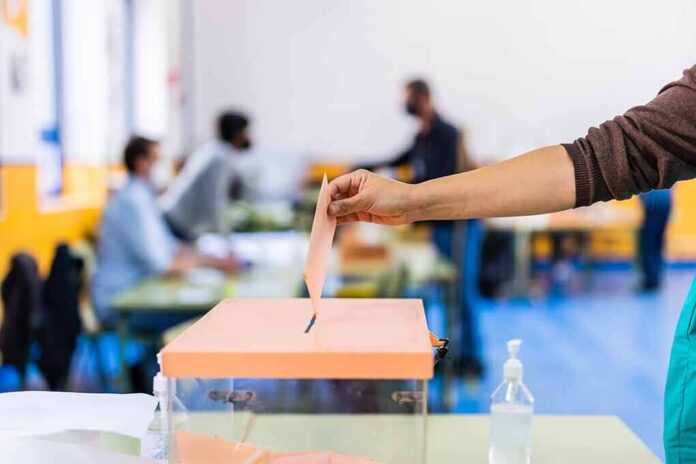
California’s election machinery is built for slowness in the name of completeness. State law allows mail ballots that are postmarked by Election Day to arrive and be counted days later, and county officials then verify signatures and process stacks of envelopes after the cameras move on. That means the votes that dominate television graphics are often the earliest mail ballots and in-person votes, not the full electorate. When races are tight, late-counted ballots routinely change margins, without any rule being broken or bent.
ABC7’s election updates and the local television breakdowns reflected this reality by constantly pairing numbers with caveats: percentages, then the share of “expected vote” counted, then reminders that “there are still a lot of votes left to count.”[1][2] That is not how a rigged game is advertised; that is how a plodding count is covered. For conservatives, who often value clear rules and predictable processes, the question becomes less “why did the numbers move?” and more “were the same rules applied to every ballot, no matter whose column it favored?”
Mail Ballots, Urban Counties, And Why The Late Surge Tilted Toward Becerra
Local coverage highlighted a key geographic fact: Los Angeles County, where Becerra ran stronger than Steyer, still had a large share of its estimated vote left to count while the statewide race remained unsettled.[2] One report noted Becerra leading Steyer in Los Angeles County by roughly 91,000 votes with only about two-thirds of the estimated vote in there.[2] At the same time, Sacramento County and other regions sat below half of their estimated total. That meant a huge reservoir of uncounted ballots in places where Becerra’s coalition was deeper than Steyer’s.
What in the Venezuela is this fraudulent bullsh*t? California has CALLED the Governor Primary for Xavier Becerra, who is 2nd behind Steve Hilton, the Republican who has been in first place the whole time.
Meanwhile, we have a Senate "majority" that refused to pass the SAVE… pic.twitter.com/ieW5W4RAhx
— 𝙏𝙝𝙚 𝙂𝙤𝙡𝙙𝙚𝙣 𝘼𝙜𝙚 𝙏𝙞𝙢𝙚𝙨 🇺🇸 (@GoldenAgeTimes2) June 5, 2026
When late-arriving mail ballots and verified envelopes from these big, Democratic-leaning counties were opened and tallied, the statewide numbers naturally nudged in Becerra’s favor. That shift did not appear out of thin air; maps and county breakdowns had already telegraphed it to anyone watching the precinct-level math. Skeptics argue that such late swings feel rigged, but the more conservative, rule-of-law way to assess this is straightforward: if ballots met the deadline, passed verification, and were counted under uniform procedures, then the timing of their addition does not change their legitimacy.
Legitimacy, Suspicion, And What This Race Really Tells Us
CalMatters framed the outcome as part of a broader pattern: California’s top-of-ticket contests consolidated behind obvious partisan leaders, and the governor’s race settled into a Hilton–Becerra matchup, not a Republican–Republican shocker.[3] That narrative matches the fundamentals: Becerra, a longtime Democratic figure and former state attorney general, entered as a favorite to claim one of the two November slots.[1][3] When late-counted ballots preserved his second-place standing instead of erasing it, the process confirmed the pre-election expectation rather than defying it.
Critics on social media now claim that “floods” of late mail ballots smell like Venezuela-style manipulation. That accusation carries emotional punch but thin factual grounding compared to on-the-record reporting that consistently described an ongoing, uncertified count, with Hilton first and Becerra second as more ballots rolled in.[1][2][3] Common sense and conservative principles point toward demanding transparent, auditable procedures—and then accepting outcomes that follow those procedures, even when they arrive days later and favor the other side’s candidate.
Sources:
[1] Web – JUST IN: Democrat Xavier Becerra Advances in California Governor’s …
[2] Web – Governor of California race: Live election results and … – abc7NY
[3] YouTube – Amid undecided California primary election results, Steve Hilton …
© restoreamericanglory.com 2026. All rights reserved.