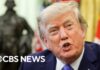

Trump’s vaccine shake-up is not just a policy tweak; it is a direct fight over who gets to define medical evidence.
Story Snapshot
- The World Health Organization said childhood vaccine timing rests on more than 60 years of research and expert review.
- President Trump’s executive order calls for fewer recommended childhood shots and splits the measles, mumps, and rubella vaccine into separate injections.
- The administration says it is revising policy through research, shared clinical decisions, and a new vaccine framework.
- Doctors, public health experts, and vaccine makers say the change lacks new scientific evidence and could confuse families.
WHO Draws a Hard Line on the Science
The World Health Organization answered Trump’s order with a sharp defense of the old schedule. WHO spokesperson Tarik Jašarević said the recommendations rest on more than 60 years of research by WHO, national authorities, and independent expert groups. He also said the timing of each shot reflects careful review of when children are most vulnerable to disease and how the immune system develops.
That matters because WHO was not arguing about style or politics. It was defending a long-built system that tries to match each vaccine to the age when it does the most good. In plain terms, WHO says the schedule is not a guess. It is a layered judgment shaped by disease risk, immune response, and decades of field experience.
What Trump Changed
Trump signed an executive order that reduces the number of childhood vaccines the federal government recommends and calls for the combined MMR shot to be split into three separate injections. The order also moves several vaccines, including hepatitis A, hepatitis B, rotavirus, meningococcal disease, influenza, and COVID-19, into a shared clinical decision model for some children instead of a universal recommendation.
Supporters present the move as a reset, not a rollback. The White House says it is delivering “gold standard” childhood vaccine recommendations, while Trump’s order directs agencies to stretch out the schedule and revisit research on vaccine timing. The administration is also tying the change to broader work on vaccine safety and autism, which gives the policy a public-health frame even as critics see something else entirely.
The Scientific Clash Is Bigger Than One Shot
The loudest argument is not really about MMR alone. It is about whether the federal government should treat a long-standing immunization schedule as settled science or as a menu for choice. Reuters reported that medical associations, public health experts, and vaccine manufacturers said there is no new scientific evidence to justify the changes, and that the existing United States schedule reflects decades of evidence and American health needs.
That pushback is strong because the basic claim from critics is simple: the evidence has not changed, so the policy should not either. CNN reported that the order goes against broad scientific consensus, while the Centers for Disease Control and Prevention’s own history has long held that vaccines do not cause autism. ABC News likewise reported that dozens of studies involving millions of people have not found an established link between vaccines and autism.
The Administration’s Defense Runs Into Familiar Doubts
The administration says it is not acting on instinct alone. Reuters reported that Trump’s health team is pursuing research on vaccinated versus unvaccinated children, vaccine ingredients, and timing effects, with the aim of producing new findings and reopening policy questions. That sounds procedural, but it does not answer the central criticism: the public record in hand does not show a published trial or technical review proving that splitting MMR improves safety or outcomes.
🩺 WHO CHALLENGES TRUMP’S VACCINE OVERHAUL.https://t.co/m3ANpqTjI3
⚠️ Eleven Diseases Stay Universal.
💉 MMR May Split Into Three.
👨👩👧 The Hidden Risk Is Missed Doses.@AmerAcadPeds @IDSAInfo @DrPaulOffit @doritmi #TaylorTailored #Trump #WHO #Vaccines
— Taylor Tailored (@TayTailore) August 11, 2026
That gap is why the fight has so much force. Trump has often cast the issue as flexibility and parental choice, but opponents hear a familiar pattern: a political decision wrapped in research language after the fact. The administration’s withdrawal from the World Health Organization and its broader break with global health bodies only deepens that perception, even for readers who may agree that vaccine policy deserves scrutiny.
Why This Fight Matters Beyond Washington
This dispute lands in a familiar American fault line. One side sees a fixed scientific standard built over generations. The other side says federal health policy should be narrowed, reexamined, and made less automatic. That tension has a real-world cost, because vaccine schedules work best when parents and doctors can trust them without second-guessing every dose. When the schedule turns into a political target, the confusion spreads faster than the policy can be explained.
There is also a common-sense case for caution that many readers will recognize. If a child’s protection against serious disease depends on timing, then changing that timing should require more than slogans. WHO says the old schedule came from long review and evidence. Trump says the new one better matches his administration’s view of safety and choice. The hard question now is which side can prove its case in the open, with data strong enough to survive the next political turn.
Sources:
insiderpaper.com, aljazeera.com, bmj.com, malaymail.com, bbc.com, cnn.com, science.org, abcnews.com
© restoreamericanglory.com 2026. All rights reserved.