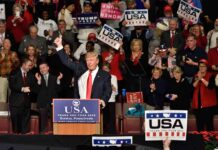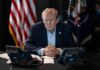

A federal judge froze a $20 million government-funded ad blitz that praised Trump—days before the midterms—and said the challengers are likely to win.
Story Snapshot
- The court issued an emergency order blocking more broadcasts and spending.
- The order barred use of Department of Homeland Security money for the ads.
- Contract records show a $20 million national media buy funded by Border Protection.
- The government reported about $19 million already spent on placements through Oct. 11.
The Order That Stopped The Ads Cold
Judge Jennifer Rochon granted a temporary restraining order that halted further broadcasts and spending tied to the campaign. The judge found the challengers are likely to succeed, would face irreparable harm, and that the public interest supported the pause. The order did not end the case; it froze activity while the court reviews the law. The judge also rejected arguments that the dispute was already over, and barred new placements or spend during the order’s term.
The written order drew a clear fence around taxpayer funds. It prohibited using money appropriated to the Department of Homeland Security to develop, create, disseminate, place, distribute, publish, or air the ads. That language matters. It targets both creative work and airtime buys. It also cues agency lawyers and contractors that even routine steps like trafficking files or shifting make-goods could violate the order.
How A $20 Million Buy Reached The Air
Contracting records show the Department of Homeland Security hired LMD Agency under a prior umbrella agreement. The records describe the work as a National Media Campaign beginning September 20 and funded by Customs and Border Protection. That description looks different from a narrow public notice. It signals strategy, reach, and repetition. A senior Department of Homeland Security official told the court that placements through October 11 cost about $19 million, confirming the scale.
Officials said the campaign would end October 11 and that no new buys were planned. The Justice Department argued that an injunction was not needed for that reason. The judge disagreed, noting the case was not moot and that a court order was needed to prevent further spending or broadcasts. That gap between assurances and enforceable limits often decides these fights. A court order creates teeth. It locks in the stop, and it sets up discovery on what happened and why.
Were These Public Service Announcements Or Politics?
The White House defended the spots as public service announcements. It said President Trump was not on the ballot and the ads did not tell people to vote. It also called the message patriotic and nonpartisan, and compared the campaign to efforts by past administrations to explain policies. Those defenses stress tradition and tone. They aim to show the government’s role as a messenger, not a campaign arm.
The challengers countered with timing, look, and message. Reports described the ads as campaign-style, praising Trump’s policies, and running nationwide right before the midterms. The judge’s order did not decide the ultimate question. But it did say the challengers are likely to win based on the record so far. For conservatives who value the rule of law and clean books, the concern is simple: taxpayer money must match the law’s purpose, or the court must step in.
Why Appropriations Rules Are The Real Battlefield
Congress bars agencies from using appropriated funds for “publicity or propaganda” not authorized by law. Government Accountability Office decisions have long warned against self-promotion and purely partisan messaging. Those rules exist to keep officials from turning public money into campaign cash. Agencies still can inform the public about programs. The line is crossed when the message looks like advocacy for a person or party rather than neutral information.
🚨 BREAKING: A federal judge has ordered the Trump administration to halt taxpayer-funded TV ads promoting the president’s political message.
The $20 million advertising campaign is facing legal challenges over whether public money was improperly used for political promotion.… pic.twitter.com/uXPzLAzfjc
— Hakim El Morabet (@HakimElMorabet) October 12, 2026
This case is a stress test of that line. The contracting label, the nationwide scope, and the political calendar point one way. The government’s claim of nonpartisan patriotism points the other way. The court’s early ruling leans toward the challengers. Next come records, scripts, and approval chains. That paper trail will decide whether this was legal public information or prohibited advocacy. Until then, the order holds the spending, and the question that matters stays alive.
Sources:
commoncause.org, cnn.com, politico.com, axios.com, rawstory.com, komu.com
© restoreamericanglory.com 2026. All rights reserved.