

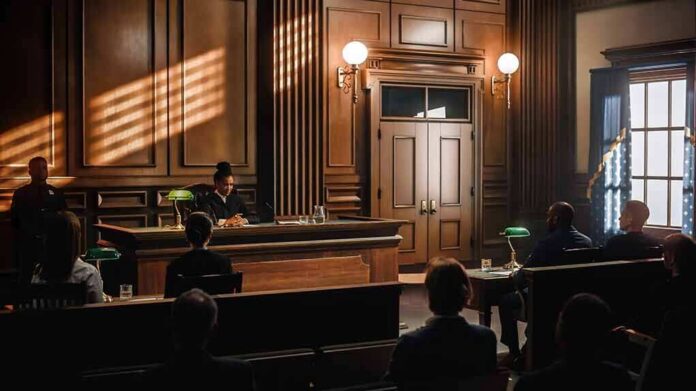
A 92-year-old federal judge died while steering the Nicolás Maduro case, and the system did not blink.
At a Glance
- Judge Alvin Hellerstein died while overseeing the Maduro prosecution in Manhattan federal court.
- He ran the October 15 arraignment where Maduro and Cilia Flores pleaded not guilty to torture charges.
- The court said the case will be randomly reassigned; the docket was active and on a schedule.
- Federal rules and district procedures keep the case on track after a judge’s death.
The Confirmed Facts Of A Sudden Vacancy
The Southern District of New York confirmed that Judge Alvin Hellerstein died at 92 while handling the prosecution of Venezuela’s deposed leader Nicolás Maduro and Cilia Flores. Reporting from multiple outlets aligns on those core facts and states the case will be reassigned through the court’s normal process. No cause of death was provided in some accounts, but officials made clear the case continues under a new judge. That clarity matters more than any headline shock.
Hellerstein was the judge on the bench for the October 15 hearing. He arraigned Maduro and Flores on newly added torture counts. Both entered not guilty pleas. He then approved a short postponement and set the trial to begin on June 14, 2027, keeping defense and prosecution aligned on timing for the next phase. That schedule signaled an active hand on a complex case with novel extraterritorial claims and high public interest.
What Reassignment Means And Why It Exists
The district’s leaders follow federal law when a judge’s seat opens mid-case. The chief judge divides business and assigns cases under Title 28, Section 137 of the United States Code. Local rules channel high-profile matters into a random wheel to prevent forum shopping and protect trust in the process. That is not bureaucracy for its own sake. It is how the court proves that rules, not personalities, decide where a case lands next.
Federal Rule of Criminal Procedure 25 provides the safety net during trial. If a judge becomes unable to proceed because of death, illness, or another disability, any other judge may step in after certifying familiarity with the record. Here, trial had not begun. That makes substitution even simpler. The successor judge can adopt prior schedules or adjust them with reasons on the record. The case does not reset. It moves forward within the same constitutional guardrails.
The Record Hellerstein Leaves Behind In This Case
Hellerstein’s last hearing left a clean procedural trail. He handled the arraignment on the added torture charges, took the not guilty pleas, and set a concrete trial date two weeks later than first planned. Those actions gave both sides a shared clock and preserved defendants’ rights to prepare. News accounts also noted his age and a brief voice struggle in a prior hearing, yet he pressed on to complete the tasks the law required. The docket now passes to a peer who will read in and rule.
Judge Overseeing Maduro Case in New York Dies Before Trial https://t.co/TEeR0m0V5j
— Jjule85A (@Jjule85A) October 31, 2026
The open question is not whether the case survives. It is how the next judge sequences pretrial motions, evidentiary issues, and logistics for a June start. A prudent court may keep the date to avoid drift, or shift it modestly to ensure fairness. Either path fits the rules. From a conservative, common-sense view, the priority is simple: stick to the law, honor due process, and deliver a verdict based on evidence, not headlines. The machinery exists to do exactly that.
Sources:
washingtontimes.com, afp.com, english.elpais.com, cbsnews.com, france24.com, efe.com, miamiherald.com, dccourts.gov
© restoreamericanglory.com 2026. All rights reserved.