The most explosive moment in Charlie Kirk’s assassination hearing was not a piece of evidence, but a legal gambit that turned the whole fight into a showdown over who owns the truth.
Story Snapshot
- Judge Tony Graf refused to shut off cameras, calling electronic coverage a tool for public accountability.
- The Kirk family wants the evidence seen, not just believed, and they are pushing hard for transparency.
- The defense warns the media circus is poisoning the jury pool and gutting the right to a fair trial.
- The hearing exposes a bigger national battle: transparency versus justice in high-profile criminal cases.
A courtroom becomes a battleground over who gets to see the evidence
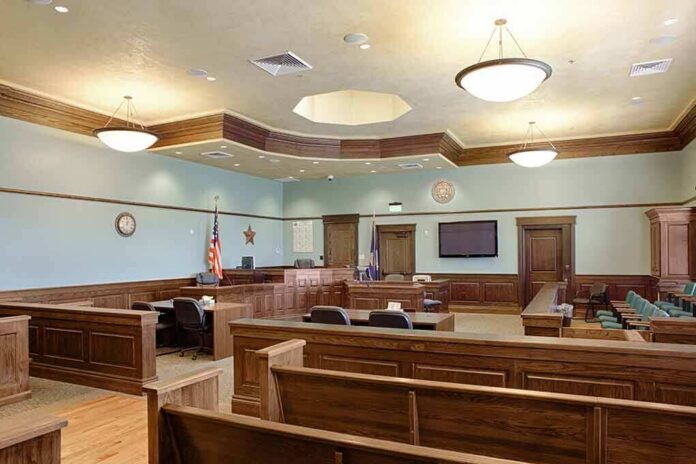
Inside a small Provo courtroom, with only a handful of public seats, prosecutors are rolling out a case they say proves Tyler Robinson assassinated Charlie Kirk with a rifle from a rooftop “sniper pad.” Video of the shooting, surveillance clips from the campus, and digital records are all being used to try to move the case toward a full trial. But the real tension is not just over what happened on that roof. It is over whether the rest of America gets to watch the evidence unfold in real time.
Judge Tony Graf has taken a clear stand. In a written ruling, he said electronic media coverage “provides a means to facilitate the public’s right of access to court proceedings,” and helps hold government power to account. Under Utah’s media rule, he refused a blanket ban on cameras and microphones, stressing that the law presumes coverage is allowed if the main purpose is journalism. In plain terms, Graf said the courtroom does not belong only to lawyers and insiders. It belongs to the public too.
The Kirk family demands that the country watch, not just trust
For Erika Kirk, that stance is not abstract. The widow of the conservative activist has made clear she does not just want a conviction; she wants clarity. In public comments, she pressed for cameras in the courtroom, saying, “We deserve to have cameras… I want there to be no hesitation in understanding what happened to my husband that day.” She and other family members sat through disturbing video and testimony, sometimes stepping out when the pain became too much, then coming back in to face the man accused of killing Kirk.
Prosecutors leaned into that transparency frame. One trial attorney argued that daily televised coverage would help dispel conspiracy theories by showing how evidence is presented step by step. This is not a small point in a case where social media is already full of wild claims, foreign interference chatter, and commentators trying to spin the facts long before any jury hears them. From a common sense, conservative view, there is a strong appeal here: if the state has strong evidence, sunlight should strengthen trust, not weaken it.
The defense fights to close the blinds in the name of a fair trial
The defense team sees that sunlight differently. Their expert presented survey data showing that almost every local resident recognizes the case, and well over half already think Robinson is guilty based on media exposure alone. Another expert in jury psychology told the court that heavy pretrial coverage, especially video and audio, creates emotional biases that jurors struggle to shake, even when trial evidence points the other way. Their bottom line is simple: you cannot get an impartial jury from a crowd that already watched the movie trailer.
To back that up, Robinson’s lawyers asked the judge to seal dozens of exhibits. They argued that constant public discussion of DNA, surveillance clips, and witness statements would “infect” the future jury pool and lock in opinions before trial. They also accused a top prosecutor of breaking gag rules and pushing details of forensic evidence to friendly media, an accusation so serious that Judge Graf later held that prosecutor in contempt for violating his order about talking to reporters. From a rule-of-law perspective, this hit a nerve: when the state bends media rules, it feeds the very distrust it claims to fight.
Strong evidence meets a slow, highly managed path to daylight
Prosecutors say they have more than enough for trial. They point to multiple videos of the rooftop shooting, DNA on the rifle and cartridges, and texts in which Robinson allegedly admits he “had enough” of Kirk’s message. Outside the courtroom, legal commentators have called the defense’s motions to disqualify the prosecution and to seal evidence “stalling tactics,” arguing the case against Robinson is strong and delay only drags out justice. That fits a familiar conservative concern: process games that let serious cases drag on while families wait.
PRELIMINARY HEARING UPDATE: CHARLIE KIRK ASSASSINATION CASE EXPLAINED
We are nearing the end of day two in the multi-day preliminary hearing for Tyler Robinson, the man accused of fatally shooting conservative activist Charlie Kirk at Utah Valley University. Prosecutors… pic.twitter.com/f3HLDnsXKs
— Crime Talk with Scott Reisch (@CrimeTalkNet) July 7, 2026
Yet even as the judge opens the doors to cameras, he also tightens control. Graf ordered that media must apply for access at least 14 days before a hearing, with short written requests and no oral argument. Exhibits such as shooting videos can be shown in court in ways that keep them off the press feed. This split approach highlights the deeper conflict. The public can watch much of the process, but key evidence may still be filtered, delayed, or presented in formats only insiders really see.
A national struggle over transparency and justice lands in one Utah courtroom
This fight is bigger than one case. In high-profile criminal trials across the country, courts often seal parts of the record or limit access to protect witnesses, avoid tipping off other suspects, or keep juries neutral. Judges and scholars warn that wall-to-wall coverage can turn trials into political theater, especially when bloodstain analysis, DNA, and other complex forensic evidence can be misread or oversold to millions of viewers. At the same time, hiding too much fuels suspicion that the system is rigged or playing favorites.
From an American conservative viewpoint, the strongest ground sits in the tension itself. The Constitution promises both open courts and fair trials. Real justice needs both. When a judge acknowledges that cameras help hold government accountable, that is a healthy nod to transparency. When the same judge punishes prosecutors for breaking gag rules, that is a needed check on state overreach. The hard work now is to keep the Kirk family’s demand for truth and the defendant’s right to a fair trial from being treated as opposing goals, instead of twin guardrails on the same road.
Sources:
pjmedia.com, apnews.com, pbs.org, youtube.com, facebook.com, atty.utahcounty.gov, fox4news.com, washingtontimes.com, vbarronlawoffice.com, anthemeap.com
© restoreamericanglory.com 2026. All rights reserved.