
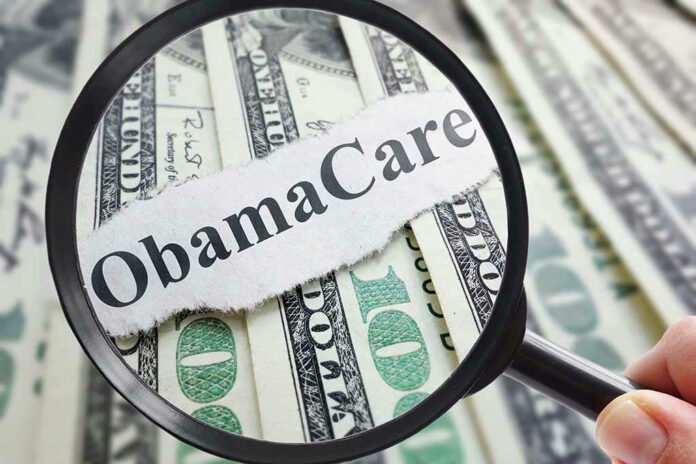
When a sitting Democrat senator publicly concedes that Obamacare has failed millions, the political earthquake shakes more than just the marble columns of the Capitol—it rattles the very foundation of partisan confidence in government-run healthcare.
Story Snapshot
- Democratic Senator Peter Welch admits to Obamacare failures on the Senate floor, breaking ranks during a heated government shutdown.
- The shutdown’s origins trace directly to Democratic demands for continued Obamacare subsidies, revealing their underlying anxieties about the law’s stability.
- This rare moment of candor exposes deeper fractures within the party’s healthcare narrative and challenges the myth that Obamacare is untouchable policy.
- As the shutdown drags on, questions mount about political priorities, accountability, and the real human cost lurking behind legislative standoffs.
Senator Welch’s Stunning Admission: The Moment That Shook the Chamber
Senator Peter Welch’s words cut through the Senate’s scripted monotony like a live wire: Obamacare has not lived up to its promises for millions of Americans. The Vermont Democrat’s admission, delivered during a tense session defending his party’s stance in the ongoing government shutdown, stunned colleagues and the pundit class alike. It was the kind of unscripted honesty that rarely surfaces in Washington’s highly choreographed debates—especially when the stakes involve the future of a signature Democratic policy.
Welch’s acknowledgment landed with particular force because it came as Democrats were digging in their heels, insisting that any end to the shutdown must include an extension of Obamacare subsidies. The move was supposed to signal unwavering commitment to the law; instead, the senator’s candor suggested that even its defenders harbor serious doubts about its effectiveness. The admission exposed an uncomfortable truth: despite years of promises, the program still leaves too many Americans behind.
The Shutdown’s Origin: A Fight Over Subsidies Reveals Deeper Worries
The current government shutdown has made history for its duration, but the spark that ignited it was almost mundane in its bureaucratic detail. Democrats, led by Welch and others, demanded an extension of Obamacare subsidies to offset rising insurance costs and prevent further instability. Republicans refused, arguing that the law was fundamentally broken and that more subsidies would only prolong its failures. The deadlock escalated, shuttering federal agencies and furloughing workers as both sides doubled down on their positions.
This standoff laid bare the political reality: Democrats are not just fighting for the survival of a policy, but for the preservation of an idea—that government can, and should, provide affordable healthcare to all. Welch’s admission drove home the point that this idea, as embodied by Obamacare, is still more aspiration than achievement for many Americans. The debate is no longer about tweaks or technical fixes; it is about the credibility of an entire governing philosophy.
Cracks in the Narrative: When Partisan Loyalty Collides with Real-World Impact
For years, Democratic leaders have presented a unified front in defending Obamacare, dismissing criticisms as partisan attacks or industry fearmongering. Welch’s statement disrupted that narrative, injecting a dose of reality into a conversation that often feels detached from the lives of ordinary citizens. His remarks echoed frustrations heard in town halls and clinics across the country, where rising premiums, limited choices, and bureaucratic hurdles have become all too familiar.
Party insiders worry that such admissions could embolden opponents and undermine public trust, but ignoring these realities risks even greater political damage. Common sense suggests that honest acknowledgment of problems is the first step toward meaningful reform. For many Americans—especially those who feel let down by the law’s promises—Welch’s candor may be the rare moment of political truth-telling they have been waiting for.
The Human Cost: Shutdown Politics and the Search for Accountability
As the government shutdown grinds on, the impact stretches far beyond the marble halls of Congress. Federal workers face missed paychecks, small businesses lose contracts, and families dependent on government services find themselves in limbo. The fight over Obamacare subsidies is not just a matter of ideological posturing; it is a struggle with tangible consequences for millions of Americans. Welch’s admission raises a critical question: when political gamesmanship leaves real people in the crosshairs, who will step up and take responsibility?
The senator’s moment of honesty, rare as it is, could serve as a catalyst for a broader reckoning—one that transcends party lines and forces policymakers to confront the gap between rhetoric and reality. Whether this reckoning leads to genuine reform or simply another round of blame-shifting remains to be seen. But as long as leaders are willing to speak plainly about what isn’t working, there is hope that solutions—rooted in accountability and common sense—may finally emerge from the political impasse.
Sources:
CNBC host pummels Dem Sen. Welch for blocking gov’t shutdown fix: ‘This is extortion’