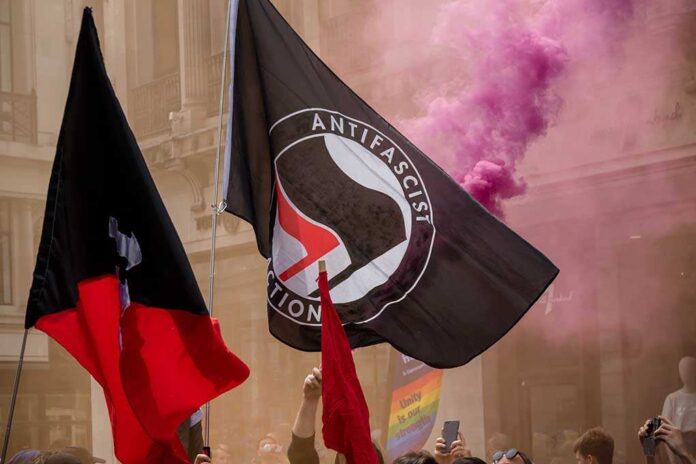
Millions of Americans have taken to the streets in “No Kings” protests, fueled by a war chest of Soros foundation money, raising the question: How much power can one billionaire exert over American democracy before the line between activism and orchestration blurs?
Story Snapshot
- George Soros’s Open Society Foundations funded the “No Kings” protests against Trump, channeling millions to organizing groups.
- Indivisible received a $3 million grant in 2023, driving the largest protest wave in October 2025.
- Republican leaders accuse Soros’s network of wielding “dark money” to influence grassroots activism.
- Protests sparked national debate over donor transparency, nonprofit law, and the boundaries of civil society.
Funding Flows That Fueled a Nationwide Uprising
George Soros’s Open Society Foundations (OSF) emerged as the financial backbone behind the “No Kings” protests. Public records and watchdog investigations show OSF issued multiple grants between 2018 and 2023 to Indivisible, a progressive organizing coalition. In 2023, a two-year, $3 million grant marked a pivotal escalation, funding logistics, outreach, and the branding of the protests. This direct pipeline of resources enabled Indivisible and allied groups to stage over 2,600 coordinated events nationwide by October 2025, coinciding with Trump’s return to the White House and renewed government shutdowns.
Republican commentators and conservative watchdogs sounded the alarm, arguing that such financial backing transformed spontaneous activism into professionally orchestrated resistance. Critics, like Speaker Mike Johnson, branded the protests “Hate America” rallies, pointing to Soros’s foreign-born status and his expansive philanthropic network as evidence of external interference. These accusations ignited a firestorm over “dark money”—undisclosed or difficult-to-trace funding—casting suspicion on the authenticity of grassroots opposition.
Organizational Muscle Versus Grassroots Authenticity
Indivisible’s evolution from decentralized opposition to a well-oiled protest machine exemplifies the tension between grassroots activism and top-down organizing. OSF’s multimillion-dollar support empowered Indivisible’s national leadership to channel resources to local chapters, providing digital toolkits, media training, and legal support. The “No Kings” branding, explicitly rejecting perceived authoritarianism, unified disparate groups under a single banner. While OSF maintains its role is limited to grantmaking, critics argue that the scale and coordination of the protests suggest a deeper operational influence.
Protest organizers counter these claims by emphasizing volunteer-driven mobilization and the necessity of philanthropic support to counter entrenched political power. Progressive analysts defend Soros’s involvement, asserting that supporting democratic norms and civil society is not only legal but essential in the face of executive overreach. Legal experts note that all disclosed grants comply with U.S. nonprofit law, with no evidence of illegal activity or direct orchestration by OSF.
Polarization and the Political Price of Philanthropy
The 2025 “No Kings” protest wave catalyzed a fierce debate over the role of wealthy donors in American politics. Millions participated, but the spectacle of mass mobilization came with economic and social costs—citywide disruptions, heightened tensions, and a barrage of competing narratives. Republican leaders amplified claims of foreign influence, while protest participants insisted on the legitimacy of their dissent. Media coverage oscillated between documenting the unprecedented scale and questioning the grassroots nature of the movement.
Long-term, these events may reshape nonprofit funding regulations and transparency requirements. Calls for donor disclosure and restrictions on political advocacy through tax-exempt organizations are mounting. The nonprofit sector faces renewed scrutiny, as advocacy groups reevaluate their funding strategies to balance impact with public trust. Soros’s OSF, meanwhile, stands at the center of a broader reckoning over the boundaries of philanthropy and protest in a polarized democracy.