
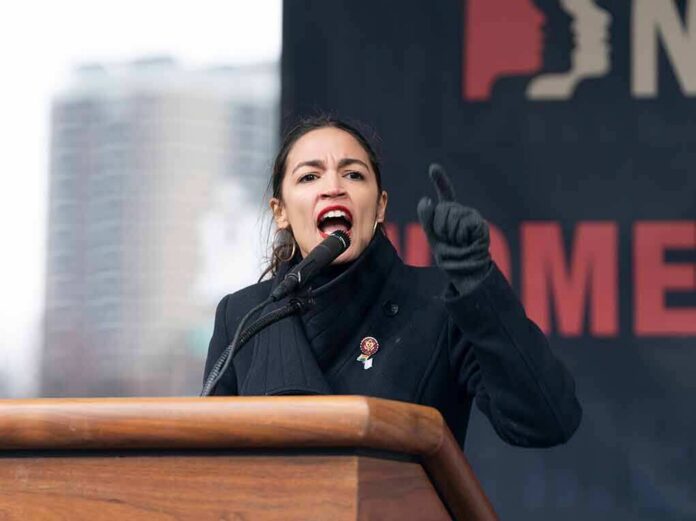
Rep. Alexandria Ocasio-Cortez stumbled through a question about defending Taiwan at one of the world’s most prestigious security forums, reigniting concerns that Democrats struggle with coherent foreign policy when the cameras are rolling.
Story Snapshot
- AOC appeared unprepared when questioned about U.S. commitment to Taiwan at the Munich Security Conference
- The exchange occurred on the global stage, amplifying scrutiny of progressive Democrats’ foreign policy credentials
- Fox News highlighted the moment as evidence of Democratic weakness on China policy
- The incident echoes previous hesitations from high-profile Democrats on critical national security questions
When the Spotlight Finds You Unprepared
The Munich Security Conference has hosted world leaders since 1963, serving as the premier venue for discussing threats to global stability. When AOC took her seat Friday at this year’s gathering, she faced a straightforward question that has vexed American politicians for decades: would the United States defend Taiwan against Chinese aggression? Her visible hesitation turned what should have been a moment to project strength into a liability. The footage quickly circulated through conservative media channels, with hosts questioning whether Democrats possess the resolve necessary to confront Beijing’s ambitions in the Pacific.
Why Taiwan Questions Are Political Landmines
The Taiwan issue sits at the intersection of legal obligation and strategic ambiguity. Since 1979, the Taiwan Relations Act has required the United States to provide defensive weapons to the island democracy, but deliberately avoids promising direct military intervention. This calculated vagueness aims to deter both Chinese invasion and Taiwanese declarations of independence. Presidents from both parties have occasionally stumbled into clarifying remarks, only to have staffers walk them back within hours. The policy works precisely because it keeps Beijing guessing, but it also creates treacherous terrain for politicians expected to sound decisive without actually committing to specific military action.
The Progressive Foreign Policy Dilemma
AOC built her political brand on domestic issues like healthcare, climate change, and economic inequality. Her progressive coalition prioritizes ending endless wars and redirecting military spending toward social programs. These positions resonate with her base but complicate appearances at security conferences where strength and deterrence dominate the conversation. When faced with questions about military commitments, progressive politicians often find themselves caught between their anti-interventionist instincts and the expectation that American leaders project unwavering resolve. The Munich moment exposed this tension, suggesting that mastery of subway politics in Queens does not automatically translate to fluency in Indo-Pacific security dynamics.
The comparison to Vice President Harris stems from her own history of verbal stumbles on significant policy questions. Both women face heightened scrutiny, critics argue unfairly based on gender and political ideology, but the substance matters too. Strategic ambiguity requires calibrated messaging, and hesitation reads as uncertainty to allies and adversaries alike. Taiwan’s 23 million people depend on American credibility for their continued freedom from authoritarian control. When U.S. representatives appear unsure about commitments, it emboldens Chinese military planners who probe for weakness in American resolve. The stakes extend far beyond partisan point-scoring.
Kamala 2.0? AOC Faceplants In Germany While Trying to Answer a Question About China and Taiwan https://t.co/BAKygPBbaW
— BREAKING NEWZ Alert (@MustReadNewz) February 14, 2026
What This Moment Reveals About Democratic Vulnerabilities
Republican strategists have long attacked Democrats as weak on national security, a perception that contributed to GOP dominance on defense issues for generations. The Afghanistan withdrawal debacle, inconsistent messaging on Ukraine, and now visible discomfort discussing Taiwan provide ammunition for these attacks. Voters consistently rank national security among their top concerns, and moments of hesitation feed narratives that Democrats lack the toughness required to lead in dangerous times. Whether fair or not, AOC’s pause in Munich reinforces stereotypes that progressives prioritize ideology over practical security considerations. Conservative media outlets amplified the clip precisely because it confirms their audience’s existing beliefs about the left’s unfitness for foreign policy leadership.
The Broader China Challenge Demands Clarity
China represents the most consequential foreign policy challenge America faces this century. Beijing’s military buildup, economic coercion, and authoritarian expansion demand coordinated responses from U.S. leaders across the political spectrum. Taiwan sits at the center of this competition, a flourishing democracy that exposes the lie that Chinese culture requires autocratic government. President Xi Jinping has made reunification a cornerstone of his legacy, and American dithering invites miscalculation. Every congressional delegation to international forums carries the weight of signaling American intentions. When those signals appear confused or unprepared, the risk of conflict increases because adversaries may conclude that America will not defend its stated interests when tested.
Sources:
AOC appears to struggle to answer whether US should commit to defending Taiwan – Fox News Video