
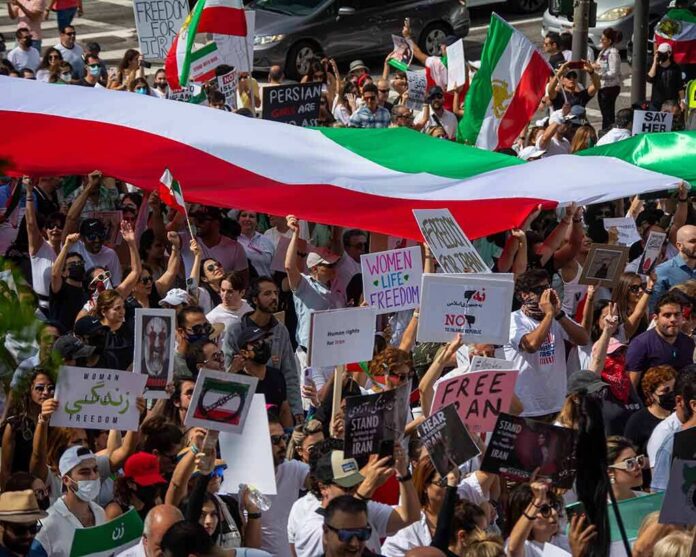
Thousands of voices converged at the United Nations to demand Iran stop political executions and to back a democratic, secular republic in its place.
Story Snapshot
- Thousands gathered outside the UN in New York on September 22–23, 2026, led by Iranian-American groups.
- Protesters called for an end to political executions and a democratic, secular republic in Iran.
- Organizers set the rally at Dag Hammarskjöld Plaza to align with UN General Assembly week.
- Rights monitors say executions in Iran surged in 2026, drawing global alarm.
Organized Show Of Force At The UN’s Front Door
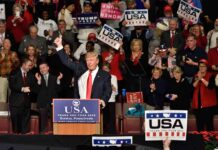
Protest organizers staged the rally at Dag Hammarskjöld Plaza, across from the United Nations headquarters, on September 22 and 23, starting at 9 a.m. each day. The media advisory billed “Stop Executions in Iran — Support a Democratic Republic” as the aim. It forecast thousands of Iranian Americans and supporters would attend from across the United States. That choice of time and place ensured diplomats, cameras, and New Yorkers would see and hear the message at peak visibility.
The Organization of Iranian American Communities coordinated the turnout push and published rally specifics ahead of time. Advocacy sites repeated the call and route details, including the location on Second Avenue at East 47th Street. Fox affiliate coverage showed the street scene filling with signs and resistance flags as delegates arrived for the United Nations General Assembly’s high-level week. The through-line was simple and blunt: stop executions, free political prisoners, and recognize the right to choose Iran’s next system.
Why The Diaspora Timed It Now
Iranian-American advocates have long used United Nations week as a megaphone. The calendar guarantees attention from global media and diplomats. This year’s rally met a darker backdrop. Rights groups report a sharp rise in executions in Iran in 2026, including cases tied to protests and national security charges. The United Nations human rights chief said at least 56 people were executed on those charges since March 19. That warning echoed across rights reporting and added urgency to the New York action.
Organizers also linked the rally’s theme to a clear political goal: a democratic, secular republic in Iran. That phrase signals a demand to end clerical rule and replace it with accountable government. It lines up with American conservative values of individual liberty, rule of law, and the basic right to choose leaders. Calling for the end of political executions is not a left-right question; it is a human question. A government that kills dissenters breaks trust at home and threatens peace abroad.
What The Crowd Wanted Policymakers To Hear
Speakers and signs focused on four asks. First, stop political executions and end torture-stained trials. Second, free prisoners jailed for speech, assembly, or protest. Third, hold Iran’s rulers to international human-rights standards at the United Nations. Fourth, support the Iranian people’s demand for a democratic, secular republic, not a swap of one strongman for another. The crowd’s message framed toughness as moral clarity: reward the people, not the jailers, and bring sunlight to every closed courtroom.
Message to the rally of freedom-loving Iranians outside the United Nations in New York in protest to the reception of the president of the regime built on executions and massacre
Today, here, and together with your demonstration, we call on the United Nations General Assembly,… pic.twitter.com/exniDQL5uX
— Maryam Rajavi (@Maryam_Rajavi) September 22, 2026
That message fits a pattern that works. Diaspora groups set specific goals, then pair them with high-visibility moments. They seed turnout claims through advisories and allied outlets, then let images and speeches carry the weight. Mainstream coverage confirms the event and setting, which is what matters for impact. The point is not winning a numbers debate. The point is forcing the executions crisis into the same news cycle as world leaders’ speeches and bilateral meetings.
How The Executions Data Raises The Stakes
Rights monitors have tracked Iran’s death penalty trend line for years. Reports this year describe a surge, including executions linked to protest cases after swift trials. The United Nations rights chief’s figure of 56 national security-related executions since March cut through the noise because it came from a formal briefing. That number gave protesters a crisp fact to rally around and diplomats a yardstick to use in speeches, side meetings, and resolutions.
Policy impact rarely comes from one rally. But this kind of pressure can shape the questions leaders ask and the lines they draw in public. It can also stiffen the spine of governments that want to link any talks with Iran to basic rights benchmarks. That alignment tracks with common-sense American priorities: defend the innocent, punish the guilty after fair trials, and never excuse state violence against peaceful dissent. Drawing that line serves both morals and security.
What Comes Next If The Cameras Move On
Organizers planned follow-up advocacy beyond the two days on Second Avenue. Volunteers gathered signatures, briefed passersby, and aimed to turn curious onlookers into steady allies. The real test now sits inside committee rooms, foreign ministries, and the United Nations corridors. Will delegates press for access to prisoners, condemn sham trials, and back a path toward a democratic, secular republic? The rally put those questions on the table. Leaders will answer with votes, statements, and leverage.
Sources:
thegatewaypundit.com, einpresswire.com, iranfreedom.org, justthenews.com, audacy.com, ncr-iran.org
© restoreamericanglory.com 2026. All rights reserved.