
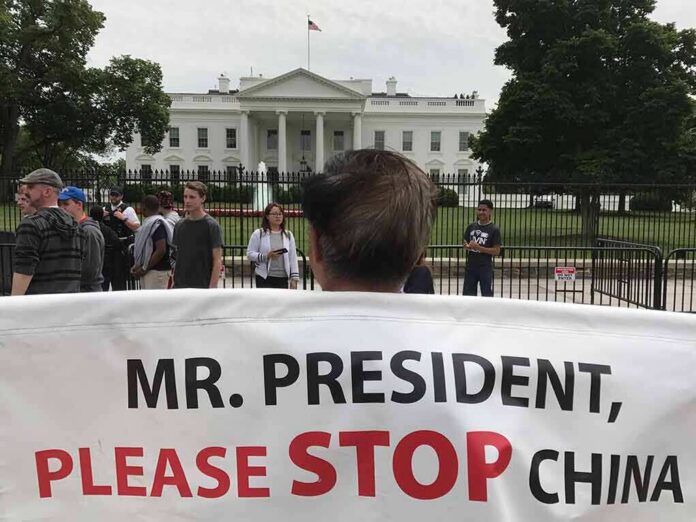
A lone climber’s banner on Pennsylvania Avenue told the story before the motorcades even rolled.
Story Snapshot
- Protesters and supporters lined Washington streets as President Trump hosted China’s Xi Jinping.
- A protester scaled a light pole near the Capitol to hang an anti-Xi banner prior to the visit.
- Law enforcement tightened security and prepared for planned demonstrations and counter-rallies.
- Rights groups used the summit spotlight to press China-focused human rights issues.
Protests And Pageantry Collide In The Capital
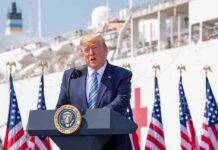
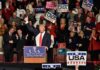
President Trump welcomed China’s Xi Jinping to Washington for a high-stakes summit while Washington streets turned into a split-screen of protest signs and red flags. Crowds gathered near Xi’s hotel and along key routes, with groups opposing Beijing’s policies facing off with pro-China well-wishers behind tight barricades. The White House prepared a full state visit program. The scene outside stayed loud, colorful, and contained by heavy police presence across the downtown core.
One image captured the mood before the first handshake. A protester climbed a light pole on Pennsylvania Avenue Northwest and unfurled a banner that read, “Dictator Xi your empire will fall. Free Tibet.” Police and emergency crews closed the street to manage safety and remove the banner. That stunt, a few blocks from the Capitol, previewed the tension to come. It also underlined a basic truth of summit weeks: symbolism often beats soundbites in the street.
Security Tightens As Demonstrations Multiply
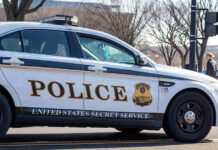
District agencies and federal partners increased staffing and barriers as Xi’s visit began. The Metropolitan Police Department coordinated with the United States Secret Service on motorcade routes, staging areas, and spontaneous protests. Advisories warned residents about rolling closures and likely demonstrations downtown. Axios flagged attempts to scale fixtures and stressed shifting street conditions for commuters and businesses. Security doctrine for state visits is direct: reduce contact risk points, segment crowds, and keep clear lanes for protected movements.
That framework held as rival groups assembled. Supporters waved national flags and welcomed Xi near his lodging. Opponents gathered under banners for Tibet, Uyghurs, Hong Kong, Falun Gong, and dissidents. The issues differ, but the message overlaps: Beijing’s power comes with human costs they want on the record. The face-off stayed mostly within delineated zones. Chants traded across pavement while police formed a moving buffer, a familiar Washington choreography during marquee diplomatic events.
Why Rights Advocates Chose This Moment
Human rights groups plan around visits like this because attention is currency. Cameras follow motorcades. That means their causes can break through the noise for a few news cycles. Organizers framed the summit as a chance to press prisoners’ cases, forced labor claims, religious freedom, and cultural suppression. They aimed their appeals at both leaders, asking for leverage in private talks and visibility in public remarks. The banner action near the Capitol worked the same lane: sharp message, high venue, maximum reach.
Policy groups also link street pressure to negotiation space. A loud public backdrop can stiffen a leader’s spine or widen the frame of what counts as “on the table.” That is not theater for its own sake. It is a tactic rooted in American free speech and assembly traditions. The test for authorities is even-handed management: protect peaceful assembly, keep order, and ensure that official business continues without intimidation or violence. Early indicators showed that security teams took that balance seriously.
What The Optics Mean For The Summit
Presidential diplomacy happens at two levels: the room and the streets. In the room, Trump and Xi faced a known list of disputes and shared interests. On the streets, protesters and supporters built pressure narratives for their side’s media and political audiences. Neither level cancels the other. Together, they tell foreign capitals how Washington thinks and what Americans will tolerate. When opponents of Beijing’s policies show up in force, it signals that human rights concerns remain part of the bilateral mix.
Americans value free speech and the right to assemble. That is not partisan; it is civic bedrock. Strong security, clear protest lanes, and firm consequences for unsafe acts protect that bedrock while keeping the capital functioning. From a common-sense, conservative lens, the day’s balance looked about right: welcome a foreign leader with full protocol, let citizens speak their minds, and keep the streets safe and open. That formula lets diplomacy proceed without muting the public square.
Sources:
youtube.com, chinatimes.com, wionews.com, foxnews.com, x.com, nbcwashington.com
© restoreamericanglory.com 2026. All rights reserved.