
America just watched the Supreme Court slam the door on Trump’s birthright citizenship order—now some want to swing it open again with pregnancy tests at the border.
Story Snapshot
- The Court reaffirmed that almost every baby born on United States soil is a citizen, no matter the parents’ status
- Trump’s executive order tried to tie citizenship to the parents’ legal standing and long term presence, but it was struck down as unconstitutional
- The decision blocks presidents from cutting birthright citizenship by executive action and makes any change require a constitutional amendment
- New “pregnancy test” ideas for female travelers clash with privacy, limited government, and basic common sense
The Supreme Court draws a hard line on birthright citizenship
The Supreme Court’s Trump v. Barbara ruling put birthright citizenship back on firm ground after two tense years of legal fights. The majority, written by Chief Justice John Roberts, said children born on United States soil to almost all parents are citizens at birth, including those whose parents are undocumented or here only temporarily. That holding followed over a century of precedent going back to the 1898 case United States v. Wong Kim Ark, which confirmed citizenship by birthplace as the rule, not the exception. Roberts stressed the words of the Fourteenth Amendment itself, which say “all persons born or naturalized in the United States, and subject to the jurisdiction thereof, are citizens,” and pointed out that nothing in that language ties citizenship to the parents’ visa or long term plans. The Court saw Trump’s order as flipping that rule on its head by making parent status the gatekeeper for a baby’s citizenship and said that move crossed a clear constitutional line.
Trump’s executive order, signed on the first day of his second term, took a very different view of what “subject to the jurisdiction” means. The order said a baby born in the United States would not be treated as a citizen if the mother was in the country illegally, or only on a temporary status like a tourist or student visa, and the father was neither a citizen nor a lawful permanent resident. Federal courts blocked the order almost immediately, calling it a plain violation of the Fourteenth Amendment and long standing case law. The Supreme Court’s final ruling went further by declaring the order facially unconstitutional, which means no president can enforce it as written and no simple rewrite will fix the core defect. That matters because some immigration hawks still hope a future White House could end birthright citizenship by memo or rule. After Trump v. Barbara, that path is closed unless the Court itself changes course or the Constitution is amended.
What the ruling means for conservative concerns about “birth tourism”
Trump and many supporters argued that the Fourteenth Amendment was meant mainly to protect freed slaves and their children, not the children of illegal border crossers or short term visitors. Their lawyer told the Court that “subject to the jurisdiction” required more than physical presence; he said it required domicile and long term allegiance, and claimed people on temporary visas or here illegally did not qualify. Justice Samuel Alito’s dissent echoed those worries, warning that the majority’s view grants citizenship even to “birth tourists,” people who travel to the United States late in pregnancy just to secure a passport for the child. That concern connects to real unease among many conservatives about chain migration, overburdened welfare systems, and the idea of people “gaming the system.” But the majority looked at the text, history, and precedent and said those fears cannot rewrite the plain words of the Constitution. From a common sense conservative view, there is a tension here. Most conservatives want clear borders, fair rules, and no special loopholes. Yet they also believe in limited government and the rule of law. Using executive power to strip citizenship from newborns goes far beyond normal border enforcement and risks turning the federal government into a kind of status police for every delivery room in the country.
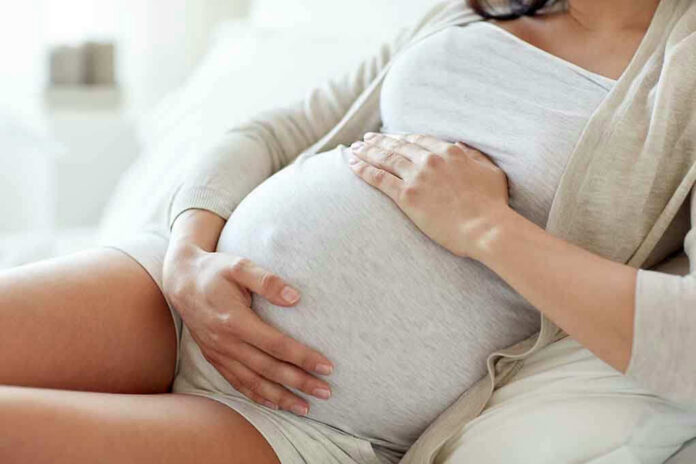
That tension shows up clearly when people float ideas like requiring pregnancy tests for all female travelers to the United States. On paper, such a rule might look like a hard line against “birth tourism.” In practice, it means agents asking every woman of childbearing age to submit to a medical test before crossing a border or boarding a flight. That is the opposite of limited government. It hands federal officials intimate power over women’s bodies based on fear of a baby’s future paperwork. American conservatives have long opposed bureaucratic control of medical decisions, most strongly with abortion and contraception mandates. Letting the state force pregnancy testing for immigration reasons would hand the same kind of power to a different set of officials.
Pregnancy tests at the border collide with privacy and practicality
Supporters of strict immigration rules sometimes treat pregnancy screening as a simple fix: stop pregnant visitors, stop birth tourism. Reality is messier. Many women do not know they are pregnant until weeks in. Early tests can miss pregnancies. Others have complex medical histories or recent miscarriages. Turning all that into a checkpoint issue invites mistakes, discrimination, and abuse. It would hit law abiding tourists, business travelers, and students far more often than determined bad actors, who could simply lie, avoid tests, or seek fake documents. A policy that treats every foreign woman as a potential threat to the citizenship system clashes with the American idea that government should presume innocence, not pregnancy.
Trump pushes Congress for legislation on birthright citizenship after Supreme Court setback https://t.co/MlY4vJWxFV
— Ramaharitha Pusarla (@HarithaPusarla) July 1, 2026
There is also a cultural cost. The Fourteenth Amendment grew out of a moment when the nation decided to end the shameful practice of using race and status to deny belonging to people born here. Birthright citizenship says to every child, “If you are born under our laws, you are one of us.” Replacing that promise with a nurse at the border holding a test strip changes the moral tone of the country. Conservatives who care about family, faith, and national pride should ask whether they want a government that starts a child’s story with suspicion. Strong borders and fair immigration rules are important, but they do not require turning customs lines into exam rooms or turning pregnancy into a legal risk factor. Trump v. Barbara did more than defeat one executive order; it reminded the country that some lines in the Constitution are meant to protect ordinary people from panicked policy experiments. Pregnancy tests for all female travelers would cross that same line, not only legally, but in basic common sense.
Sources:
bbc.com, aljazeera.com, pbs.org, youtube.com, washingtonpost.com, stopaapihate.org, aila.org, naacpldf.org, whitehouse.gov, aclumaine.org, asianlawcaucus.org
© restoreamericanglory.com 2026. All rights reserved.