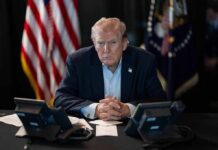

President Trump told Americans that paying a little more for gas is a fair trade to stop a hostile regime from getting nuclear weapons, and the political firestorm lit up faster than a match at a refinery.
Story Snapshot
- Trump said higher gas is a temporary, acceptable cost tied to national security.
- National pump prices topped $4 per gallon as the Middle East conflict squeezed supply.
- Polls show most voters blame Trump for the spike and feel budget pain.
- White House allies argue prices will “tumble” once war risks ease.
Trump’s Case: Pay A Little Now, Prevent A Bigger Threat
Trump linked higher gas prices to a concrete aim: deny a dangerous state a nuclear weapon. He told supporters that paying “a tiny little bit more” at the pump serves that end and said he would not apologize for it. He also cast the pain as brief, saying prices would come down in time. That claim set the terms: national security first, wallet pain second. The defense rests on the idea that short-term costs can secure long-term safety.
Energy markets did tighten as the conflict rattled supply and risk. The United States average for regular gas cleared $4 per gallon, with higher prices in coastal and high-tax states. Analysts and the Energy Information Administration say wars and chokepoint threats often drive price spikes even without a total supply cut. That backdrop helps explain the jump. It also explains why presidents can only nudge prices, not control them, in the heat of a shock.
The Pump Reality: Prices Rose, Households Felt It
American drivers saw the hit in real time. A national average above $4 landed like a tax on every commute and delivery. The Bureau of Labor Statistics reported that gasoline fueled a large share of monthly inflation, confirming what shoppers felt at checkout. Diesel set records, pushing shipping and food costs higher down the line. The pain was broad and visible, which always turns fuel into a proxy for government performance in the public mind.
That visibility drove a wave of voter blame at the White House. A Reuters and Ipsos poll found 77 percent of registered voters assign at least some responsibility to Trump for higher gas prices during the war with Iran, often linking the increase to his decisions on that conflict. The polling does not prove causation, but it does show a steep political cost. When the sign at the corner climbs, voters rarely buy macro explanations, even when those explanations are sound.
Does The “Temporary” Promise Hold Water?
Trump has said prices will fall once war risks fade and supply routes normalize. The Energy Information Administration’s historical work backs a piece of that view: war risk and chokepoint stress tend to lift prices and volatility; easing risk tends to release pressure. The hard question is timing. The agency lifted near-term oil price forecasts while the conflict drained stockpiles, a sign that markets expect tightness to linger rather than vanish on cue. The promise may prove right over a longer arc, but families budget monthly.
A last-minute effort by House GOP hardliners to get a floor vote on a bill to suspend the gas tax wound up coming up empty.
Members are skipping town this evening — and won't be back until mid-November.
w/@AnthonyCruznews and @NicoPortuondo https://t.co/XvrLwUMqeC
— Pavan Acharya (@pavanmacharya) September 17, 2026
From a conservative lens, the tradeoff logic is coherent if three things also happen: domestic production rises, permitting speeds up, and the White House sends clear, steady signals to markets. America should drill more, refine more, and move more fuel on pipelines, not trucks. That stance lowers the “war premium” by making the United States harder to squeeze. Without those moves, asking voters to carry a higher near-term bill becomes a tougher sell, because policy is not matching the promise of relief.
Sources:
mediaite.com, rev.com, huffpost.com, usatoday.com, washingtontimes.com, theguardian.com
© restoreamericanglory.com 2026. All rights reserved.