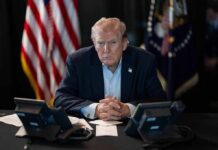

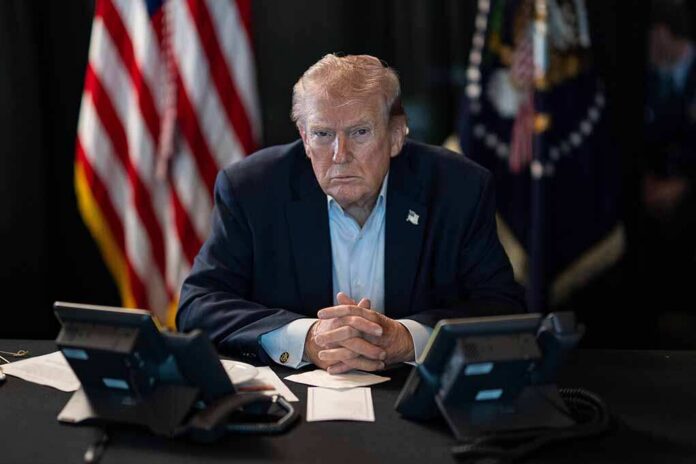
Trump told rally-goers that paying a little more at the pump is the price of keeping a hostile regime from going nuclear, and the backlash was instant.
Story Snapshot
- Trump framed higher gas prices as a short-term tradeoff for national security.
- Average gas hit about $4.20–$4.30 during the week of his remarks, per AAA reports.
- Polls show majorities blame Trump for the surge and feel real budget pain.
- Energy officials tie price spikes to war-driven supply risks and volatility.
What Trump Said And Why It Lit A Fire
Trump told supporters that “a tiny little bit more” for gasoline helps stop the world’s top terror sponsor from getting a nuclear weapon. He said the cost would come down later and that he would not apologize for the policy choice. The line aimed to link pain at the pump to national defense. It also suggested relief would follow once risk faded. That is a classic leader’s ask: accept short-term cost for long-term safety.
Gasoline averages that week gave the quote sharp edges. The national average hovered around $4.22 to $4.27 a gallon, up meaningfully from a year earlier, with states like California near $5.90, according to American Automobile Association snapshots reported by national outlets. The numbers were not abstract. Households budget in gallons and miles. When commutes do not change but prices jump, families feel cornered fast. That sense breeds anger before any policy payoff arrives.
The Voter Reaction: Pain First, Patience Last
Polling showed the political cost right away. A Reuters and Ipsos survey found 77 percent of registered voters blamed Trump at least some for higher gas prices during the surge, which they linked to the Iran war decision with Israel. That figure tells you how blame flows. Voters hold presidents to account for what they can see. They do not parse oil futures or shipping lanes on the drive home. They see the sign, they see the bill, and they judge.
Other polls and on-the-ground reporting echoed that mood. Many who backed Trump in 2024 said they were wrestling with the pump price and weighing it in their next vote, according to field interviews and surveys that tracked budget stress as broad and deep. When more than eight in ten say fuel costs strain their home finances, there is little room for “be patient” stories. People need cash relief, not theories, when they swipe a card.
What Actually Moves Gas Prices
Energy markets price risk in seconds. War risk tightens supply even without a single broken pipeline. Traders pay more to secure barrels when shipping routes face threats and stockpiles drain faster than planned. The United States Energy Information Administration raised oil price forecasts as the Iran war cut supply and pushed global stocks down, lifting expected benchmarks and, with them, retail fuel costs. Causes can be global, but consequences feel local at every pump.
A last-minute effort by House GOP hardliners to get a floor vote on a bill to suspend the gas tax wound up coming up empty.
Members are skipping town this evening — and won't be back until mid-November.
w/@AnthonyCruznews and @NicoPortuondo https://t.co/XvrLwUMqeC
— Pavan Acharya (@pavanmacharya) September 17, 2026
That link between conflict and prices is not guesswork. The Energy Information Administration and other agencies have long warned that geopolitical shocks kick up crude costs and retail gasoline, sometimes fast and hard, until new supply, slower demand, or calmer seas reset the balance. Presidents can tap reserves, speed permits, or message stability. None of that flips a switch like peace on a key waterway does. The market moves first; policy chases it.
The Conservative Read: Security Matters, But So Do Kitchen Tables
Conservatives value peace through strength and fiscal realism. If a policy blocks a terror state from the bomb, that is a clear good. But conservative common sense also measures tradeoffs in family terms. Any leader who asks families to pay more today must show a clear path to lower prices soon, not just promise it. That means credible timelines, visible steps that expand supply, and restraint on mixed messages that jolt markets and erode trust.
Trump’s bet is that voters will accept the trade once results arrive. The risk is timing. Energy shocks bite now; strategic gains land later. Winning this argument demands proof that prices will “come tumbling down,” paired with steps that speed refining, improve logistics, and keep shipping lanes secure. If those pieces click, the case holds. If not, the words become a receipt voters keep in their wallets.
Sources:
mediaite.com, rev.com, huffpost.com, presidency.ucsb.edu, cnbc.com
© restoreamericanglory.com 2026. All rights reserved.