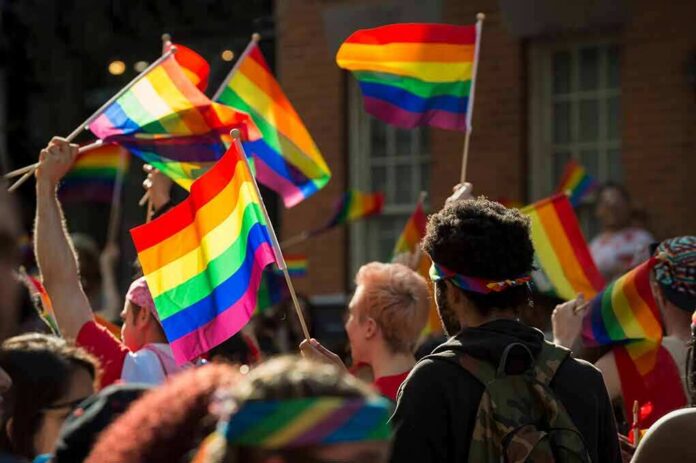
Turkish police arrested 162 people and raided the offices of nine LGBTQ+ associations and thirteen businesses in coordinated weekend operations across multiple cities.
Story Snapshot
- Turkey’s Justice Ministry says prosecutors coordinated raids in several cities, netting 162 suspects tied to nine associations and thirteen businesses.
- Officials frame the crackdown as enforcement against prostitution, obscenity, and organized criminal activity threatening families and children.
- Rights groups, including Kaos GL and the Human Rights Association, call it a political operation targeting LGBTQ+ civil society under a family-values banner.
- The raids follow years of escalating measures in Turkey, including association closures and event bans justified by constitutional family-protection language.
What Turkish Officials Say Justified The Operation
Justice Minister Akin Gurlek announced the results of a coordinated investigation spanning multiple Turkish cities. He said 162 suspects, nine associations, and thirteen businesses were targeted in the sweep. Gurlek tied the action directly to the Turkish constitution’s family-protection clause, declaring that no criminal network targeting children, youths, or families would be tolerated. Prosecutors described the probe as centered on alleged prostitution and obscenity offenses.
Reporting on the exact scale varies by outlet and date, with some accounts citing 47 detentions and others 26, reflecting different stages of a rolling, multi-city operation dubbed “Family Safety” by Istanbul’s chief prosecutor. Regardless of the headline number, the pattern is consistent. Police searched association offices, questioned board members, and in some cases restricted online access for LGBTQ+ groups during the same window of activity.
Kaos GL And Rights Groups Push Back Hard
Kaos GL, one of Turkey’s oldest LGBTQ+ advocacy groups, said police entered its Ankara offices and detained members of its board and audit committee during home raids. The group’s own account describes officers arriving at private residences before dawn, a detail that has fueled criticism from international observers watching Turkey’s civil society space shrink over the past several years.
The Human Rights Association went further, calling the operation something other than a genuine judicial investigation. The group said in a statement that authorities were running a political operation aimed at forcing society into a single approved family model. It also argued that stacking charges like criminal organization and drug offenses onto the case served to incriminate an entire community rather than establish specific wrongdoing tied to individual suspects.
International advocacy organizations echoed those concerns. The Mojust Foundation condemned the raids, arrests, and access-blocking measures as a coordinated attack on LGBTQ+ organizations and human rights defenders. ILGA-Europe separately said Turkey has intensified repression of activists through detentions and new laws restricting gender recognition and free expression. These are documented, named objections worth weighing, even as the underlying facts of the raids themselves remain undisputed by any side.
A Pattern Years In The Making, Not A Sudden Shift
This crackdown did not appear out of nowhere. Turkish courts have ordered the closure of LGBTQ+ associations before, citing obscenity tied to old social media posts and invoking the same constitutional family-protection article now driving this operation. Ankara has also maintained an indefinite ban on LGBTQ+ public events for years, a policy Kaos GL and Pink Life warned would leave community members more exposed to attacks rather than safer.
President Erdogan declared 2025 the “Year of the Family,” a branding effort that analysts say has steadily merged religious and nationalist messaging with state policy. Framing LGBTQ+ organizing as a threat to family cohesion lets the government rally conservative voters while shifting public attention toward alleged criminality instead of civil liberties questions. That said, using morality statutes to police political dissent is a well-worn tactic, and Americans who value limited government and due process should recognize the pattern even when it happens abroad.
Turkey: 162 targeted in anti-LGBTQ+ raids https://t.co/v5VSLvclHq pic.twitter.com/HNBuouFgbt
— Gay Travel & Tourism (@gaytourism) September 14, 2026
For now, the 162 arrests stand as a documented fact, not a disputed claim. What remains genuinely contested is motive and proportionality, whether this was narrow law enforcement against specific crimes or a broader campaign against an entire community’s right to organize. Both the government’s stated justification and the rights groups’ documented objections deserve a place in that conversation, and readers can judge the balance for themselves as court proceedings unfold.
Sources:
zerohedge.com, dw.com, reuters.com, bianet.org, ground.news, barrons.com, cnn.com, apnews.com, ilga-europe.org, bbc.co.uk
© restoreamericanglory.com 2026. All rights reserved.