
Elon Musk said “I’m not MAGA,” right after pouring hundreds of millions into Republicans—and that timing is the tell.
Story Snapshot
- Musk denied MAGA affiliation at the New York Times DealBook Summit
- He called himself “ideologically moderate” with no extreme views
- Reports say he spent about $445–$500 million backing Republicans
- He said he wanted checks and balances, not one-party rule
What Musk Actually Said, And Why It Mattered That Day
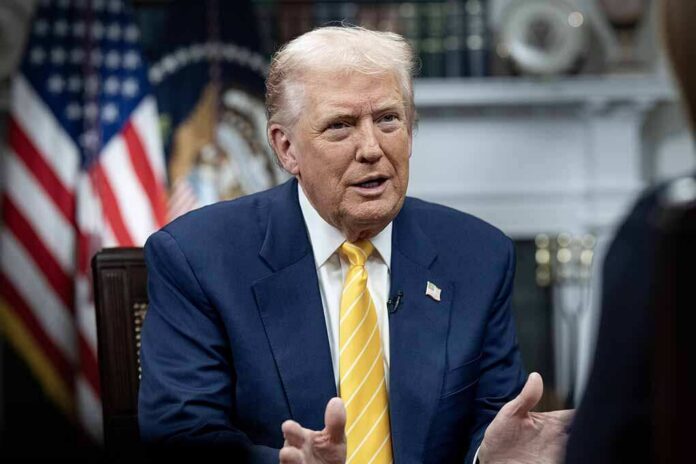
Musk told interviewer Andrew Ross Sorkin, “I’m not MAGA,” and framed MAGA as “blind adherence” to Republican policies. He said he sees good and bad in both parties and described himself as moderate. He tied his political giving to checks and balances, saying one-party control is dangerous. He also admitted he felt “foolish” about how much he spent in the midterms, which ended in Republican losses that undercut his stated goal.
The words were clear. The friction sits in the receipts. Coverage across outlets put his Republican spend between roughly $445 million and nearly $500 million. Those figures overshadow a “not MAGA” label because money signals priorities in politics far louder than hats or headlines. The public record cited in reports did not break down non-Republican gifts to balance the claim of moderation, leaving critics room to say the behavior and the brand do not match.
The Moderation Claim Versus The Spending Trail
Musk grounded moderation in issues, not tribes. That stance fits common sense: judge leaders one policy at a time. Many conservatives agree that checks and balances protect freedom and markets. The hitch is scale. When someone becomes the largest individual donor—largely to one side—people will file them with that side. That is not cancel culture. That is pattern recognition. The gap between label and ledger created the cloud he tried to clear.
One more wrinkle lingers in the clips. Fortune noted a prior self-portrayal as “dark MAGA,” a phrase loaded with movement meaning, even if used ironically. The DealBook denial did not explain that earlier posture or its limits. Without a dated, issue-by-issue map of his positions, or Federal Election Commission filings laid out by candidate and cause, the audience is left weighing a single interview against years of online signals and alliances.
Why Critics Call It A Rebrand, And What That Misses
Commentators said Musk adjusted to the party in power after a Democratic sweep. They tied his softer tone to regulators, state deals, and share prices. They also argued that calling MAGA “blind adherence” let him step away from a label while keeping most policy aims intact. These takes are pointed and sometimes persuasive, but they infer motive. They do not disprove what he said about checks and balances. They frame it as self-interest, not constitutional principle.
The Downfall Of Jensen And The Coronation Of Dario
How Huang Lost His Seat At Nvidia For Good And Anthropic Became a $1.8 Trillion Company In the Same Week
There is a strange timing in the recent history of 2 of the most powerful men of the AI era…
the same week the USA and… pic.twitter.com/RBuyoiaruW— PetrAnto (@petranto) November 20, 2026
Here is the common-sense read through a conservative lens. Two ideas can be true at once. First, checks and balances are good. Split control can cool bad laws, block crony favors, and slow fads. Second, money on that scale binds you to your roster. If you want the “moderate” label to stick, publish the playbook. Name the Democratic bills you back. Show the Republicans you will not fund. If the test is independence, set rules and keep them when it costs.
The Real Test: Fewer Labels, More Proof
Voters over forty have seen this movie. Big donor says “independent.” Headlines chase the word, not the record. Then the next cycle starts, and the checks tell the truth. If Musk wants to move this off pundit turf, he can make it measurable. Release a contribution matrix with policy conditions. Share an issue slate that crosses party lines—immigration courts, energy permits, debt restraint, and speech rights. Post it, timestamp it, and live by it in public.
The stakes reach beyond one mogul. When elite figures switch labels, public opinion can swing fast. Research shows that cues from high-profile leaders can shift views within minutes. That is why this “not MAGA” moment drew heat: it is a cue with market, regulatory, and cultural impact. Labels will keep shifting. Behavior will not hide. The scoreboard is simple—what bills pass, what rules change, and where the next dollar goes.
Sources:
theatlantic.com, theintercept.com, nbcchicago.com, vcstar.com, informnny.com, abc7chicago.com, fortune.com, them.us, cbsnews.com
© restoreamericanglory.com 2026. All rights reserved.