
A young father went to a Cowboys game, fell during a fight at kickoff, watched four quarters, and died three days later.
Story Snapshot
- Arlington police opened a death investigation after the family’s report and confirmation of death.
- Police say the fall happened during an altercation around kickoff on November 15 at AT&T Stadium.
- The Tarrant County Medical Examiner recorded Mario Narro’s death at 11:30 a.m. on November 18.
- No arrests announced as officials await autopsy findings on cause and manner of death.
What Police Say Happened Inside AT&T Stadium
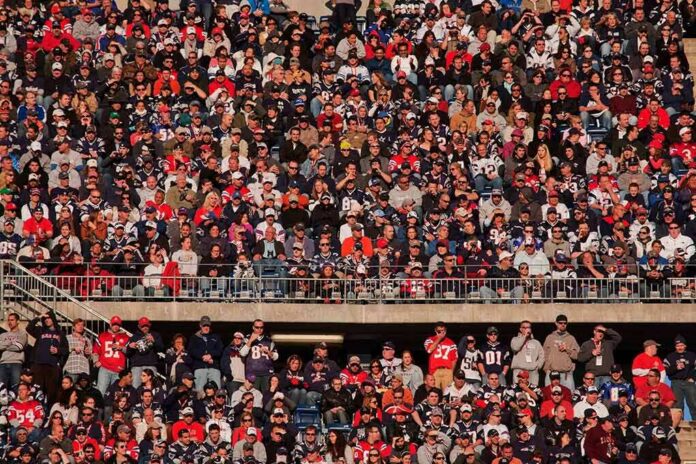
Arlington police say 36-year-old Mario Narro attended the November 15 Cowboys–49ers game and fell during an altercation around kickoff. They report he stayed and watched the entire game. Afterward, he sought medical care for pain and was taken to a hospital. He died on November 18. Police opened a death investigation after the family reported the incident on November 17 and officers learned of his death the next day.
The Tarrant County Medical Examiner’s Office recorded Narro’s death at 11:30 a.m. on November 18 in the Medical City Arlington intensive care unit. Officials had not yet confirmed the cause and manner of death when police announced the investigation. Detectives said they were reviewing evidence, including any available stadium footage and witness accounts, to piece together the fall, the medical timeline, and whether any criminal charges may follow.
Known Timeline, Open Questions, And The Evidence Hunt
The timeline is clear: altercation near kickoff on November 15, full game watched, later hospital care, and death on November 18. The question is medical causation. That is why the autopsy matters. Cause of death will link, or not link, the fall to the fatal outcome. Police had not named the other fan involved and had not announced arrests. That stance tracks standard practice during an active death investigation pending medical findings. One brief note of caution: an investigation is not a conviction.
The team’s owner, Jerry Jones, said the Cowboys had no record of an in-stadium incident but would provide any surveillance when asked. That statement does not cancel the police account; it highlights a record gap that investigators often close with video pulls, seat-location data, and interviews. Police can seek footage that covers the seating bowl, concourses, exits, and medical response. That step, along with the autopsy, will likely shape the next move.
How Stadium Violence Usually Plays Out And Why It Matters Here
Spectator violence does not define most games, but it is a recurring risk. Research suggests deaths tied to fan violence were higher in 1960–1980, while injuries were more common in 2001–2019. That pattern hints at a tough truth: serious harm happens even when deaths are rarer now. Crowd size, alcohol, rivalry heat, noise, and staffing all raise or lower the temperature. Strong, visible security and smart alcohol rules tend to cool it down.
A 36-year-old man died in the hospital days after a fight at a Dallas Cowboys game at AT&T Stadium, and police are treating the case as a death investigation. https://t.co/RJKbEOwIj9 pic.twitter.com/Jb8YrinpMc
— FOX 13 Tampa Bay (@FOX13News) November 21, 2026
Courts often judge stadium responsibility by foreseeability and reasonable steps. Operators must plan for known risks and act when warning signs rise. The law does not demand perfection, but it expects prudence. Policies on alcohol, camera coverage, and trained response teams are basic now. When those work, tempers cool faster and people get help sooner. When they lag, small shoves can become life-changing injuries—exactly the concern police now review in Arlington.
What To Watch Next: The Findings That Will Decide This Case
Three findings will drive what happens next. First, the autopsy from the Tarrant County Medical Examiner will state cause and manner of death. Second, stadium video and seating data can show the altercation mechanics: shove, trip, stumble, or something else. Third, witness interviews can lock the timeline and clarify who did what. If those align, police can decide on charges or close the case. Families, teams, and fans deserve that clarity.
The conservative common sense here is simple: tell the truth fast, show the tape, and enforce the rules fairly. Fans should get a safe seat, not a fistfight. Teams should back their security playbook with data, not spin. Police should call balls and strikes based on evidence, not headlines. That is how trust holds, and how a Sunday escape stays a game, not a tragedy.
Sources:
facebook.com, independent.co.uk, nbcnews.com, dialnet.unirioja.es, asuselj.org, dergipark.org.tr, portal.cops.usdoj.gov, sportslitigationalert.com
© restoreamericanglory.com 2026. All rights reserved.