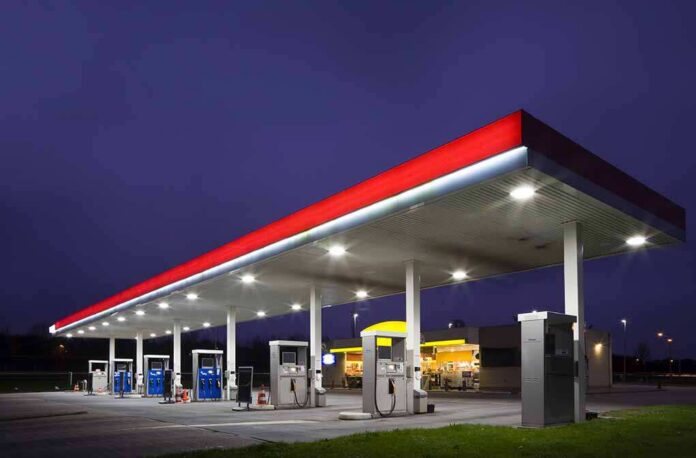
Hundreds of UK petrol stations, including major supermarkets, now face enforcement for breaking the new live fuel price reporting rule — and the clock has run out.
Story Snapshot
- Every forecourt must report pump price changes within 30 minutes under Fuel Finder.
- The Competition and Markets Authority (CMA) begins enforcement from 1 May 2026.
- Drivers can check and report mismatches between apps and forecourt boards.
- Transparency push follows “persistently high” fuel margins flagged by the CMA.
The Rule: Real-Time Price Reporting, No Excuses
Since 2 February 2026, every petrol station in the United Kingdom has been legally required to report any pump price change to a central government database within 30 minutes. This open data powers comparison apps and maps, letting drivers see live prices at every forecourt nearby. The requirement sits under the Motor Fuel Price (Open Data) Regulations 2025 and is designed to end the guessing game at the pump by forcing instant transparency across the market.
The logic is simple and strong. If a forecourt drops petrol by four pence per litre, drivers should see it before they turn in. If another holds a higher price while competitors fall, that should be obvious too. The government assigned an aggregator to collect the updates and feed them to apps like PetrolPrices and popular navigation tools. The goal is to give families the power to choose and to push retailers to compete in plain sight.
Enforcement Starts: What Non-Compliance Now Risks
The Competition and Markets Authority said it would support businesses in the early weeks, but that grace period is over. From 1 May 2026, the regulator will prioritise enforcement against non-compliance. That means formal investigations and penalties for operators who do not report price changes on time, or who allow the live data to drift from what is on the pump. The agency can issue information notices, compliance orders, and financial penalties where breaches persist or appear deliberate.
For drivers, the test is practical. If the app says one price and the forecourt board or pump shows higher, that is the mismatch the scheme was built to catch. The government asks motorists to report these errors with a timestamped photo. That evidence can trigger a fix by the aggregator or, if a station refuses to comply, a referral to the regulator. This is consumer protection with teeth, backed by a clear paper trail any shopper can help create.
Why This Crackdown Landed Now
The Competition and Markets Authority’s 2025 monitoring found fuel margins stayed “persistently high” and were not explained by operating costs dropping. That finding set the stage for live price publishing as a way to force competition on the facts, not on slogans. The regulator published guidance and stressed proportionate action, but the message is clear: data honesty is no longer optional, and late uploads hide price signals that keep bills higher than they should be.
This follows a pattern seen in other markets. When rules demand clear pricing and accurate display, early non-compliance runs high, then falls as fines bite. The United Kingdom is not reinventing the wheel. It is applying a common-sense standard many shoppers assume already exists: the price you see is the price you pay, and the same price should appear in the official feed that apps use to guide you there.
Roadside Signs, Pump Prices, And The Line You Cannot Cross
Some stations claim roadside boards are not required if prices appear at the pump. The law here is not about the size of the sign; it is about timely and accurate data in the national feed and a match between what is shown and what is charged. If a station pulls its big board to dodge scrutiny but fails to push real-time updates, that is a red flag for enforcement under the new regime and a fast way to lose customer trust.
Hundreds of UK Petrol Stations Breach Fuel Price Reporting Rules#UK #Fuelhttps://t.co/aDaZqhZFWL
— The British Eye (@the_british_eye) July 7, 2026
Conservative values align with this approach. Markets work when buyers see true prices and sellers compete fairly. The scheme does not fix prices. It shines a light so drivers can choose and retailers who play straight win the business. If a company will not press “update” within 30 minutes, while families count every pound, it should not be shocked when penalties arrive. Honesty is the cheapest fuel in any economy.
What Drivers Should Do Next
Check your usual routes in a price app before you fill up. If two nearby stations differ by three pence per litre, that is more than a pound saved on a typical tank. If you arrive and the price does not match the app by a clear margin, take a photo and report it. That quick action helps clean the feed for everyone and speeds up fixes. With enforcement live, one report can tip a store from sloppy to compliant in a day.
Sources:
ccpc.ie, bumper.co, reddit.com, facebook.com
© restoreamericanglory.com 2026. All rights reserved.