The Trump administration has turned America’s largest anti-hunger program into a high-stakes showdown over data, power, and what counts as “fraud” in the eyes of Washington.
Story Snapshot
- USDA is threatening to choke off key SNAP administrative funds to more than 20 Democratic-led states unless they hand over granular personal data on millions of recipients.
- Democratic governors and attorneys general argue the demand is unlawful, dangerous for privacy, and potentially a back door to immigration enforcement and political targeting.
- Federal courts have already stepped in with a preliminary injunction, creating a murky legal battlefield over executive power and conditional funding.
- Low-income families, states’ rights, and long-term conservative goals for smaller, more accountable government are all on the line in this clash.
How a Food Program Became a Data Battlefield
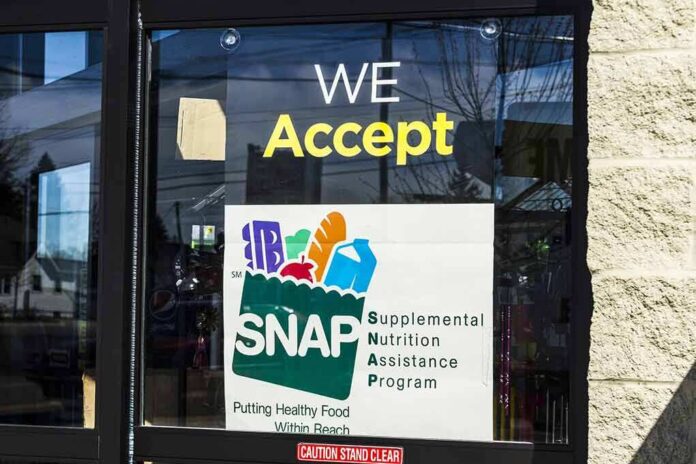
SNAP was built in the 1960s as a straightforward deal: Washington pays the benefits, states run the machinery, and limited data-sharing helps police clear-cut fraud without building a national surveillance file on the poor. That balance shifted in 2025, when President Donald Trump signed an executive order demanding expanded data collection across benefit programs and backed a budget package that pushed more SNAP costs onto the states while punishing high error rates. USDA then told all 50 states to upload detailed, person-level files on every SNAP recipient to a new federal “integrity” system, turning what had been targeted checks into a sweeping data grab.
Most Republican-led states complied, though not all cheerfully, while roughly 21 Democratic-led states and the District of Columbia refused, citing state privacy laws, constitutional concerns, and the risk that a unified database could be repurposed to hunt non-citizens or mixed-status families. From a conservative, limited-government standpoint, that concern is not entirely fanciful; any massive federal dataset can outlive the administration that built it and be turned toward missions far removed from its original “fraud control” label, which makes statutory limits and transparency crucial if taxpayers are to trust the tool and not fear its abuse.
“No Data, No Money” and the Leverage of Hunger
By late 2025, Agriculture Secretary Brooke Rollins dropped diplomatic language and went with four explosive words: “NO DATA, NO MONEY,” vowing on social media and in a filmed cabinet meeting that USDA would halt or freeze administrative funding to non-compliant Democratic-led states as early as the following week. That threat hits where it hurts; while benefit dollars are federal entitlements, states rely heavily on Washington to pay for call centers, eligibility workers, and the computer systems that actually get EBT cards loaded each month, so even a partial cutoff can slow approvals, stretch wait times, and rattle already-precarious households.
A federal judge has already issued a preliminary injunction blocking USDA from pulling certain funds from the suing states solely because they refused to transmit the data, but the order leaves room for gray areas and does not erase the public pressure campaign.[3] From a common-sense conservative lens, using hunger administration dollars as a bargaining chip over contested new conditions that Congress never explicitly wrote into law looks less like prudent stewardship and more like Washington strong-arming states into surrendering their residents’ privacy under duress, which undercuts the traditional Republican case for constitutional limits on federal power.
Fraud Claims, Immigration Fears, and Competing Narratives
USDA defends the directive by pointing to projected savings of roughly 9 billion dollars annually once all states share data, citing early results from compliant states that uncovered duplicate enrollment, payments after death, and other anomalies across borders. Conservative officials argue that taxpayers should not bankroll benefits for people registered in multiple states or long after they have left the rolls, and they see a centralized SNAP integrity team as the only realistic way to detect patterns that state-by-state systems simply cannot see, especially when Washington has just shifted more financial risk for overpayments onto state budgets.
Anti-hunger and civil-liberties advocates counter that the fraud rate in SNAP has historically been low relative to program size and that existing tools—death-record matches, wage databases, targeted audits, can tackle most real abuse without vacuuming up full case files on tens of millions of people. They warn that a unified recipient database, built under an administration already tightening immigrant eligibility, would be politically tempting to use for immigration or law-enforcement purposes, and that for mixed-status families, the mere possibility can chill participation and push children off the rolls, even if they remain legally eligible.
Courts, States’ Rights, and the Conservative Test
Democratic-led states and their attorneys general have sued, arguing that USDA’s demand for bulk personal data exceeds the authority Congress granted under SNAP, violates administrative-law standards, and crosses the line into unconstitutional coercion by tying long-standing funding streams to brand-new conditions. Legal scholars watching the case note echoes of earlier fights over Medicaid expansion and sanctuary-city grants, where courts probed whether the executive branch tried to rewrite the terms of federal funding on its own, using the power of the purse to extract concessions unrelated to what lawmakers clearly authorized.
If USDA ultimately wins, Washington will gain a formidable data asset on low-income households that future administrations of either party could harness for everything from analytics to enforcement, raising enduring questions about surveillance, cybersecurity, and mission creep that should trouble anyone who distrusts big government. If the states prevail, the ruling could mark a significant check on executive overreach and reinforce the principle that if federal agencies want new, intrusive data-sharing rules tied to essential funding, they must persuade Congress and the public in the open rather than smuggling them in through backdoor regulations and budget footnotes, a result that fits squarely with conservative respect for process, separation of powers, and the rule of law.
Sources:
KFGO – Trump to halt some food aid support for Democratic-led states over data fight
DailyFly – ‘No data, no money’: USDA says states who don’t hand over info will lose SNAP funding
Mother Jones – USDA to blue states: hand over personal data or lose SNAP funding
Grocery Dive – USDA’s Brooke Rollins threatens to withhold SNAP funding from Democratic states
The Intelligencer – USDA demands states undo full SNAP payments
USDA – 2025 Food and Nutrition Service explanatory notes