Ten drinks, a blood alcohol level more than double the legal limit, and a wrong-way drive that ended with two men dead and a state trooper’s family shattered.
Story Snapshot
- Prosecutors say Hernan Marrero had a blood alcohol level of 0.192, over twice the legal limit, when he killed Massachusetts State Trooper Kevin Trainor in a wrong-way crash.
- An official report says Marrero was served ten alcoholic drinks across two restaurants before getting into his Jeep and entering Route 1 the wrong way.
- Investigators blame Marrero’s actions, not road signs or car problems, for the head-on collision that killed both men.
- The case fits a wider pattern: alcohol impairment drives most fatal wrong-way crashes on American highways.
How one night of drinking turned into a fatal wrong-way crash
Essex County prosecutors say Hernan Marrero’s last night alive began like many others on Massachusetts’ North Shore: dinner, drinks, and a late stop at a trendy restaurant off Route 1. By dawn, State Trooper Kevin Trainor was dead, Marrero was dead, and a community was staring at yet another wrong-way crash that looked less like an accident and more like the predictable end of a series of choices.
A new report from the Essex DA’s Office offers a more detailed look at the timeline of what led up to a fatal crash that killed Trooper Kevin Trainor and wrong-way driver Hernan Marrero. https://t.co/j2XMtwoozJ
— Boston Herald (@bostonherald) July 15, 2026
The district attorney’s report says Marrero first had food and one alcoholic drink at a restaurant in Waltham earlier that evening. Later, he went to Tribu Mexican Kitchen and Bar near Route 1 in Lynnfield. Over about three and a half hours, staff served him nine more drinks, bringing his total to ten for the night. At one point, he even posted a margarita photo on social media with the caption “Second stop!!!,” a small but chilling detail given what followed.
The blood alcohol number that changes everything
After the crash, toxicology testing showed Marrero had a blood alcohol concentration of 0.192. For context, most states make it illegal to drive at 0.08 or higher, so 0.192 is more than double the usual legal limit. Medical experts explain that at this level, a person’s reaction time, judgment, coordination, and ability to track lanes or signs are all badly impaired. Driving a two-ton vehicle in that state is not just risky; it is reckless on its face.
Investigators examined more than just the lab number. They looked at the cars, the road layout, and the speed of both vehicles before impact. The report says Trainor’s cruiser was traveling between about 60 and 69 miles per hour, while Marrero’s Jeep was moving at about 56 to 61 miles per hour when they collided head-on. Both vehicles had recent inspections. A crash reconstruction expert concluded there was no mechanical failure and no confusing signage that would explain Marrero’s path.
What investigators say really caused the crash
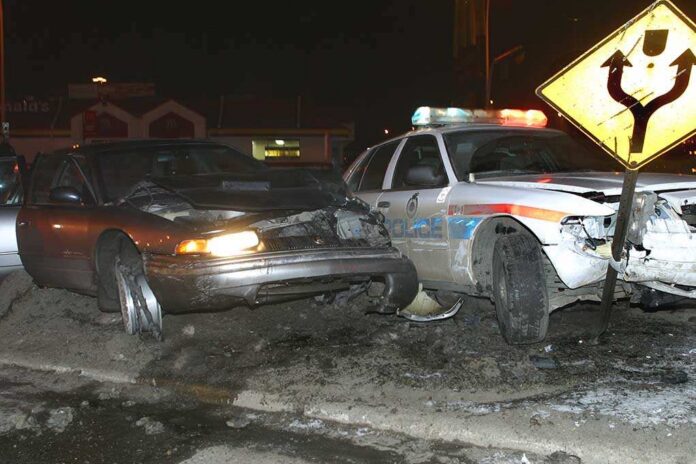
The critical moment came when Marrero reached a jughandle ramp on Route 1 in Lynnfield. Instead of following the correct path, investigators say he misjudged the turn and entered the wrong side of the divided highway, driving south in the northbound lanes. He continued wrong-way until his Jeep struck Trooper Trainor’s cruiser head-on. In the expert’s written opinion, the crash was “caused by the actions of Mr. Marrero,” not by road design or a malfunction.
That conclusion matters. Defense lawyers in other drunk driving cases sometimes argue that poor signs, strange ramps, or blind curves share the blame. In this case, the district attorney’s office is clear: Marrero’s drinking, his wrong-way entry, and his continued travel against traffic led directly to his own death and Trainor’s line-of-duty death. That framing lines up with basic common sense and many Americans’ view that responsibility sits with the driver who chooses to drink and drive.
Why this case fits a disturbing national pattern
This crash is not an isolated event. Federal safety investigators have warned for years that alcohol impairment is the dominant factor in wrong-way driving tragedies. The National Transportation Safety Board has reported that more than half, and possibly up to three-quarters, of wrong-way drivers are impaired by alcohol, and about 60 percent of fatal wrong-way collisions involve drunk drivers. In other words, when a car is going the wrong way on a divided highway at night, odds are high the driver has been drinking.
Essex County DA Paul Tucker has released a summary statement on investigation into fatal crash on Rt. 1 in Lynnfield of 5/6/26 which resulted in the death of @MassStatePolice Trooper Kevin Trainor, 30, of Georgetown, and Hernan Marrero, 50, of Roslindale.https://t.co/TZJxoqSKMu
— Essex County District Attorney Paul Tucker (@EssexCountyDA) July 15, 2026
Massachusetts-specific data and legal commentary echo the same story. Local analyses say driving under the influence is the leading cause of wrong-way crashes in the state, accounting for a large share of severe and fatal wrecks. When you zoom out, the Marrero case looks less like a freak mistake and more like another entry in a sad list: late-night drinking, a driver far over the legal limit, a wrong-way ramp entry, and families left to bury the dead and handle the fallout.
Accountability, public safety, and the role of personal choice
From a conservative, common-sense perspective, the facts here line up clearly. A grown man chose to consume ten alcoholic drinks, then chose to drive. At 0.192 blood alcohol concentration, he was not “a little buzzed”; he was deeply impaired. Under American law and basic moral logic, those choices carry responsibility. When they end with a state trooper killed in the line of duty, people understandably demand real accountability and tougher deterrence for drunk driving.
Some may still ask about bar responsibility, late-night ramp design, or broader policy reforms. Those are fair questions, and other cases have found fault with bars that overserve or with confusing road layouts. But in this specific crash, investigators say they ruled out mechanical problems and bad signage. That leaves one main cause: an impaired driver behind the wheel. For many citizens, especially those who back strong law enforcement, that is where the focus belongs.
Sources:
nypost.com, wcvb.com, warroom.armywarcollege.edu, usni.org, mahaneypappaslaw.com
© restoreamericanglory.com 2026. All rights reserved.