Kamala Harris previewed a 2028 platform that mixes serious rule changes with yet another viral blunder, and that odd combination may shape how voters see the entire plan.
Story Snapshot
- Harris floated ending the Electoral College and expanding the Supreme Court while teasing a future run.
- Her comments land on top of a long record of public gaffes and awkward viral clips.
- The reforms echo a broader Democratic push to weaken the Senate filibuster and empower population majorities.
- Conservatives see the whole package as a raw power grab dressed up as “democracy reform.”
Harris previews a controversial 2028 reform agenda
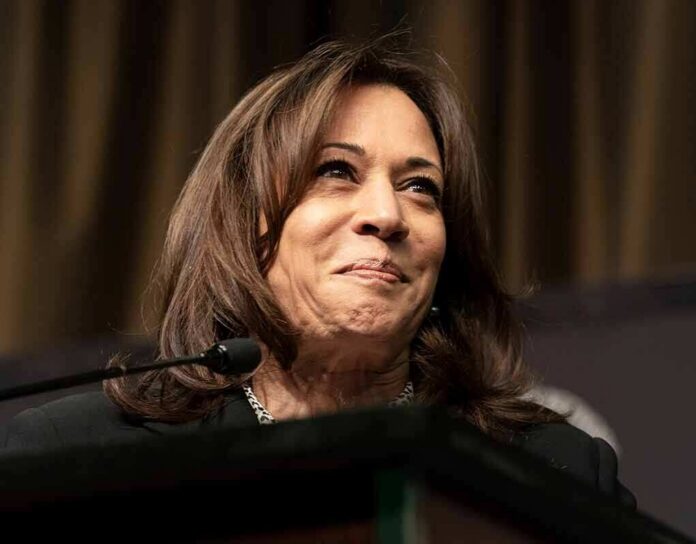
Kamala Harris used a recent event to test-drive pieces of what sounded like a 2028 presidential platform, and she did not tiptoe around controversy. She told the audience the country should “reassess the Electoral College,” and said Americans ought to consider increasing the number of Supreme Court justices to thirteen, matching the thirteen federal circuits. She also talked about possible statehood for Puerto Rico and Washington, District of Columbia, if residents want it, plus tougher accountability rules for judicial nominees who mislead the Senate.
Those ideas land in a polarized country where rule changes are loaded with meaning. Ending the Electoral College would shift power toward big states and cities. Expanding the Court would flip a century-old norm about nine justices and open a fight over who gets to appoint the new ones. For many right-leaning voters, that sounds less like neutral reform and more like a way for Democrats to lock in policy wins they cannot get under current rules, especially after recent conservative Supreme Court decisions.
Her awkward public style undercuts the message
Harris did not preview this platform in a vacuum. Voters now know her as much for verbal stumbles as for policy. Clips of her “word salads” and strained laughter have gone viral for years. She once praised America’s “alliance with the Republic of North Korea” before correcting herself. She was caught on a hot mic during a hurricane briefing, muttering “It’s a live broadcast” while fumbling through prepared notes. At a Michigan bar, she blurted out “s**t” on a live microphone and then joked about sharing “family secrets.”
These moments may seem small, but they stick. When people see a new clip of Harris making a Trump “mob boss” impression that many called “cringe,” they do not just laugh at the bit. They fold it into a larger story about judgment and seriousness. For a candidate pitching major structural reforms to the Supreme Court and the Electoral College, that perception matters. Big changes demand trust. Every awkward clip chips away at that, especially for older voters who already wonder whether today’s leaders chase trends instead of stability.
The bigger Democratic push to break minority veto power
Harris’s hints fit into a broader Democratic reform agenda aimed at breaking what they see as minority rule. On the Senate side, reformers target the filibuster, the rule that effectively requires sixty votes to move most bills. Scholars and advocates have laid out detailed ideas: abolishing the filibuster entirely, restoring a “talking filibuster” where senators must speak nonstop to block bills, or flipping the math so forty-one votes must actively sustain debate. The goal is simple: let coalitions backed by a majority of the population actually govern.
Groups like the Filibuster Reform Forum and legal advocates have even proposed rules that tie Senate procedure to population-majority representation, so a few sparsely populated states cannot block national voting rights or election laws. This logic lines up with Harris’s call to rethink the Electoral College, which also gives smaller states outsized clout. From a left-of-center view, these moves defend democracy by curbing veto points that help entrenched interests. From a conservative lens grounded in federalism and checks and balances, they look like efforts to bulldoze local voices and erase guardrails that protect liberty from raw national majorities.
Power grab or overdue modernization?
The tension around Harris’s platform preview comes down to motive. Reform advocates point out that the filibuster, Court size, and the Electoral College are not fixed by the Constitution in the way many assume. The Senate invented the filibuster and has changed it several times. Congress has changed the number of justices before, moving up and down over the nineteenth century. The Electoral College itself was a compromise, not a divine command. From that angle, updating these tools looks like normal maintenance in a modern, populous country.
Yet Harris’s timing and record make skepticism reasonable. She is previewing expansion of a Court now often hostile to progressive causes, not one packed with liberals. Her allies talk about weakening the filibuster for voting and democracy bills that would likely help Democrats win more elections. That sounds like a recipe to tilt the playing field, not to protect neutral rules. American conservative values emphasize stable norms, dispersed power, and distrust of concentrated majorities. Measured against that standard, Harris’s agenda reads less like careful reform and more like a partisan bet.
Sources:
thegatewaypundit.com, polisci.northwestern.edu, filibusterreform.org, brookings.edu, effectivegov.uchicago.edu, nationalaffairs.com, merkley.senate.gov, acslaw.org, pogo.org, theatlantic.com
© restoreamericanglory.com 2026. All rights reserved.