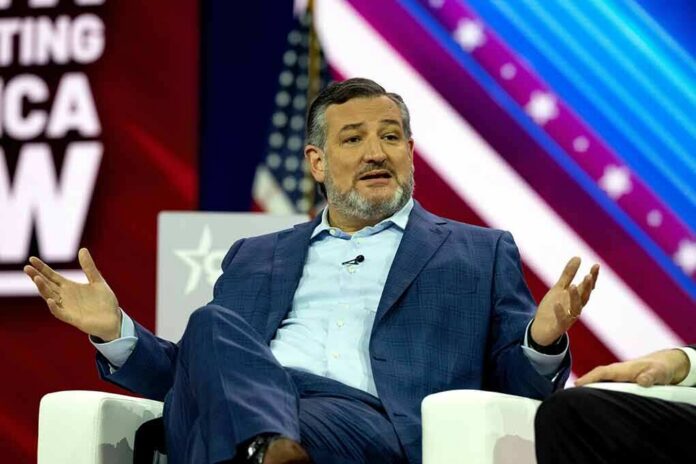
The boos were so loud on live television that Ted Cruz’s policy pitch became background noise.
Story Snapshot
- Ted Cruz appeared on ESPN’s College GameDay in Austin to discuss the Protect College Sports Act.
- The crowd booed throughout, with chants of “Ted, you suck” reported by multiple outlets.
- The interview with host Rece Davis ran close to 10 minutes.
- The segment highlights how college sports now doubles as a national policy stage.
Cruz used a football morning to sell a federal college sports bill
Senator Ted Cruz joined ESPN’s College GameDay set in Austin and spoke with host Rece Davis about the Protect College Sports Act. Reports described the appearance as focused on national name, image, and likeness rules, athlete transfers, and the shape of college sports going forward. Outlets pegged the on-air conversation at close to ten minutes. The booking pushed lawmaking into a Saturday ritual watched by millions, and it did so in one of the loudest college football venues on television.
The timing also mattered. The college sports system is in flux after court rulings, rapid realignment, and new money streams. Cruz framed the bill as a way to bring order to a messy marketplace, where schools and athletes face clashing state laws and shifting rules. That message fits a wider push for a single national standard that replaces a patchwork of state policies and curbs chaos that hurts teams and fans who want clear, fair rules that last beyond one season.
The crowd response overpowered the message on air
The Austin crowd booed for most of the segment, and many chanted, “Ted, you suck,” while cameras stayed on the set. The noise was not a momentary rumble; reporters called it sustained and intense, often drowning out answers on the microphone. That kind of reaction is not new in sports, but the scope on a flagship pregame show gave it unusual reach. Viewers did not need subtitles to understand how the audience felt; the audio told the story before the bill’s details could land.
GameDay thrives on live energy, and that energy can turn in seconds. Campus sets draw students and locals with strong views. When a politician enters that space, the risk and reward both rise. Some see this as normal friction when sports and policy meet. Others say the venue should stick to football. The network has featured political voices before and has taken heat when chatter veers away from the field’s painted lines.
What the bill fight means for fans, athletes, and schools
The Protect College Sports Act aims to set one federal rulebook for name, image, and likeness deals and define transfer and eligibility norms. Supporters argue it protects competitive balance, reduces legal risk, and gives coaches and players a stable system to plan careers. Critics worry a hard federal line could limit athlete leverage and cement power among schools and the National Collegiate Athletic Association. The core dispute is who sets the rules and who benefits when the money moves.
https://twitter.com/family_inmate/status/2099097769558323433
Fans feel the effects even if they never read the bill text. Transfers change rosters overnight. Pay rules shape recruiting. Legal battles can cancel wins long after the final whistle. A clear national standard could help the sport avoid yearly upheaval. But a heavy federal hand could also lock in today’s winners and slow change athletes have pushed for in recent years. Reasonable people can back guardrails while still asking for athlete freedom and fair market pay.
Why the moment matters beyond Austin
The segment showed how college sports now acts as a prime-time forum for national policy. A senator tried to sell a plan on a pregame show because this is where the audience gathers. The crowd answered in real time, and their reply went viral. That loop—policy on the set, reaction in the stands, clips online—now shapes how bills live or die with the public. The boos may fade by Monday, but the stakes for the sport will not.
Sources:
thesource.com, tmz.com, usmagazine.com, awfulannouncing.com, x.com
© restoreamericanglory.com 2026. All rights reserved.