A second fatal shooting by federal immigration agents in Minneapolis within three weeks has turned the city’s streets into a battleground where protesters drag dumpsters to block roads, hurl ice chunks through vehicle windows, and face down flash-bang grenades in subzero temperatures.
Story Snapshot
- Federal officers shot and killed an armed man on January 24, 2026, triggering immediate street protests in Minneapolis, the second fatal ICE shooting in the city in 17 days
- Protesters blocked streets with dumpsters, threw ice chunks that shattered vehicle windows, and confronted federal agents who responded with batons and flash-bang devices
- Minnesota Governor Tim Walz demanded the White House withdraw “thousands of violent, untrained officers” from the state as tensions escalated between federal and state authorities
- Over 100 organizations including labor unions, clergy, and immigrant advocates mobilized thousands in bitter cold to demand an end to what they call a federal “occupation”
- The unrest follows the Trump administration’s largest immigration enforcement surge in Minnesota history, with reports of detained children and school staff triggering community outrage
When Federal Enforcement Meets Street Resistance
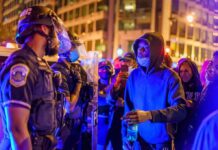
Federal immigration officers shot and killed a man carrying a firearm with two magazines on January 24, 2026, in Minneapolis. Within minutes, an angry crowd gathered approximately one mile from the scene. The Department of Homeland Security described the situation as “evolving,” while protesters screamed profanities at officers and physically blocked their movements. The confrontation marked the second fatal shooting by federal agents in Minneapolis in less than three weeks, igniting a powder keg of rage that had been building since early January.
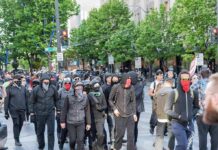
The response turned Minneapolis streets into obstacle courses. Protesters dragged garbage dumpsters into intersections, creating barricades while chanting “ICE out now.” Officers wielded batons and deployed flash-bang devices to disperse crowds who threw chunks of ice with enough force to break vehicle windows. The Hennepin County Sheriff’s Office and Minnesota State Patrol issued dispersal orders and made arrests for road-blocking and ice-throwing. These were not spontaneous outbursts but coordinated actions in temperatures 20 degrees below zero, where even breathing hurts.
The Shooting That Started the Fire
January 7, 2026, set this crisis in motion when ICE agent Jonathan Ross shot and killed 37-year-old Renee Nicole Good in her vehicle. That single incident sparked daily protests across the Twin Cities. By mid-January, reports surfaced of ICE detaining children, parents, and school staff, with school districts verifying that masked agents had taken people into custody. These weren’t rumors whispered in immigrant communities but documented incidents that civic leaders confirmed publicly.
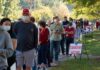
On January 22 and 23, protesters escalated their tactics by confronting Border Patrol Commander Greg Bavino’s convoy directly, blocking stores and facing pepper spray and tear gas. One armed federal agent entered a restaurant during the confrontations. The following day, thousands rallied in subzero cold, organized by a coalition of more than 100 groups demanding prosecution of Ross and complete ICE withdrawal from Minnesota. Mayo Clinic workers staged walkouts. One hundred clergy members were arrested at the airport while protesting Delta Airlines and Signature Aviation’s cooperation with ICE deportation flights.
Authority Versus Accountability
Governor Walz took the extraordinary step of posting on X, demanding immediate federal withdrawal. His exact words cut through political niceties: “Pull thousands of violent, untrained officers out of Minnesota. Now.” He contacted the White House directly, framing federal agents as destabilizing rather than protecting communities. DHS spokesperson Tricia McLaughlin countered by emphasizing the second shooting victim was armed, justifying the use of lethal force. This federal-state clash exposes a fundamental question: who controls public safety when federal law enforcement operates in states that view their methods as dangerous?
Protester Josh Koskie shouted what many in immigrant neighborhoods feel: “They’re killing my neighbors!” Organizer Glaubitz Gabiou framed the Minneapolis resistance as a national message to end what protesters consistently label a federal “occupation.” The coalition spans labor unions, clergy, childcare workers, and immigrants themselves, creating leverage through sheer diversity. Faith in Minnesota, a key organizing force, mobilized people who rarely protest, including rabbis like Tamar Magill-Grimm. When religious leaders risk arrest in dangerous cold, they signal this fight transcends typical political theater.
The Reality Behind the Headlines
Viral claims described an “organized insurrection” by “leftists” setting dumpsters ablaze and blocking armored ICE vehicles. The verified facts show chaos, yes, but something different than marketed. Protesters did drag dumpsters into streets and throw objects that damaged property. No credible sources confirm dumpsters set ablaze or specifics about armored vehicles being blocked. The “rocks” were ice chunks, hard enough in subzero cold to break windows but not the same as rocks. The ideological framing as a “leftist” action ignores the coalition’s composition: clergy, union workers, parents, and immigrant families who defy simple political labels.
The term “insurrection” carries legal weight and historical meaning that this unrest does not meet. Federal law defines insurrection as organized rebellion against governmental authority with intent to overthrow or prevent execution of law. Blocking streets and throwing ice in response to fatal shootings constitutes civil unrest, potentially criminal depending on actions, but lacks the systematic organization and seditious intent that “insurrection” requires. The exaggeration matters because it distorts public understanding of legitimate grievances versus actual threats to constitutional order.
What Happens When Trust Collapses
Short-term consequences include over 100 clergy arrests, multiple injuries including a protester’s broken arm sustained while fleeing, disrupted traffic, and pressure on airport operations. Faith communities, medical facilities, and schools now operate under stress as members face detention risks. The economic impact ripples through businesses losing workers to walkouts and customers avoiding protest zones. Socially, communities either unite in solidarity or fracture in fear, depending on immigration status and political leanings.
Long-term implications extend beyond Minnesota. Vice President JD Vance’s visit during peak tensions risked further escalation. If Walz’s White House negotiations succeed in scaling back operations, it could embolden other sanctuary states to resist federal enforcement more aggressively. If they fail, immigrant communities will retreat deeper into shadows, avoiding hospitals, schools, and police even when they need help. Children like the five-year-old detainee cited in reports will grow up with trauma that shapes their relationship to government authority for life. This enforcement surge sets precedent for how far federal power can reach into communities that explicitly reject cooperation.
Sources:
LA Times – Federal officers shoot another person in Minneapolis, governor says