
Capitol Police say they pulled a full-size guillotine from a pickup truck parked by the Supreme Court and arrested the driver for carrying a dangerous weapon — and the details get stranger from there.
Story Snapshot
- Police say the guillotine sat in the truck bed along East Capitol Street near the Supreme Court.
- Officers arrested 35-year-old Philan-Tam-Duy Le of Julian, California, around 3 p.m. Tuesday.
- United States law bars dangerous weapons on Capitol grounds; the statute is broad by design.
- The case fits a long pattern of unusual objects treated as weapons near federal sites.
What Police Found And Where They Found It
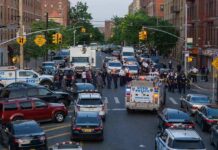
United States Capitol Police say officers spotted a pickup truck parked along the 100 block of East Capitol Street, within sight of the Supreme Court. They say a guillotine sat assembled in the truck bed, visible to anyone walking by. Officers moved in and detained the driver, identified as 35-year-old Philan-Tam-Duy Le of Julian, California. Police say they arrested him for carrying a dangerous weapon tied to the guillotine in his truck. Reporters at local and national outlets echoed those details later that day.
Timing matters on Capitol Hill. Police say the truck drew attention shortly after 3 p.m., a busy hour when officers clear lanes and watch for unusual items. The area around the Court and the Capitol runs on a tight security rhythm. Vehicles that stand out get a fast look. A visible, assembled blade device in a truck bed near a landmark will draw an officer every single time. That is both common sense and standard practice in that zone.
Why The Charge Sticks Near The Capitol
Federal law bans firearms, explosives, incendiary devices, and dangerous weapons on the grounds of the Capitol complex. Congress wrote the law to be broad, not picky, because a unique threat at the wrong place can do damage like a gun can. That is why odd gear — a sword, a crossbow, or a home-built contraption — can still count as a dangerous weapon. The point is to keep volatile tools far from top institutions and the people who work there.
Capitol Police have tested that rule many times. In past cases, officers charged people for swords, bows, knives, and high-capacity gear discovered near the complex. The pattern is steady: if the item can seriously injure, it likely meets the threshold, and officers will act first and sort the rest through the courts. This case sits cleanly inside that pattern and shows how the rule applies to non-firearm threats in real life.
The Unusual Object Problem: When Symbol Becomes Security Risk
Unusual items near major seats of power often blur the line between prop and threat. A guillotine has heavy symbolic freight. It signals rage at elites. It can also be built as a working device. Police on the Hill do not grade symbolism. They enforce safety rules in a place that has seen real attacks. A visible, assembled device that could act like a weapon gets treated as a weapon, even if the owner claims art, protest, or theater after the fact.
U.S. Capitol Police arrest a man who they say was carrying a guillotine in the bed of a pickup truck. https://t.co/7F4up17WxJ
— NBC News (@NBCNews) August 26, 2026
Speed also shapes public understanding. Early official statements frame the story before court filings catch up. Here, the press release set the tone, and reputable outlets quickly matched it with on-scene details and the suspect’s identity. That clarity helps, because rumor can spiral fast when the object is this odd. The core facts are direct: police saw it, seized it, and made an arrest under the dangerous weapon rule that applies on Capitol grounds.
Security, Liberty, And Common Sense
Americans want both safety and freedom to speak their mind. Near the Capitol, the balance leans toward safety for one simple reason: risk is concentrated there. The law draws a bright line to protect institutions that make the country work. That does not gag protest. It says leave dangerous tools at home. Most people agree with that trade. It squares with common sense and with the duty to guard public servants and the public who visit those places.
The guillotine arrest is not about politics as much as proximity and potential harm. Bring a dangerous device to the heart of government, and you will meet fast enforcement. That standard has applied to a man with many knives, to a person with a sword, and now to a driver with a guillotine in an open truck bed. The rule is neutral, the zone is sensitive, and the margin for error is thin by design.
What Happens Next
A charge for carrying a dangerous weapon on Capitol grounds goes to the courts, where the facts and the device itself get reviewed. Judges will look at how the law defines a dangerous weapon and how the police found and handled the item. Until then, the best guide is the statute and the long history of similar cases near the complex. The takeaway is simple: security rules around the Capitol mean exactly what they say, even when the object looks like it belongs in a history book.
Sources:
mediaite.com, latimes.com, uscp.gov, wjla.com, uscode.house.gov
© restoreamericanglory.com 2026. All rights reserved.