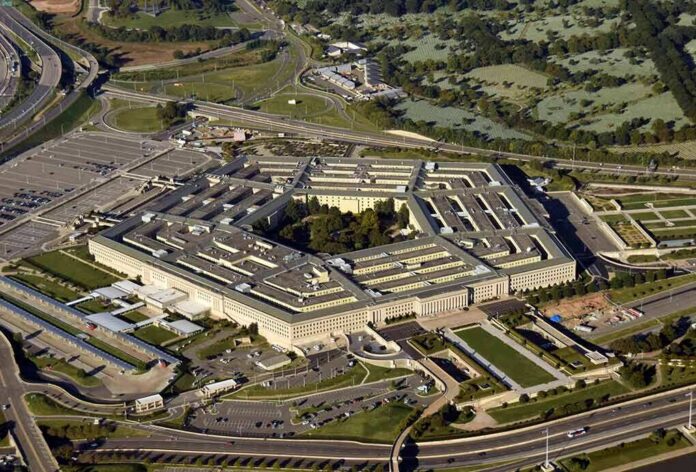
European governments scrambled after reports said Secretary Pete Hegseth weighed pulling about 25,000 U.S. troops from Europe, a shift that would force Europe to carry more of its own defense now, not later.
Story Snapshot
- Reuters reported Hegseth considered a 25,000-troop cut in Europe before June’s NATO meeting.
- A broader review looked at reductions up to 40,000, according to multiple summaries.
- Hegseth said U.S. levels already returned to pre-2022 after earlier drawdowns.
- Analysts say NATO is shifting from burden sharing to burden shifting toward Europe.
What triggered the alarm in European capitals
Reuters reported that Hegseth planned to announce a reduction of about 25,000 U.S. troops in Europe before the June NATO ministerial in Brussels, according to two U.S. officials. The figure landed like a thunderclap because it would mark the largest single reshuffle since the Cold War. Another outlet summarized Pentagon options that reached up to 40,000, signaling that planners gamed more than a trim. The discussion moved fast because any change reshapes logistics, readiness, and politics overnight.
European leaders read the number and saw risk. The shock was not just fewer American boots. It was what those boots enable: command hubs, air and missile defense nodes, munitions stocks, and the “tripwire” that links an attack in Europe to an immediate U.S. response. Critics warned that a deep cut could dip below levels Congress had previously tied to NATO’s deterrence posture, raising fears Moscow might test cohesion if it sensed a window. That is the anxiety politicians must answer at home.
What Hegseth said he is trying to do
Hegseth said the United States already returned troop levels to pre-2022 by redeploying a brigade combat team last year and cutting another 5,000 earlier this year. He also put a clear marker on the table for Brussels: Europe should assume primary responsibility for conventional defense, boost industrial output, and field combat-credible forces. The message was not subtle. The Pentagon framed it as a push for allies to spend more and buy real capability, not just pledge and delay. That aligns with years of burden complaints from Washington.
Supporters of the shift argue the logic is overdue. Policy thinkers have urged a smaller U.S. footprint to force a real handover of cost and responsibility to Europe’s much larger economy. One argument holds that reductions are not the reward for European action but the trigger that finally drives it. Another case says Europe must relieve the United States wherever American involvement is not vital, with cash translated into brigades, shells, air defenses, and ship days, not press releases. This push echoes what many American conservatives call common sense: strong allies carry their share.
Deterrence risks, Europe’s readiness, and the clock
NATO’s center of gravity has shifted east since 2017. Battlegroups and forward defense replaced the old light “tripwire” model. After 2022, that shift sped up. Analysts describe a move from burden sharing to burden shifting, with Europe taking the lead in conventional deterrence while the U.S. nuclear umbrella endures. The hard part is timing. If Washington reduces faster than Europe fields units, stocks ammo, and fixes maintenance, deterrence can sag. If Europe accelerates production and force structure, Russia’s calculus stays hard and simple.
European leaders fear a capability gap they cannot close in a single budget cycle. Munitions output still lags. Air defense battalions remain scarce. Heavy brigades cannot appear by memo. That is why the reported 25,000 number sparked panic. It compresses a decade of European goals into a near-term must. Still, the blunt truth favors the shift. Europe has the wealth and technology to defend itself if it chooses to spend and deliver. The United States should remain the nuclear backstop, not the permanent infantry of first resort.
The bottom line for NATO and U.S. interests
Facts on the ground matter more than famous speeches. Reuters’ reporting put a specific reduction on the table and revealed why allied phones lit up. Hegseth’s own statements confirm a deliberate step-down toward pre-2022 levels and a demand that Europe take the conventional lead. The strategic aim tracks with the alliance’s new direction outlined by independent analysis: a Europeanized conventional posture under a U.S. nuclear umbrella. That balance serves American taxpayers and strengthens the West—if Europe moves from meetings to metal.
Sources:
thegatewaypundit.com, reuters.com, militarnyi.com, msn.com, news.liga.net
© restoreamericanglory.com 2026. All rights reserved.