The owners of the Pittsburgh Post-Gazette just proved that in 2026, a 240-year American institution can vanish in a single afternoon Zoom video.
Story Snapshot
- A nearly 240-year-old newspaper will publish its final edition and shut down on May 3
- Ownership cites over $350 million in losses and inflexible union contract obligations
- Unions call the closure retaliation after winning a string of labor rulings and a Supreme Court defeat for the company
- Pittsburgh now faces a deepening local news vacuum and serious questions about accountability
How a Supreme Court loss became the last straw
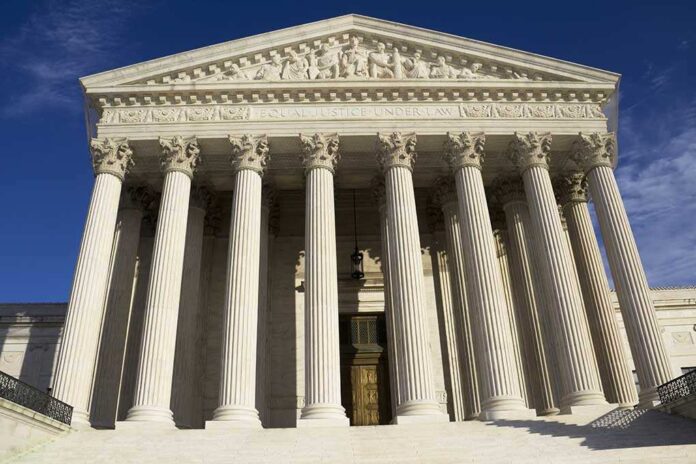
Block Communications did not close an iconic metropolitan newspaper on a quiet news day; it did it hours after losing at the U.S. Supreme Court. The company had asked the Court to block a 3rd Circuit order requiring the Post-Gazette to restore the 2014 health care plan and comply with an earlier NLRB decision. Within that same day, ownership announced that the Post-Gazette would cease all operations on May 3.
The timing alone does not prove motive, but it invites hard questions. Management had fought union workers for years over contract terms, benefits, and bargaining practices, losing repeatedly before an administrative law judge, the NLRB, and the 3rd Circuit. From a conservative, rule-of-law perspective, the pattern looks straightforward: regulators and courts applied federal labor law, and the company, faced with enforcement, chose to exit rather than comply.
The long road from shared sacrifice to shutdown
The seeds of this collapse were planted long before that January morning. The 2014 collective bargaining agreement became the benchmark for a dispute that stretched over a decade. Workers reportedly went more than 20 years without across-the-board raises, agreeing to “shared sacrifice” to keep the paper afloat. In 2020, management abruptly tore up that contract, imposed new health and work rules, and later saw those moves ruled illegal and reversed on appeal.
The escalation peaked in October 2022, when members of the Newspaper Guild of Pittsburgh walked out, launching a strike that would last three years.[1] While journalists picketed for restored health care and lawful bargaining, Block Communications kept publishing, spent millions on legal fights according to the union, and refused to open its books. Federal authorities ultimately ordered the company to reinstate the old terms and provide back pay for costs shifted to workers. From a common-sense standpoint, this is the kind of prolonged trench warfare that drains both capital and public goodwill.
When a legacy paper becomes a cautionary tale
The Post-Gazette is not just another struggling outlet; it traces its lineage back nearly 240 years, with roots to the 1780s and ownership by the Block family since 1927. Its journalism has helped define Pittsburgh’s civic life for generations. Shutting down such an institution is more than a business decision. It marks a cultural and democratic loss that cannot be replaced quickly by a Substack, a podcast, or a Facebook group.
Block Communications says the call was about math: more than $350 million in cash operating losses over two decades and an unsustainable future for local journalism under what it describes as “outdated and inflexible” 2014 contract terms. That argument resonates with anyone who believes businesses cannot be forced to operate indefinitely at a loss. At the same time, the union insists that after losing “at every level, including now at the Supreme Court,” the owners simply chose closure over following the law. That framing aligns with a core conservative concern: powerful actors evading accountability while ordinary workers and citizens pay the price.
What Pittsburgh loses when the presses stop
Pittsburgh is not just losing a brand; it is losing eyes and ears on city hall, school boards, courtrooms, and backroom deals. The closure of the Post-Gazette lands just as another outlet, the Pittsburgh City Paper, also heads toward shutdown, magnifying the risk of a local news vacuum. Research across the country has tied such gaps to lower civic engagement and more room for waste, fraud, and abuse—exactly the outcomes limited-government conservatives worry about when watchdogs disappear.
In the short term, dozens of journalists and staffers will lose their jobs, while legal liabilities for back pay and benefits still hang over the company. In the long term, either new players, nonprofits, digital startups, public media, step into the breach, or Pittsburgh drifts toward a news desert where national narratives drown out local reality. For a city that once boasted one of the nation’s oldest newspapers, the choice ahead is stark: rebuild a culture of local reporting, or accept a future where no one with real reach is keeping score.
Sources:
Pittsburgh Post-Gazette owners couldn’t bust the union, so they shut down the paper
Pittsburgh Post-Gazette to close after 239 years following union dispute
Why Is the Pittsburgh Post-Gazette Closing?
History of the Pittsburgh Post-Gazette after ownership announces closure
Post-Gazette to publish final edition and cease operations on May 3