In early August 2024, tens of thousands of Florida Republicans opened their mailboxes and, without knowing it, walked straight into what prosecutors now call a coordinated scheme to hijack their votes.
Story Snapshot
- Prosecutors say a fake “official” Republican voter guide was mailed to as many as 30,000 GOP voters in St. Johns County.
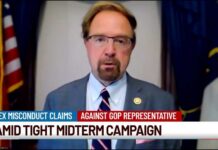
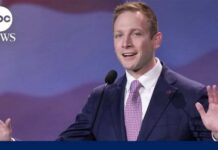
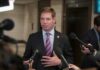
- Two county commissioners, a beach commissioner, and a campaign consultant now face criminal charges over the mailer.
- A criminal affidavit describes a “secret envelope stuffing” operation inside a rented St. Augustine home.
- All five insist they are not guilty, and the case may test how serious Florida is about election integrity.
How A Fake Voter Guide Landed In Thousands Of Mailboxes
Voters in St. Johns County did what responsible citizens do. They checked their mail, saw a slick Republican voter guide that looked official, and brought it with them to the polls. The guide used the name and logo of the St. Johns County Republican Executive Committee, but prosecutors say it was never approved by that committee at all. The mailer also lacked required legal disclosures, which triggers a specific violation under Florida election law.
Charging documents filed in Florida’s 7th Judicial Circuit say five defendants worked together between August 1 and August 15, 2024, to design and send the guide. According to those filings, this was not some sloppy error or lone-wolf prank. Prosecutors describe a planned operation using a campaign headquarters, commercial printing, and multiple mail drops in different cities. The goal, they allege, was simple: steer Republican primary voters toward a preferred slate of candidates without telling them who was really behind the message.
Inside The “Secret Envelope Stuffing” Operation
A newly released criminal affidavit pulls back the curtain on what investigators say happened before those guides ever hit a mailbox. Consultant Briana Jordan, who ran two political consulting firms in the area, allegedly rented a St. Augustine home and turned it into a campaign war room. In the days leading up to the mailing, she allegedly made significant purchases from several printing companies and spent nearly $25,000 on postage at the United States Postal Service.
The affidavit says Jordan oversaw a “secret envelope stuffing” operation in that home, where workers loaded between 10,000 and 30,000 fake voter guides into envelopes. Three elected officials are accused of directly joining in that effort: St. Johns County Commissioners Christian Whitehurst and Sarah Arnold, and St. Augustine Beach City Commissioner and former mayor Dylan Rumrell. Prosecutors say the envelopes carried stamps, no return address, and were mailed out of Orlando and Jacksonville over several days.
What The Law Says, And Why Tampering Allegations Matter
The core charges are not about bad political taste. They are about whether these mailers broke Florida law on unauthorized voter guides and conspiracy. Florida rules require clear disclosures about who paid for political advertising and bar people from pretending to be an official party organization when they are not. The state says this guide crossed that line when it used the county Republican brand without approval and skipped the required legal language.
Jordan faces an extra problem that the others do not. The affidavit says that once questions started swirling, she burned leftover voter guides in the backyard of the rented campaign headquarters. That act led to a felony charge for tampering with physical evidence, the only felony in the case so far. From a common-sense conservative view, if prosecutors prove someone destroyed evidence in an election case, that is not “hardball politics.” That is a direct attack on transparency and the rule of law.
Claims Of A Rigged Election And A Fractured Local GOP
Local fallout has been ugly. Some voters showed up at polling places clutching the mailer, convinced it reflected true Republican endorsements. One candidate, Anne Marie Evans, publicly claimed the fake guide swung her race by about 800 votes, which would be more than enough to flip many local primaries. That kind of allegation, even if not yet proven in court, hits at the heart of why people already doubt election fairness.
St. Johns GOP Chair discusses 'criminal conspiracy' behind fake voter guide in 2024, as more details emerge of scheme involving elected officials and consultants
Reporting by @AGGancarski#FlaPolhttps://t.co/rf492Fjagx
— Florida Politics (@Fla_Pol) July 7, 2026
Republican leaders in St. Johns County have not tried to spin this as no big deal. County party chair Denver Cook called the operation “election fraud” and said it tried to “steal the voice of the people.” State Representative Kim Kendall called it a “sham” meant “to trick all the voters.” Other Republican commissioners are urging the charged officials to resign now, arguing that the accusations alone shatter public trust, even before any trial ends.
The Defense, Due Process, And What Comes Next
The three elected officials have not told their side in detail. Their legal teams issued a joint statement saying they would not comment but “look forward to the conclusion of this matter,” a classic way to deny guilt without feeding the media. Two local judicial circuits recused themselves, and the governor reassigned the case to another circuit, which the defense could argue shows concern about local political pressure. That may help them claim they will get a fair shake.
The Florida Department of Law Enforcement and the Office of the State Attorney took about two years to bring charges, which has drawn criticism from both sides. Some conservatives worry that slow-walking cases like this creates a “chilling effect” on grassroots volunteers while also making voters think the system protects insiders. Others see the delay as evidence that the state took time to be thorough. Either way, the case now stands as a test: will Florida back up its talk about election integrity when the accused are Republican officeholders, not just anonymous bad actors?
Sources:
mediaite.com, news4jax.com, yahoo.com, youtube.com
© restoreamericanglory.com 2026. All rights reserved.