restoreamericanglory.com — When Congress holds a hearing that asks whether an entire religious legal tradition is “incompatible” with the Constitution, you are not just watching policy; you are watching the country argue about what America is.
Story Snapshot
- House Republicans used “Sharia-Free America” hearings to warn about parallel Islamic legal systems operating alongside U.S. law.
- Democrats and religious-liberty advocates countered that the proceedings smeared a minority faith and misunderstood the First Amendment.
- The sharpest legal line was not about prayer or personal piety, but about any religious body claiming coercive civil authority.
- The clash exposes a deeper question: can America defend its constitutional order without drifting into outright religious tests?
Congress Put Sharia Law On Trial, But The Real Defendant Was The Constitution
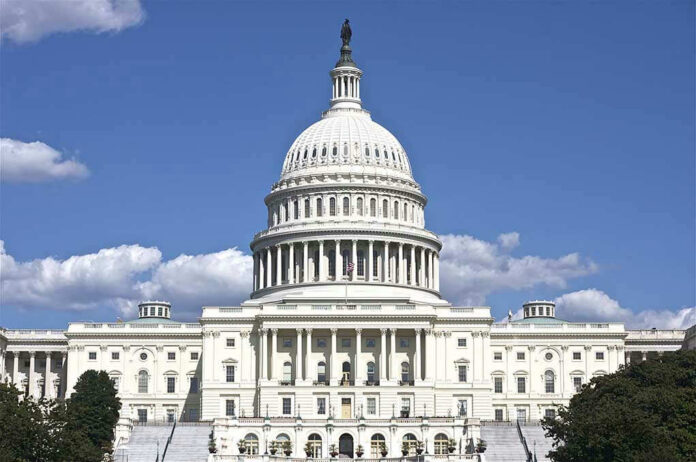
On paper, the House Judiciary Subcommittee on the Constitution and Limited Government met in February 2026 to analyze one question: “Why Political Islam and Sharia Law Are Incompatible with the U.S. Constitution.” The official notice promised scrutiny of “efforts to establish alternative, Sharia law-based legal and civic institutions” and whether these might violate federal law and constitutional guarantees of due process, equal protection, and one supreme rule of law.[1] In practice, the hearing turned into something larger.
Representative Chip Roy of Texas, who chaired the effort, framed Sharia as a direct, structural threat. His press release and opening remarks painted Sharia as a foreign legal code that “fails to include due process, treats non-Muslims as second-class citizens, prescribes barbaric punishments,” and “subjugates women and children.”[3] He argued this is not about private worship, but about a rival legal order that allegedly permits polygamy, corporal punishment, and violence, all fundamentally at odds with the American constitutional tradition.[3]
Parallel Legal Systems Are The Red Line For Constitutional Conservatives
Witnesses sympathetic to Roy’s concerns drew a crucial distinction that many headlines skipped. One expert testified that the American system “does not recognize parallel sovereign systems operating outside constitutional supremacy, judicial review, equal protection, due process or the rule of law.”[4] The real constitutional alarm, he said, sounds when any religious or ideological system tries to exercise “coercive civil authority independent of the Constitution while claiming immunity from constitutional accountability.”[4] That is a bright line most conservatives instinctively support.
From that standpoint, the hearings were less about what Muslims believe and more about what any group, religious or otherwise, does with power. The same witness expressly stated that “the constitutional concern is not private worship or voluntary religious practice,” but arises where systems attempt to establish adjudicatory structures that assert Sharia as binding law.[4] This view squares with the conservative commitment to one sovereign, one Constitution, and rejection of any competing legal regime, whether Islamic, Marxist, or otherwise. The message: worship freely, but you cannot run a second court system.
Texas, Islamic Enclaves, And The Evidence Gap
Roy and allies tried to show this was not hypothetical. They highlighted a 2024 effort tied to members of a Plano mosque to develop a 402-acre Islamic enclave that, according to their description, would be governed by Sharia, placing Islamic jurisprudence above state and federal law.[3][4] They also referenced Islamic tribunals in Texas, portraying them as “shadow courts” whose very existence is “repugnant to the spirit of the Constitution.”[2][4] These examples became the emotional backbone of the threat narrative.
Yet the record, as made public, left holes that critics exploited. The hearings did not introduce zoning filings, bylaws, or covenants proving that any enclave would impose Sharia rules on non-consenting residents or claim immunity from state law.[3] Nor did they show court cases where Sharia-based arbitration awards overrode constitutional rights at scale. Supporters offered an urgent warning; skeptics saw a set of worrying anecdotes without the documentary spine conservatives usually demand before government acts. That evidentiary gap matters, especially for those who value limited government and due process.
Democrats Flipped The Script To Religious Liberty And Anti-Hysteria
Democrats did not merely disagree; they argued the premise of the hearing was itself un-American. Ranking Member Mary Gay Scanlon and other members accused the majority of whipping up “hysteria” about a religious minority and using Congress to decide which faith traditions are compatible with American life.[4][5] To them, the phrase “Sharia-Free America” echoed previous waves of fear politics rather than a sober constitutional discussion about courts and sovereignty.[5]
.@DailySignal: "Rep. Chip Roy, R-Texas, a member of the House Judiciary Committee, was another early voice calling out the SPLC.
"'This hearing builds on the important work that subcommittee began in December and follows serious DOJ charges involving fraud and money laundering,”…
— Rep. Chip Roy Press Office (@RepChipRoy) May 19, 2026
A key counter-witness, Baptist Joint Committee executive director Amanda Tyler, warned that if Congress targets one religion’s internal norms today, another faith’s doctrines could be targeted tomorrow.[5] She reminded lawmakers that the First Amendment protects belief, worship, religious instruction, peaceful association, and voluntary observance for everyone, not just majority faiths.[5] From that angle, any sweeping anti-Sharia statute could collide head-on with the Free Exercise Clause and effectively create a religious test for full membership in public life—exactly what the Constitution forbids.
The Conservative Balancing Act: Guard The Republic, Or Guard Against Overreach?
The hearings exposed a tension inside the right-of-center coalition that usually stays under the surface. On one side, Roy and his allies appealed to core conservative instincts: defend the rule of law, protect women and children, and refuse to apologize for American constitutional supremacy.[3][4] On the other, traditional religious-liberty advocates and some libertarian-leaning conservatives hear echoes of the same government power that could one day declare Christian, Jewish, or other doctrines “incompatible” with modern rights.[5]
The most constitutionally grounded position, and the one that best matches common sense, threads a narrow path. The nation must reject any parallel coercive legal system that claims to stand above the Constitution; that is non-negotiable and already written into our structure through the Supremacy Clause and the First Amendment.[4] At the same time, Americans should be wary of turning “Sharia” into a catch-all label for suspicion of neighbors who simply pray differently. The line to defend is not between “Islam” and “the West,” but between voluntary religious practice and any attempt—by anyone—to rule outside the Constitution.
Sources:
[1] Web – Why Political Islam & Sharia Law Are Incompatible with the U.S. …
[2] Web – Why Political Islam & Sharia Law are Incompatible with the U.S. …
[3] Web – Rep. Roy Leads Hearing Highlighting the Threat of Sharia Law in …
[4] YouTube – Hearing on “Sharia-Free America: Part II”
[5] Web – Why I testified at a congressional hearing on anti-Sharia laws – BJC
© restoreamericanglory.com 2026. All rights reserved.