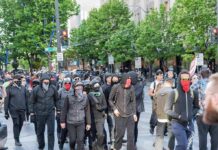

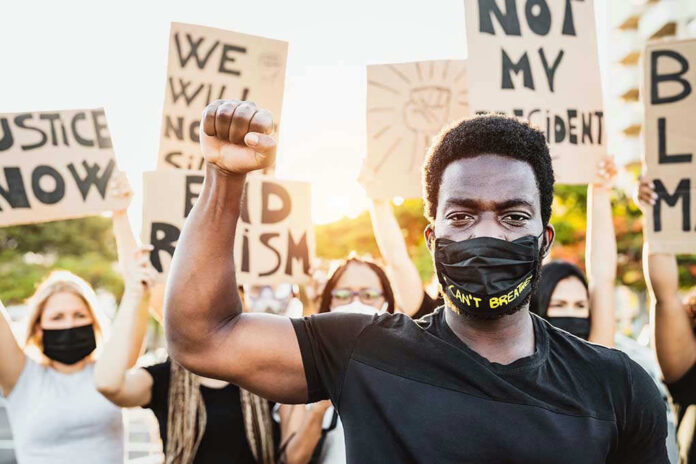
In Philadelphia, a modern-day resurgence of the Black Panther Party is openly challenging federal immigration enforcement with legally armed protests.
Story Highlights
- Armed Black Panther members appear at Philadelphia anti-ICE protest.
- The group is a modern iteration of the 1960s Black Panther Party.
- Protests respond to a fatal incident involving an ICE agent in Minneapolis.
- Philadelphia serves as a sanctuary city opposing federal immigration operations.
The Armed Presence at Protests
On January 8, 2026, members of the Black Panther Party for Self-Defense arrived at an anti-ICE protest in Philadelphia, visibly armed with military-style weapons. This legal demonstration of force followed the death of Renee Good, an unarmed U.S. citizen fatally shot by an ICE agent in Minneapolis. The group positions itself as a defender of the community, leveraging open carry laws to legally carry their weapons during protests to deter federal enforcement actions.
Paul Birdsong, chairman of the Philadelphia chapter, issued explicit warnings to ICE, stating their willingness to protect communities and challenge federal agents. The group draws a direct lineage to the original Black Panther Party of the 1960s, yet claims a more aggressive stance in response to contemporary issues surrounding immigration enforcement and systemic racism.
Background and Catalysts
The shooting of Renee Good by ICE agent Jonathan Ross on January 7, 2026, served as a catalyst for the Black Panther Party’s resurgence. This incident occurred amidst the Trump administration’s aggressive immigration enforcement policies, defended staunchly by President Trump and Vice President JD Vance. Philadelphia, a sanctuary city, has been at the forefront of resisting these federal operations, with District Attorney Larry Krasner warning ICE agents against overstepping boundaries in the city.
Philadelphia’s sanctuary status and Krasner’s vocal opposition create an environment ripe for confrontation between local and federal authorities. The Black Panther Party’s involvement underscores the escalating tensions and the potential for conflict as they actively engage in protecting immigrant communities from perceived overreach by federal agents.
Community Impact and Broader Implications
The Black Panther Party’s presence highlights a shift in protest tactics, where armed community mobilization becomes a strategy to counter federal enforcement. This approach raises questions about the balance between community protection and potential escalation of violence. The legal implications of open carry rights during protests further complicate the narrative, as communities navigate the boundaries of self-defense and lawful protest.
Weekly demonstrations outside the Philadelphia ICE field office signify a sustained commitment to opposing ICE’s presence. The group’s actions have sparked national debates about immigration policy, protest rights, and the role of armed activism in contemporary social movements.
Future Prospects and Ongoing Developments
The Black Panther Party’s activities in Philadelphia contribute to broader conversations about federal and local power dynamics, especially in sanctuary jurisdictions. Their armed resistance serves as a model for other activist groups, potentially inspiring similar movements in other cities facing ICE enforcement.
The ongoing situation in Philadelphia exemplifies the complexities of modern protest movements and the diverse tactics employed to achieve social justice goals. As federal and local tensions continue, the Black Panther Party’s actions will undoubtedly influence the national discourse on immigration and community protection, highlighting the need for a balanced approach to enforcement and civil rights.