A protest that starts with speeches at City Hall can end, by nightfall, with a burning dumpster at a federal facility and people firing metal projectiles from a slingshot.
Story Snapshot
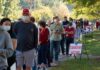
- Thousands joined “ICE Out Everywhere” actions in downtown Los Angeles on January 30, 2026, with a march from City Hall toward the Metropolitan Detention Center.
- Police say a smaller group shifted the mood from protest to attack, throwing bottles, rocks, and metal objects and blocking facility access.
- A graffiti-covered dumpster was pushed and set on fire near the detention center as dispersal orders escalated into clashes.
- LAPD used less-lethal tools, including pepper balls and tear gas, and made arrests for failure to disperse and alleged assaults on officers.
Downtown Los Angeles, One March, Two Very Different Outcomes
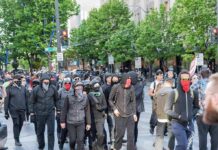
January 30 began with a familiar Los Angeles script: thousands gathered near City Hall, speakers used a flatbed truck as a stage, and marchers moved through downtown under the banner “ICE Out Everywhere.” By early evening the destination shifted the stakes. The Metropolitan Detention Center is not a symbolic target; it is a functioning federal facility with gates, vehicles, and staff who cannot simply “shut down” because a crowd arrives.
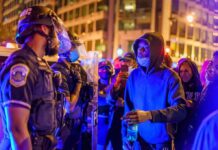
Video and witness reporting describe the pivot point: protesters reached the federal detention center area near Alameda Street and confrontations replaced chants. Police accounts say agitators threw bottles and rocks and used a slingshot to send metal objects toward officers and federal agents. That detail matters because it signals intent to injure, not merely to disrupt traffic. Once projectiles fly, law enforcement stops treating the event as a permitted demonstration and starts treating it as a public safety emergency.
The 5:45 p.m. Moment When “Disperse” Became the Only Option
By roughly 5:45 p.m., officers issued dispersal orders between Union Station and First Street and declared an unlawful assembly as debris reportedly hit law enforcement. That’s the moment the peaceful majority faces a hard choice: create distance from the hotheads or get swept into the consequences. Reports indicate LAPD went to tactical alert and deployed less-lethal munitions as the crowd refused to clear and clashes intensified. Arrest totals varied across accounts, a common feature of fast-moving scenes.
The dumpster fire became the visual headline because it compresses a complicated story into one image: a crowd, a federal building, and open flames. The dumpster had anti-ICE graffiti and was pushed and ignited near the detention center, according to multiple reports. A burning object at an access point is not expressive speech; it is obstruction, intimidation, and a risk to anyone nearby. Fires also force police into containment tactics that raise the chance of injury to bystanders.
Maxine Waters, Mayor Bass, and the Split Screen of Political Incentives
Representative Maxine Waters appeared on scene, chanting “ICE out of L.A.” and describing the gathering as people exercising constitutional rights. Mayor Karen Bass also emphasized constitutional protest rights while warning that violence gives the administration “an excuse,” a blunt assessment grounded in political reality. Crowds often overestimate how much sympathy the public holds once objects fly and fires burn. Conservative common sense lands here: protest all you want, but nobody gets to assault cops or torch property and call it civic virtue.
That split screen reveals why these events keep repeating. Elected officials feel pressure to validate anger over immigration enforcement while avoiding responsibility for what happens when a protest becomes a riot. Law enforcement faces the opposite trap: if officers act quickly, critics call it repression; if officers hold back, critics blame them for “allowing” chaos. Public order exists in that narrow band where police tolerate noise but stop violence. Projectiles and arson shove the situation past that line.
Why Minneapolis Deaths Fueled Los Angeles Street Heat
The national “ICE Out Everywhere” wave didn’t emerge from nowhere. Reporting tied the Los Angeles protests to outrage over two Minneapolis shootings involving federal immigration authorities. Accounts describe Renee Nicole Good killed January 7 after allegedly ramming officers with her SUV, and Alex Pretti killed January 24 after approaching officers with a 9mm handgun and magazines, with uncertainty in some coverage about whether he brandished it. Those incidents formed the emotional accelerant for actions far from Minnesota.
Coordinated protests often borrow intensity from distant tragedies because the narrative travels faster than the facts. That creates a dangerous mismatch: local demonstrators bring moral certainty, while local officers must manage concrete hazards in real time. People in their forties and older have seen this movie before. The pattern isn’t new: a righteous cause draws a large crowd, a smaller group hunts for confrontation, and everyone else becomes a prop. The public then argues about politics while ignoring basic responsibility.
What the LAPD Response Signals for the Next Round
LAPD said “violent agitators” drove the conflict and authorized less-lethal tools such as pepper balls and tear gas. Federal agents also used chemical sprays as the night developed, and protesters reportedly tried to block a federal van leaving the detention center. Those details suggest police and federal personnel anticipated sustained interference with facility operations. Conservative voters should focus on the operational point: when crowds target functioning government facilities, authorities cannot “de-escalate” by surrendering access and hoping it calms down.
https://twitter.com/sf_beretEd/status/2017651521916191204
The unresolved question is the one Los Angeles keeps dodging: what happens to a city’s civic fabric when leaders defend protest rights but hesitate to condemn the tactics that destroy those rights for everyone else? The peaceful protester gets tear-gassed because someone else brought a slingshot. The immigrant family seeking stability gets used as a slogan while downtown businesses eat the costs. Order is not the enemy of reform; it is the precondition for it.
Sources:
‘Violent agitators’ arrested during chaotic Los Angeles anti-ICE rally: Police – KRCR
‘ICE Out’ Protests Across LA Draw Thousands As Demonstrators Clash With Police – LAist
Live Updates: Protesters clash with officers during ICE protest in downtown LA – ABC7
Photos: Anti-ICE protest gets heated on ‘National Shutdown’ day – LA Times