
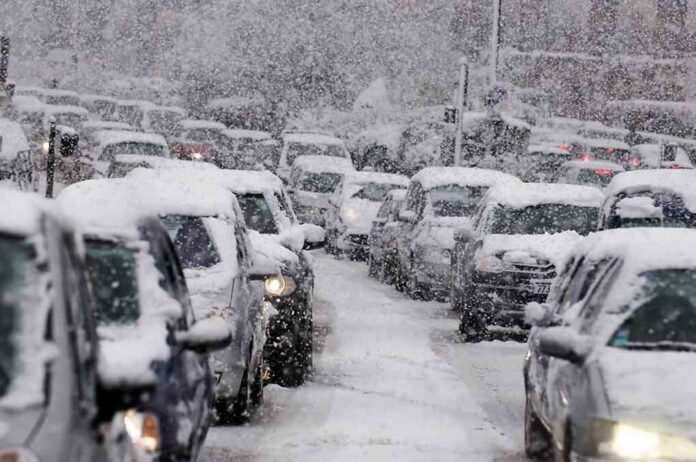
Thousands of families shattered their post-Christmas reunions, sleeping on JFK’s cold terminal floors as Winter Storm Blaine unleashed over 500 flight cancellations in a single day.
Story Snapshot
- Winter Storm Blaine hit the Northeast on December 26-27, 2025, canceling 500+ flights at JFK, the worst-hit U.S. airport with a 28% cancellation rate.
- 50,000+ travelers stranded amid peak holiday rush, facing hotel shortages and chaos despite airline waivers.
- FAA ground stop began at 6 PM ET on December 26; partial recovery by December 27 evening with ongoing delays.
- Airlines like Delta and JetBlue bore heavy losses, highlighting infrastructure vulnerabilities in climate-amplified storms.
- #JFKSnowStranded trended with 150K+ X posts, amplifying passenger frustration.
Storm Timeline and Immediate Chaos at JFK
Winter Storm Blaine intensified over the NYC metro area on December 26 evening. The FAA issued a ground stop at JFK starting at 6 PM ET due to heavy snow and high winds. By morning of December 27, FlightAware reported 347 cancellations by 10 AM ET. The Port Authority declared a Level 2 snow emergency, stranding thousands in overcrowded terminals during the busiest post-holiday travel week.
Delta and JetBlue each canceled over 200 flights by afternoon, pushing total disruptions past 500. Passengers faced long rebooking lines, scarce hotels at 100% occupancy, and many slept on floors. Airlines offered waivers, but limited de-icing capacity prolonged the misery. AAA projected 119 million U.S. travelers that period, magnifying the bottleneck at JFK, which handles 60 million passengers yearly.
Stakeholders Clash Amid Operational Failures
Port Authority of NY/NJ controlled runways and coordinated with FAA, prioritizing safety over speed. Delta, JFK’s largest operator with 50% of flights, issued 250 waivers and lobbied for de-icing priority. JetBlue competed for gates while managing costs. FAA enforced airspace safety, lifting the ground stop by 1 PM ET on December 27. Travelers wielded social media pressure against airlines.
NYC Mayor Eric Adams deployed MTA buses for shuttles, bolstering his public image. Ground crew unions like TWU demanded overtime for 12-hour shifts in icy conditions. Tensions rose between airlines and regulators over liability, echoing past incidents like 2022’s Winter Storm Elliott with 700+ JFK cancellations. Common sense demands airlines stockpile resources for predictable Northeast winters, aligning with conservative self-reliance values over endless bailouts.
Economic Toll and Human Heartbreak
Stranded travelers numbered 40,000 to 60,000, incurring $50 million in meals and hotels. Airlines faced $200 million losses from fuel and crew costs, with Delta stock dipping 2%. National GDP hit reached $1 billion per Forbes estimates, slamming tourism. Low-income families without insurance suffered most, separated from homes during holidays. Emotional strain peaked as children cried amid terminal chaos.
Amtrak added trains and LIRR extended service by evening, easing some pressure. DOT monitored for $400-per-passenger refunds under rules. NYC traffic gridlocked, straining shelters. This event underscores infrastructure neglect; heated runways and modernized FAA systems could prevent repeats, a practical fix rooted in fiscal responsibility rather than reactive federal aid.
Expert Warnings and Future Resilience
Henry Harteveldt of Atmosphere Research called it predictable chaos, with airlines underprepared despite forecasts. Professor Joseph Schofer predicts 30% more disruptions by 2030 from climate change. NOAA notes 20% rise in extreme Northeast winter events since 2000. IATA optimists claim systems held, but Consumer Reports criticizes profit-over-passenger priorities. Facts support critics: 80% of major JFK disruptions tie to weather.
Delta CEO Ed Bastian defended cancellations as safest, issuing vouchers. Port Authority promised full recovery by December 28 morning. By 4 PM ET December 27, 85% flights operated, though 120 delays lingered. Long-term, lawsuits loom and AI forecasting gains traction. American conservative principles favor private innovation—like resilient airports—over government overreach for weather woes we can anticipate.
Sources:
FlightAware Disruption Tracker (flightaware.com/live/cancelled)
CNN Travel (cnn.com/travel/article/jfk-storm-cancellations-dec-2025)