

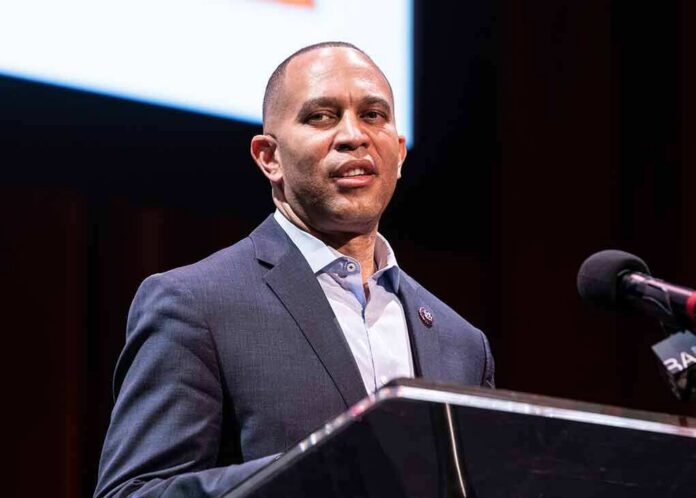
Hakeem Jeffries said “everyone” tied to the MAGA movement should be ready to answer Congress’s questions about alleged harm and how to prevent it next time.
Story Snapshot
- Jeffries called for questioning “everyone” linked to the MAGA movement about alleged damage.
- He promised to follow facts, apply law, and stay within the Constitution.
- House Judiciary Democrats issued reports on crypto conduct and pardons.
- He cited Social Security, Medicare, tariffs, and immigration as focus areas.
Jeffries sets a sweeping target list, then narrows the process
House Democratic leader Hakeem Jeffries told MSNBC host Jen Psaki that “everyone” who joined the “MAGA extremist movement” should be ready to answer questions about the “carnage and damage” he says it caused. He framed the aim as prevention: what happened, why it happened, and how to stop it from happening again. The comment signals a wide aperture for inquiry, even as it foreshadows a grind of witness interviews, document requests, and staff work.
Jeffries paired the broad language with specific guardrails. He said Democrats will follow the facts, apply the law, and be guided by the Constitution. He named Representative Jamie Raskin and House Judiciary Democrats as the point on investigations, and he pointed to House Oversight Democrats for related work. The message promised aggressive oversight while avoiding talk of preset outcomes or blanket prosecutions. That mix is designed to expand reach without losing legal footing.
Alleged harm areas: benefits, costs, and conduct
Jeffries listed policy areas where he says Americans paid a price. He warned about threats to Social Security and Medicare and argued that tariffs raised costs for families. He also alleged that some federal agents broke the law, harmed citizens, and targeted law-abiding immigrant families. He tied these claims to what he calls a broader “MAGA extremist” push to “break America,” while saying Congress must learn how to stop repeat harm through oversight and legislation.
The challenge is scope. “Everyone” sweeps in millions of voters, donors, online activists, staff, and public figures. Effective oversight needs names, dates, records, and a legal theory that ties conduct to harm. That means committees must sort political speech from potential misconduct, and policy disagreements from measurable damage. Clear standards, public reports, and precise questions can keep the work aimed at behavior, not beliefs. That is how Congress builds durable findings that stick.
What the committees already put on paper
Democrats on the House Judiciary Committee released two staff reports that preview lines of attack. One report addresses alleged “crypto corruption” connected to Trump-aligned networks, referencing market activity around meme coins and drawing on staff material from the Securities and Exchange Commission. Another, “Pardons Inc.,” claims that prior presidential pardons cheated victims out of about $1.3 billion. These reports do not brand all MAGA supporters as responsible, but they flag narrower alleged schemes for scrutiny.
Staff reports create a trailhead, not a verdict. The next step is sourcing exhibits, interviews, and financial records to test each claim. Referral letters to the Department of Justice or the Securities and Exchange Commission would show confidence in the evidence. Transparency about methods and data would also help. Well-run oversight shows its work and invites replication. That is the best answer to critics who see political theater where investigators see facts.
How broad oversight stays inside the constitutional lines
Congress has wide power to investigate when it ties questions to lawmaking or to checking how the executive branch runs programs. Courts have said lawmakers cannot wander beyond a “legitimate legislative purpose.” Successful inquiries connect each request to possible bills, funding guardrails, or agency reforms. That frame supports asking about tariffs, benefits administration, and federal agent conduct, because each has direct policy hooks Congress can shape through statute and oversight.
Psaki asks Jeffries if Elon is now trying to avoid congressional scrutiny and if he should be investigated.
Jeffries says "EVERYONE who has been part of this MAGA extremist movement that has unleashed all of this carnage and damage on the American people, should be prepared to… pic.twitter.com/Ks050EhDjM
— Western Lensman (@WesternLensman) November 19, 2026
American conservative values prize individual responsibility, due process, and limited government. A plan that says “everyone” should face questions risks blurring those lines. A stronger approach targets conduct, not identity. It names who did what, shows the record, and links it to law. Jeffries’s pledge to follow facts and the Constitution points in that direction. The test will be whether committees focus on concrete actions and produce clear, public evidence to match their claims.
Sources:
townhall.com, thewrap.com, networkisa.org
© restoreamericanglory.com 2026. All rights reserved.