

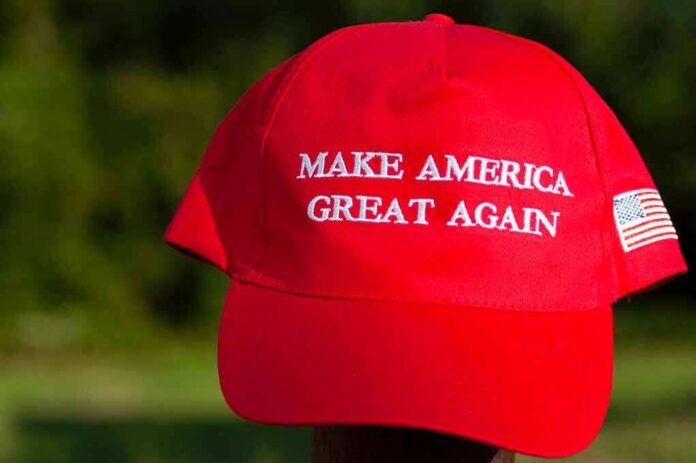
A Senate memo says federal prosecutors obtained data on at least 639,000 Republican donors, voters, and supporters, reaching as far as small-dollar givers and possible merchandise buyers.
Story Snapshot
- Senate materials attribute mass data collection to the Special Counsel Office and the Justice Department.
- Reported fields include names, addresses, dates of birth, political data, and partial financial details.
- Spreadsheets reportedly span from 2005 contributions to post-2020 activity, including low-dollar donors.
- Key legal tension centers on donor privacy versus investigative need under the First Amendment.
Senate release details who, what, and how much
Senate Judiciary Committee Chairman Chuck Grassley released records that he says came from subpoena returns tied to the Arctic Frost investigation. His office reports that files in the Special Counsel Office and the Department of Justice held information on at least 639,000 Republicans, including donors, voters, and supporters. The memo describes multiple spreadsheets with names, dates of birth, home and email addresses, party registration, districts, occupations, employers, donation amounts, and the last four digits of credit cards.
The Senate materials say more than 148,000 rows identified donors, many with small amounts, sometimes as low as one dollar. The data reach back as far as 2005 and extend through the post-2020 period. The release stresses that the universe went beyond political insiders. It lists jobs like janitor, doorman, pool technician, driver, logger, safety manager, and retiree to show the sweep included regular people with no public roles.
Scope expanded beyond core subjects of the case
The reported datasets did not stop at high-dollar checks or senior staff. They included small-dollar donors and a broad set of supporters tied to Trump-aligned groups and activity after the 2020 election, according to the Senate memo and aligned reporting. The files also included internal donor-analysis notes, signaling not just raw lists but processed or categorized entries. The public material describes possession and scope; it does not name each subpoena or recipient entity by date and docket.
Committee staff say the records came in response to Senate subpoenas aimed at understanding what the Special Counsel Office sought and received. That chain of custody gives the account more weight than pure commentary, because it relies on produced records and not rumor. Coverage from other outlets summarized the same core facts and highlighted that the figure refers to individuals represented in aggregated spreadsheets, not a single vendor file.
What the data fields mean for privacy and politics
Names, addresses, and dates of birth can be matched across databases to build precise identity profiles. Add party registration, districts, occupations, employers, and donation histories, and you have a map of a person’s beliefs, networks, and capacity to give. Even the last four digits of a credit card, while not payment credentials, can serve as a cross-check inside larger customer systems. When government compels access to that kind of associational record, First Amendment alarms go off for good reason.
🚨 A bombshell new Senate memo alleges that former Special Counsel Jack Smith’s team obtained personal information on at least 639,000 Republican donors, voters and supporters during the Arctic Frost investigation. 🇺🇸🔥
The records reportedly included names, birth dates, home… pic.twitter.com/qnlJ1VVnt5— Profilo politics (@profilopolitics) October 15, 2026
American law accepts that investigators can seek sensitive records if they are material and lawfully demanded. American tradition also warns that forced exposure of donor or member lists chills speech and assembly. The Supreme Court’s donor-disclosure line underscores that the government must tailor requests and tie them to a real need, because associational privacy carries special weight. That is the lens many conservatives use to judge this episode: respect the rule of law, but set real limits that protect political conscience.
What critics ask next, and what answers would resolve it
Critics will want the underlying subpoenas, the dates, the legal authorities cited, and the stated investigative purposes. They will ask whether political affiliation or protected speech acted as a selection filter, and whether analysts used, shared, or deleted the data when no longer needed. They will press to know if the 639,000 count represents unique people or duplicates across lists. Those specifics would show whether the scope was targeted or broad by design.
The reported record shows possession and breadth. It does not name which officials designed the queries, reviewed the files, or made use-of-data calls. That gap leaves room for oversight. Congress can obtain production logs, targeting terms, and retention records. Inspectors general can trace access, handling, and disposition. Courts can weigh tailoring and burden. That is the right path: sunlight on the paperwork, strict rules for sensitive data, and a clear firewall between crime-fighting and politics.
Sources:
pjmedia.com, judiciary.senate.gov, grassley.senate.gov, washingtontimes.com, yahoo.com
© restoreamericanglory.com 2026. All rights reserved.