

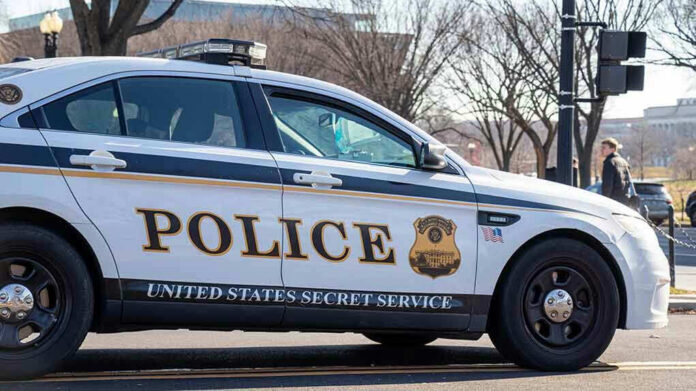
The Secret Service says it is tracking about 10,000 potential threat cases this year—roughly 40% more than last year—and calls the danger to protectees the highest it has ever seen.
Story Snapshot
- About 10,000 threat investigations opened so far in 2026, up about 40% year over year.
- A senior official called the threat environment for protectees the highest ever recorded.
- Officials report a tenfold jump in mental-health-related interventions tied to threats.
- Most threats now start online, with lone actors and foreign-linked concerns in the mix.
Officials report a surge in threat cases and a record risk climate
Secret Service leaders briefed reporters that protective-intelligence cases have climbed to about 10,000 in 2026, roughly a 40% increase compared with the same point in 2025. A senior official said the overall danger to protectees, including President Trump, sits at the highest level the agency has ever seen. Multiple outlets published the same topline figures after the July 22–23 briefings, reinforcing the scale of the spike reported by agency leaders.
Officials said mental-health-related interventions connected to suspected threat-makers rose by about ten times compared with 2025. They described a workload shaped by online threats, lone actors, ideological grievances, and foreign-linked activity. They also noted that most threats now originate on the internet, not in letters or phone calls, which aligns with the shift in how people communicate and vent online. The Secret Service did not disclose how many cases led to arrests or charges, which is common while investigations are active.
What counts as a “case” and who is included
The reported 10,000 total covers investigations tied to government officials beyond traditional Secret Service protectees. That universe can include senior officials such as Supreme Court justices, which means the figure is not limited to the President and Vice President alone. Officials described how analysts treat every report as potentially credible before assessing intent, means, and ability. That standard is designed to move fast and to avoid missing a lone actor who might escalate from angry posts to real steps toward violence.
Leaders emphasized that the spike reflects a mix of forces. Social media lowers the barrier to making threats, which increases tips and referrals. Better digital monitoring also surfaces more concerning posts than older systems did. At the same time, a tense political climate adds fuel to grievance-driven rhetoric that can spill into threats. The result is a larger intake, more triage, and more field work to separate rant from risk.
How this fits the broader national pattern
The surge the Secret Service describes fits a wider rise in threats against public officials tracked by researchers and other agencies. The Combating Terrorism Center at West Point found that federal criminal cases for threatening public officials rose from an average of 38 per year in 2013–2016 to 62 per year in 2017–2022, which is roughly a 63 percent jump. That longer trend shows that the current spike is not a one-off; it builds on several years of rising hostility aimed at people in public life.
The internet sits at the center of this change. Violent online rhetoric targeting famous public figures has increased sharply in recent years. Analysts have documented large growth in such posts, which tracks with what the Secret Service says about where most leads now begin. The match between online escalation and investigative intake helps explain why the agency’s protective-intelligence teams are busier than ever and why mental-health interventions have multiplied this year.
What matters now: speed, clarity, and accountability
Protective duty depends on speed and clarity. Investigators must spot the needle in the haystack before it moves. That means treating each report like it could turn real, then using evidence to narrow the field fast. From a common-sense, public-safety view, that is the right bias. Americans expect a hard line against anyone who threatens public officials, and they expect agencies to have the tools to act before harm occurs.
OF COURSE HE IS THE REASON. HE'S NUTS.
Secret Service leadership warn threats against US presidency rising ‘like we’ve never seen before’ #TheSecretService #FBIhttps://t.co/oebUDYU6aj
— Marilyn (@mspshed) October 13, 2026
At the same time, the public deserves regular reporting on outcomes that matter: how many threats became arrests, how many led to seizures of weapons, and how many were resolved through mental-health care. Clear, measured reporting keeps attention on facts over fear. Congress and the public can then judge resources and reforms on results, not headlines. The Secret Service says it is facing a record threat environment; the numbers and the country’s climate suggest that claim aligns with the reality on the ground.
Sources:
redstate.com, cnbc.com, cbsnews.com, thehill.com, brookings.edu, ctc.westpoint.edu
© restoreamericanglory.com 2026. All rights reserved.