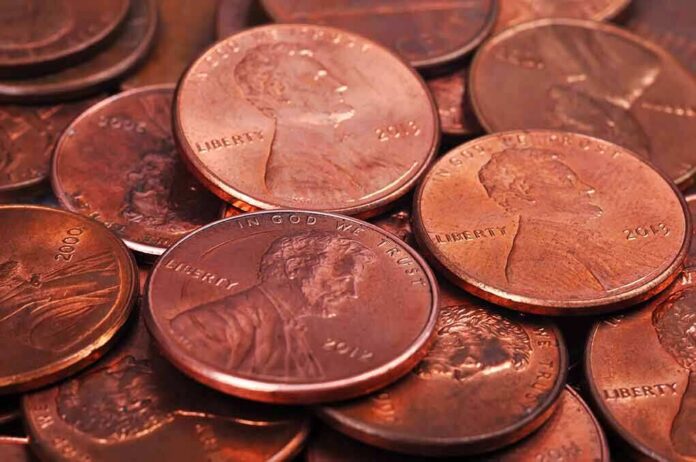
Congress just voted to stop minting pennies for your change jar and to let cash totals round to the nearest nickel—and that flips a century of habit with one clean rule set.
Story Snapshot
- House and Senate passed the Common Cents Act to end general penny production.
- Existing pennies stay legal tender; you can still spend or save them.
- Cash transactions can round to the nearest five cents under set rules.
- Treasury must wind down penny minting within a year of enactment.
Congress approved a clear path to retire the penny from circulation
The House passed the Common Cents Act in July, and the Senate followed by unanimous consent in August. Both chambers backed the same core idea: stop making one-cent coins for everyday use, while allowing the Mint to sell special collector pennies. The House release frames the change as cutting waste without erasing the coin’s place in history. The Senate’s action log shows swift agreement, signaling rare bipartisan alignment on a pocketbook policy that also trims government overhead.
The heart of the bill is plain English. The Secretary of the Treasury must stop producing one-cent coins for general circulation. The House text directs the shutdown within one year of enactment, which sets a firm clock for the Mint to retool operations and for businesses to prepare. The Senate text mirrors the core policy: halt general production, preserve numismatic sales. That approach keeps collectors happy while ending the churn of a coin that costs time at the register and money to produce.
Rounding rules tell cash registers what to do without pennies
The bill builds a simple rounding map for cash totals. When the final cent ends in 1, 2, 6, or 7, round down. When it ends in 3, 4, 8, or 9, round up. Totals ending in 0 or 5 do not change. These rules apply to the final, after-tax cash amount, not to list prices or card payments. That setup keeps math symmetrical and avoids nudging prices. The House text lays out the specific digits, making point-of-sale software adjustments straightforward.
Electronic payments do not round. Debit cards, credit cards, and digital wallets still settle to the exact cent. Only the physical cash handoff gets rounded. That means most people, who already pay mostly by card or phone, may barely notice the shift. The Federal Reserve has found the expected aggregate effect of rounding on prices to be small, because the rule is symmetric and cash is a shrinking share of transactions.
Pennies remain legal money even as the Mint winds production down
Congress did not outlaw Lincoln cents. The coin stays legal tender, and you can keep using pennies you already have. Banks can still accept deposits, and stores can still give them out while supplies last. The House release underscores this point to calm any fear that drawers of old change are now worthless. Canada used the same approach in 2012, withdrawing the penny from circulation while keeping it legal and rounding only the final cash total. That model worked smoothly for consumers and retailers.
Merchants will likely lean on software updates and register stickers to guide staff and customers. The bill’s clarity on which digits round up or down helps avoid guesswork at checkout. For mom-and-pop shops, the change is a one-time settings shift, not a monthly compliance task. The House’s one-year window gives vendors and payment providers time to push updates and training before pennies stop flowing from the Mint.
Why this passed now: time costs, mint costs, and common sense
Lawmakers faced a simple math problem. Every penny takes time to count and costs real money to mint and ship. Ending general production removes a cost that taxpayers and businesses eat daily, without touching people’s right to pay exactly by card. Conservative values prize stewardship and less red tape. This hits both marks: reduce waste, free up time at checkout, and keep the market setting prices. The House touted broad support and a voice vote; the Senate used unanimous consent.
Congress Passed the 'Common Cents' Act Moving the Penny Into Numismatic and Linguistic History https://t.co/fqZFRIjBQf
— Becca Lower (@BeccaJLower) September 15, 2026
Two caveats fit on a post-it. The House and Senate texts are not identical in every detail, and the Senate adopted an amendment. The enrolled bill will lock the final language, including any clarifying line on whether rounding is required or optional. The House’s version states rounding rules. Advocacy summaries describe permissive rounding. Either way, the everyday experience looks the same: cash totals land on the nickel, and cards stay exact.
What to watch next as the penny fades into history
Treasury and the United States Mint will publish the phase-out schedule and operational guidance. Expect notices on last-strike dates, bank distribution, and how numismatic sales will work. Retail software providers will roll out updates for rounding, tax calculation order, and receipt language. The end state is already clear. You can still spend your jar of pennies if you want, but the register no longer needs them—and your pocket will feel a little lighter.
Sources:
congress.gov, yahoo.com, bankingjournal.aba.com, govinfo.gov
© restoreamericanglory.com 2026. All rights reserved.