One narrow waterway half a world away can turn a “going very well” war update into a gut-punch at the gas pump by Friday.
Story Snapshot
- Oil prices jumped more than 10% as the US-Iran war coincided with disruptions around the Strait of Hormuz.
- President Trump publicly projected confidence, citing control of Iranian skies and roughly 2,000 targets struck in five days.
- Shipping risk, not refinery capacity, drove the market’s fear: tankers hesitated and traffic halted in the chokepoint.
- The White House signaled an economic “mitigation” response led by State, Energy, and Treasury officials.
- Consumers face inflation pressure fast, while US producers gain from higher prices but can’t instantly replace lost barrels.
The war story Wall Street trades: skies controlled, seas contested
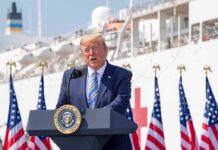
Donald Trump’s message from the White House sounded simple: the campaign against Iran was progressing “very well,” US forces controlled Iranian skies, and strikes had already hit more than 2,000 targets within five days. Markets heard something else: wars don’t have to reach Houston to raise costs in Houston. When tanker routes wobble and insurers panic, oil stops behaving like a commodity and starts behaving like a hostage.
The price reaction wasn’t a mystery. Traders didn’t need a long briefing to picture the Strait of Hormuz, where a huge share of the world’s seaborne crude passes through a tight corridor. When reports said vessel traffic halted, the market priced the risk first and sorted the facts later. Iranian state media also claimed a strike on a US oil tanker in the northern Persian Gulf, a detail that raised the temperature even before verification.
How oil jumps 10% without a global shortage: the “fear premium” mechanics
Oil can leap on the expectation of scarcity, not just confirmed scarcity. A 10% move signals traders scrambling to secure barrels now, because tomorrow’s delivery looks uncertain. This war’s distinguishing feature isn’t a single pipeline explosion; it’s a chokepoint problem. If ships can’t move, crude becomes trapped upstream and scarce downstream. That mismatch hits futures pricing immediately, even if producers keep pumping in Texas and North Dakota.
Timing mattered. Oil prices had already been climbing since mid-January as unrest inside Iran rattled markets, then held in the $60s as Trump signaled naval deployments to the Gulf. Once the conflict turned into open US-Israel operations in early March, the market shifted from “headline risk” to “logistics risk.” Logistics beats rhetoric every time, because refineries and airlines can’t run on speeches.
The White House mitigation plan: what Washington can do, and what it can’t
Marco Rubio announced a mitigation effort led by Energy Secretary Chris Wright and Treasury Secretary Scott Bessent, a clue that the administration sees energy costs as a kitchen-table emergency, not an abstract chart. Tools likely include coordinated messaging to calm markets, pressure on partners to keep supply moving, and potential use of the Strategic Petroleum Reserve. Any SPR move can buy time; it can’t reopen a sea lane.
Trump also framed a timeline, projecting four to five weeks for the war, while acknowledging it could run longer. That estimate matters because oil pricing behaves like homeowners insurance: a storm that lasts overnight costs less than a storm season. If markets believe shipping risk will persist, they build a longer “risk premium” into every barrel. The gap between official optimism and market anxiety becomes the price you pay at the pump.
Energy independence meets reality: America pumps a lot, but can’t teleport barrels
US production sat around 13.6 million barrels per day heading into 2026, and Trump touted gains since inauguration, reinforcing the political case for energy abundance. Conservative common sense says domestic production strengthens national security; it does. It also doesn’t erase global pricing, because oil is traded internationally and refined products move through complex systems. Americans still feel global shocks when global shipping routes seize up.
Another uncomfortable truth: higher prices don’t instantly translate into higher supply. Producers can respond, but rigs, crews, and capital don’t materialize overnight, especially with rig counts reportedly down year over year. Big Oil may enjoy windfall pricing in the short run, yet the broader economy pays the bill through higher transportation costs, higher grocery delivery costs, and higher manufacturing inputs. Winners and losers appear at the same time.
Who absorbs the hit first: drivers, small businesses, and import-dependent nations
Consumers absorb energy inflation fast because gasoline and diesel touch everything. A spike in crude ripples into trucking and then into shelves, which is why voters punish leaders for fuel prices even when presidents don’t control global markets. Import-dependent nations feel the squeeze too. China, a top importer, has every reason to conserve and scramble for alternatives. When big buyers race for supply simultaneously, everyone pays more.
The conflict also creates a political dilemma. Trump’s posture signals strength abroad, yet high oil prices act like a tax at home, and Americans rarely tolerate “taxes” that arrive without a vote. From a conservative values lens, protecting trade routes and deterring hostile regimes aligns with core national interests. The administration still needs a credible plan for affordability, not just battlefield updates, or the home front turns into a second battlefield.
The tell to watch next: shipping and verification, not slogans
The next inflection point won’t come from a new catchphrase; it will come from maritime reality. If insurers resume coverage, navies secure passage, and tankers move, the fear premium can deflate quickly. If disruption lingers, analysts warning about triple-digit oil start to look less like alarmists and more like realists. The claimed tanker strike, if verified, would amplify risk pricing because markets hate one thing most: uncertainty.
The price of the benchmark US oil contract soars more than 10 percent on fears of extended disruption to crude supplies after President Donald #Trump demanded #Iran's “unconditional surrender.”https://t.co/oZ4yVPOuNx
— Al Arabiya English (@AlArabiya_Eng) March 6, 2026
Trump says the operation is ahead of projections. Markets respond that projections don’t power engines; barrels do. The truth is both can be correct at once: tactical success in the air can coexist with economic pain at sea. For readers watching from home, the story isn’t just about foreign policy. It’s about how quickly a far-off chokepoint can reach into your budget, and how hard it is to unwind fear once it gets priced in.
Sources:
Trump says war with Iran to last four to five weeks as oil market weighs impacts