Two lifelong friends, bonded by a shared passion for flight, perished in a mid-air collision that exposes the razor-thin margin between thrill and tragedy in private helicopter flying.
Story Snapshot
- Sean Johnson, 36, and Michael Landgraf, 50, high school friends since the 2000s, died after their Robinson R44 helicopters collided over New Jersey woods on December 22, 2025.
- Johnson died instantly; Landgraf fought for five days before succumbing on December 27, turning a solo tragedy into a double loss.
- NTSB probes point to visual flight rules in marginal weather and uncontrolled airspace as key factors in this rare private helicopter mid-air smash.
- Both experienced private pilots ran informal sightseeing tours from Teterboro, highlighting risks in unregulated skies near New York City.
- Incident fuels calls for better traffic tech, grounding local ops and shaking Bergen County’s aviation community.
Collision Over Washington Township Woods
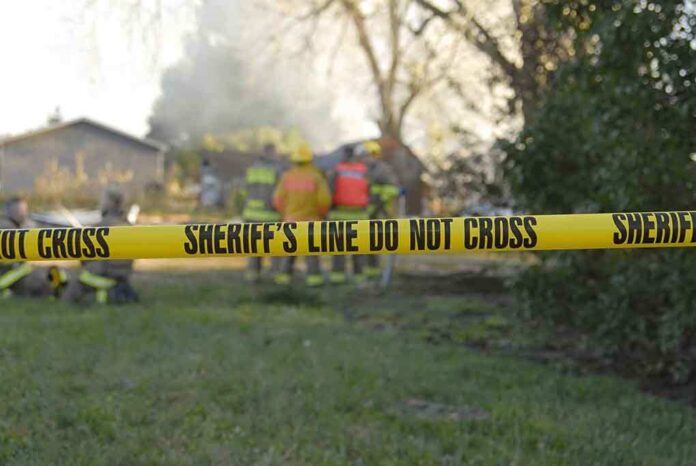
Two Robinson R44 helicopters smashed mid-air at approximately 2:45 PM EST on December 22, 2025, over dense woods near Lake Treservoir in Washington Township, Bergen County, New Jersey. Sean Johnson, 36, from Wayne, piloted one; wreckage stayed intact with his body inside. Michael Landgraf, 50, from Mahwah, flew the other; debris scattered across the site. First responders extracted Landgraf alive but critically injured. Both men logged over 1,000 flight hours as certified private pilots.
Washington Township’s low population of 9,000 and uncontrolled Class G airspace amplified risks. No air traffic control separated the aircraft. FAA radar captured both on similar northbound sightseeing routes from Teterboro Airport that morning. METARs reported ceilings at 1,500 feet and visibility of 3-5 miles—marginal for visual flight rules.
Decades-Long Friendship Forged in the Skies
Johnson and Landgraf met in high school and nurtured aviation passions since the 2000s. Johnson worked as a real estate agent; Landgraf as an IT consultant. They flew mutual private tours, not licensed commercial operations. Families confirmed their bond as “brothers in the sky” in a joint statement on December 29. Bergen County Sheriff ruled out foul play, calling it a pure accident. Autopsies showed no drugs or alcohol.
This personal angle contrasts routine flights with profound loss. Their story echoes conservative values of personal responsibility in hobbies—pilots chose VFR in dicey weather without coordination. Common sense demands better self-policing in shared skies, aligning with facts over regulatory overreach.
NTSB Investigation Pinpoints Early Clues
NTSB deployed a Go-Team immediately, recovering wreckage for analysis in Washington, D.C. Preliminary data reveals collision at 1,200 feet MSL with no distress calls. ADS-B radar showed failed separation despite tracking. Acting Chair Jennifer Homendy emphasized “see-and-avoid failures.” FAA issued temporary groundings for similar VFR operations nearby via NOTAM FDC 9/9876. Final report due in Q3 2026.
Experts like Capt. Ross Aimer blame lack of coordination on familiar routes. NTSB veteran Al Chick notes R44 tail rotor vulnerability in low-speed impacts. Embry-Riddle’s Stephen Rice cites complacency in known airspace, backed by studies showing 30% of mid-airs from route bias. Robinson Helicopter defends airframe, stressing pilot training.
Historical Echoes and Broader Safety Wake-Up
R44 helicopters claim 20% of accidents from loss of control or mid-airs since 1989, per NTSB data. Precedents include 2019 Hudson River collision killing six under VFR into instrument conditions, and 2018 East River R44 breakup. Northeast U.S. saw 20 mid-airs from 2015-2025. AOPA estimates $500K weekly revenue hit from groundings; insurance covers $1M+ per family.
Aviation forums mourn with 200+ local pilots planning memorials. NJ lawmakers, including Sen. Booker, demand hearings. Push grows for ADS-B upgrades and traffic advisory systems like TCAS in light helicopters. Pilot advocates urge weather caution over mandates, a balanced view rooted in individual accountability.
Sources:
NTSB: ntsb.gov/investigations (DCA26FA003)
FAA: faa.gov/data_research (radar/METAR)