
Venezuela’s quake crisis turned into a test of trust, and the gap between official claims and street-level fear made it worse.
Quick Take
- The death toll reached 1,430, while families reported 68,900 people missing, keeping pressure on every rescue team in sight.
- Many residents said they saw too few official rescuers, and some families dug with shovels and bare hands.
- Government officials said they had sent more than 1,600 rescue workers and thousands of security personnel to the area.
- The fight is not only about rescue. It is also about whether Venezuela’s state can still meet a national emergency.
A Disaster Measured in Bodies and Missing Names
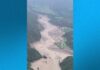
The latest reports show a country crushed by scale as much as by rubble. Associated Press reporting said the death toll climbed to 1,430 after the earthquakes hit Venezuela’s northern coast, while families said 68,900 people were still missing[1][2]. That is the kind of number that swallows politics, because it forces one question: who is still alive, and who is still waiting under the wreckage?
The human fear behind those numbers is plain in the reporting. Residents described a desperate search for survivors, and some said they saw soldiers, firefighters, police, and military cadets that looked underprepared for the scale of the destruction[1][2]. One report also said the government was trying to project a strong response at the same time people were seeing chaos on the ground[2].
The Complaint on the Ground
The loudest accusation is not that help never came. It is that help did not come fast enough, or visibly enough, where it mattered most. People in the hardest-hit areas told reporters that they were digging through debris with whatever they could find, including shovels and bare hands[5]. That kind of image sticks because it speaks a simple language. When citizens start acting as rescue crews, faith in the state begins to crack.
ABC13’s account said Venezuelan officials had projected a strong response, yet residents still reported seeing few state rescue teams in the worst-hit areas[5]. The same reporting said rescue windows were narrowing, which made every hour feel expensive[5]. In disasters like this, public confidence depends on what people can see, not what officials promise in television statements.
What the Government Said It Was Doing
Government officials did not stay silent. Acting President Delcy Rodríguez acknowledged the disaster, gave casualty updates, and asked for international help[8]. AP’s reporting also said Venezuelan officials said 17 flights had brought in more than 1,600 rescue team members, and that more than 14,000 military and police personnel were patrolling the area[1][2]. Those are not the actions of a state pretending nothing happened.
That said, a large deployment on paper does not always feel like a rescue on the street. The AP report left room for both truths at once: the government said more help had arrived, while many Venezuelans still felt the response was inadequate[1][2]. That split matters because disasters expose more than broken buildings. They expose whether institutions can reach ordinary people before fear hardens into anger.
Why This Story Travels Far Beyond Venezuela
Venezuela entered this crisis with deep weaknesses already in place. Reporting tied the country’s trouble to economic collapse, underinvestment, and long-running political strain[19][24]. Other coverage noted that experts have long warned the government was ill-prepared for a major natural disaster and that hospitals were already under pressure[18]. In plain terms, the earthquake did not create every weakness. It revealed them all at once.
That is why this dispute matters beyond one country. When a state is weak before the ground shakes, every later claim about response speed, rescue numbers, and equipment becomes a fight over credibility. The official story can be true in part and still fail to satisfy a public that sees bodies in the rubble and no boots on the ground. In that moment, trust becomes part of the rescue itself.
What Still Needs to Be Proven
The strongest unanswered question is not whether the government deployed anything. It did. The question is whether those deployments matched the scale of need in the places that mattered most. The reporting in hand does not provide deployment logs, arrival times, or a clean independent count of rescuers on each street[5]. Without that, both sides lean on snapshots, and snapshots can mislead when lives are still hanging in the balance.
What makes this case so volatile is that both narratives have fuel. Officials can point to flights, personnel, and international help[1][2]. Residents can point to rubble, missing relatives, and the feeling that they were left to fend for themselves[5]. Until hard records emerge, the argument will keep circling the same wound: in a disaster this big, did the state arrive as a rescuer, or as a witness?
Sources:
[1] YouTube – Frustration grows in Venezuela as earthquake death toll reaches 1,430
[2] Web – Venezuela earthquake death toll rises to 1,430 as rescue efforts …
[5] Web – Venezuela quake death toll rises to 1,430: Top lawmaker
[8] Web – The death toll in the twin earthquakes which rocked Venezuela …
[18] YouTube – Massive quakes bring new devastation and turmoil to Venezuela
[19] Web – Is the government’s response to Venezuela’s earthquake crisis …
[24] Web – Patterns of government disaster policy response in Peru
© restoreamericanglory.com 2026. All rights reserved.