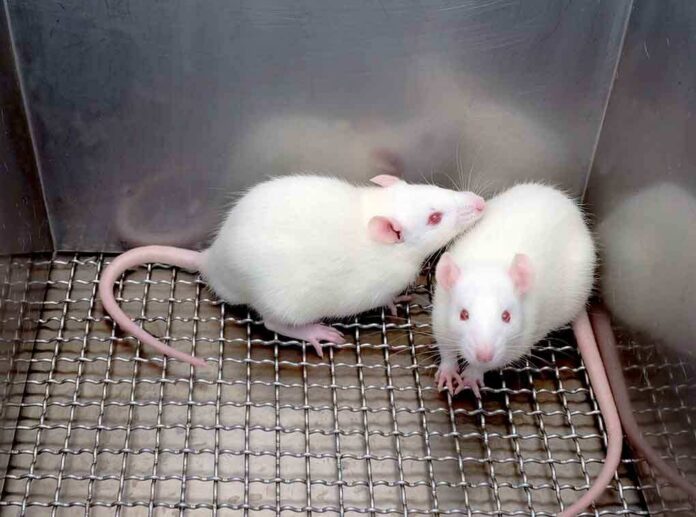
The real story behind “mutant sewer rats” is not sci‑fi horror, but a quiet genetic arms race that is already changing how cities can fight pests.
Story Snapshot
- Most city house mice tested in the U.S. Northeast now carry genes that help them survive common poisons[3][9]
- Norway rats do carry mutations, but their actual resistance to poison is still unclear[3][9]
- Some cities show no resistance at all, proving this is a local hotspot problem, not a national apocalypse[3][9]
- Smart, integrated pest control beats simply throwing more poison at tougher rodents[3][13]
Genetic proof that city mice are outsmarting poison
Rutgers scientists went into the alleys and basements of New York, New Jersey, Pennsylvania, and Washington, D.C., and did something simple but powerful: they tested the DNA of the local rodents[3]. Out of 147 house mice, a stunning 84 percent carried at least one mutation in a gene called Vkorc1, which controls how the body recycles vitamin K for blood clotting[3][9]. Nearly 70 percent had known mutations that help mice survive anticoagulant poisons, the standard “rat poison” used for decades in American cities[3][8][14].
These poisons work by blocking the vitamin K cycle so blood cannot clot and the animal bleeds internally[13]. Change the Vkorc1 gene, and the poison cannot lock onto its target as well. That is exactly what these mice have done over years of exposure. Scientists also found new variants in this gene that have never been seen before in house mice, but they do not yet know whether those new changes make poison failure even worse[3][4]. So the media headline “mutant mice” is flashy, but the core story is basic evolution under pressure.
Rats are changing too, but the picture is murkier
The same Rutgers study looked at 143 Norway rats from those Northeastern cities[3]. About 35 percent of the rats carried Vkorc1 mutations, far fewer than mice, and none of those rat mutations have been clearly proven to make them survive poison in real‑world conditions[3][9]. Scientists openly admit they do not yet know if most of these rat mutations matter for resistance or are just genetic noise[3]. That uncertainty is important, because social media now paints a picture of unstoppable “super rats,” while the data still shows a mixed and incomplete story.
Surveillance in other places strengthens that point. A study of Norway rats in Richmond, Virginia, and Helsinki, Finland found no resistance mutations in the Vkorc1 gene at all[3][11]. Research from a tropical city‑state found that local rats carried silent gene changes that did not lead to measured poison resistance, even after many years of rodenticide use[9]. These results push back against sweeping claims that American cities are universally overrun with poison‑proof rats. Resistance is real in some hotspots, especially in house mice, but it is not everywhere.
Global pattern: pockets of resistance, not total collapse
The Northeastern numbers feel scary until you place them next to broader data. A large study in the Netherlands found that about 38 percent of house mice and 15 percent of Norway rats carried resistance‑linked mutations at a key spot in the Vkorc1 gene[12][3]. That is serious but still far below the Rutgers mouse figure. Meanwhile, other research has documented similar resistant mutations, such as Y139C and L128S, in places like Lebanon, again tied to long‑term heavy use of anticoagulants[15]. Taken together, these studies show a clear pattern: wherever cities rely on the same poisons for years, evolution eventually pushes local rodents to fight back.
This fits a common‑sense, conservative view of cause and effect. If government and industry lean on one chemical solution year after year, nature adapts. That does not mean every city is doomed. It means the worst problems show up where practice has been sloppy and over‑reliant on one tool, without adjusting to new data or looking for smarter methods.
Why “mutant sewer rat” panic misses the real threat
The Rutgers team is careful about what they can and cannot prove. Their lab enzyme tests were not suited to show full warfarin resistance for every new mutation, and they say so[1][3]. They stress that some newly found variants may not change poison response at all[3][9]. Yet online videos and click‑bait headlines spin those cautious findings into an urban horror story. That kind of exaggeration may grab views, but it can actually make city health departments hesitate, worried about being seen as overreacting or chasing myths.
Breaking News
Mutant sewer rats spreading through major US cities as scientists discover disturbing DNA changesScientists have uncovered a disturbing change in both mice and rats infesting America's biggest cities, making the rodents harder to kill than ever before.… pic.twitter.com/0g7LLDgTaZ
— News News News (@NewsNew97351204) June 24, 2026
There is also a quiet financial angle. Rodenticide makers earn steady money from traditional anticoagulant products. Industry groups point out that hard resistance data in the Americas is still limited and promote the idea that existing tools are mostly fine if “used correctly”[13]. That is partly true and partly self‑interested. American conservative values favor dealing with proven facts, not panic, but also expect companies and regulators to update tactics when evidence of failure piles up. When most local mice carry resistance genes, shrugging and selling more of the same bait is not responsible management.
What smart, science‑based pest control looks like now
Researchers recommend integrated pest management instead of a pure poison strategy[3][19]. That means starting with sanitation: cleaning up trash, sealing food, fixing leaks, and removing nests so rodents lose easy food and shelter[19]. It means hardening buildings by sealing entry points, repairing holes, and maintaining basements and attics[19]. Traps then play a bigger role, especially against cautious rats that can learn to avoid bait stations. Chemical tools stay in the toolbox, but they share space with safer, more targeted methods.
Lab and field studies in other countries show that some second‑generation anticoagulants, such as brodifacoum, still work against certain resistant rat strains when used carefully[10]. Other research is exploring poisons with different modes of action, which may bypass Vkorc1 resistance altogether[8][15]. A practical path forward looks less like “ban all poison tomorrow” and more like “test, map, adapt.” Cities can use DNA testing to check local rodent populations for resistance genes[13]. Where mutations are rare, current products can remain in use with decent confidence. Where mutations are common, it makes sense to switch chemicals, tighten building standards, and invest in non‑chemical control.
Sources:
[1] Web – Scientists Find Poison-Resistant Mutant Rats Spreading Across …
[3] Web – Urban Rodents May Be Evolving Against Common Poisons
[4] Web – Surveillance of the Vkorc1 Gene Finds No Evidence of Rodenticide …
[8] Web – A Rutgers study of rodents found mice with a mutated gene making …
[9] Web – [PDF] Detection of Vkorc1 single nucleotide polymorphisms indicates …
[10] Web – VKORC1 mutations in rodent populations of a tropical city-state as …
[11] Web – [PDF] Anticoagulant Resistance in Norway Rats Conferred by VKORC1 …
[12] Web – [PDF] VKORC1-based resistance to anticoagulant rodenticides … – …
[13] Web – Large‐scale identification of rodenticide resistance in Rattus … – …
[14] Web – Rodenticide Resistance – An Overview – Professional Pest Manager
[15] Web – Mice and rats are now evolving resistance to poison, experts warn
[19] Web – Widespread exposure to anticoagulant rodenticides among common …
© restoreamericanglory.com 2026. All rights reserved.