
The arrest of a Northern California graduate student over hateful bomb threats in a campus restroom shows how one person’s words can freeze an entire university in fear and trigger the full weight of federal law.
Story Snapshot
- Graduate student accused of leaving repeated bomb and hate messages in university restrooms
- Federal investigators say the written threats disrupted campus life for months
- Department of Justice treated the case as a serious terrorist-style hoax, not a mere prank
- Case fits a growing trend of false threats that still bring real arrests and long-term fallout
Restroom messages that turned into a federal case
Federal prosecutors say the story began with short, ugly notes left in men’s and gender-neutral bathrooms around a Northern California university campus. The messages did not just insult. They mixed bomb threats, shootings, and hate against different racial and religious groups, and they named dates for supposed attacks. Over time, more than 20 threats appeared, each one raising the question every parent now asks: joke, or real danger.
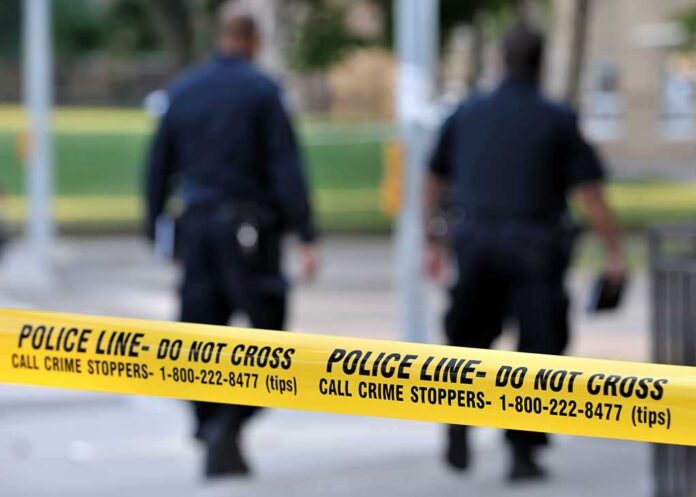
Campus police did not shrug and move on. Each new message meant emergency alerts, nervous calls from students, and hours of officers and staff sweeping buildings. Some professors canceled class or moved online. On the days named in the threats, buildings were nearly empty because people did not want to gamble with their lives. The result looked exactly like what a real bomber would want: fear, disruption, and a shaken sense of safety.
How investigators say they tied the threats to one grad student
According to the Department of Justice, the turning point came when one threat was written on paper rather than directly on a stall. Investigators say they found a fingerprint on that paper and matched it to a graduate student at the university. They then pulled key card records and security video. Those records allegedly placed him in the buildings shortly before many threats appeared and showed him entering or leaving restrooms that later turned up the notes.
That digital trail matters. Law enforcement today treats bomb threats the way they treat serious plots. In past California cases, officials have arrested teens and adults for online posts about bombs in backpacks or attacks on schools, even when no device was found. Prosecutors argue that once you force evacuations, lockdowns, and police deployments, the damage is real. They say you have crossed from free speech into criminal hoax and terror-style behavior.
Why a “hoax” is still treated like a bomb plot
Most threats against schools and universities turn out to be false, but that does not make them harmless. Recent reporting shows American schools now face waves of fake bomb and shooting threats that shut down campuses and drain police resources. One Long Beach man who ran into a college classroom claiming he was a terrorist with a bomb faced felony charges and years in jail, even though officers found no explosive. The law focuses on what the threat forces others to do, not just what the speaker meant.
From a common-sense, conservative view, that approach lines up with basic order. Society cannot function if any angry or attention-seeking person can shut down a university with a marker and a stall door. The First Amendment protects tough and even offensive ideas, but it does not protect direct threats of mass murder or bombings. When someone writes detailed attack dates and talks of bombing classmates, that is closer to shouting “fire” in a crowded theater than to political speech.
Where the line between speech and crime gets drawn
Supporters of strict enforcement point to real bomb plots to show why officials must assume the worst until they know more. In California, federal agents recently arrested members of an anti-government group who allegedly planned to set off pipe bombs at several sites on New Year’s Eve. In another case, officials say a man tried to bring an explosive onto a plane at Sacramento International Airport. The public only hears about the plots that are stopped. Police see the ones that almost succeed.
‘100% woke’ US grad student charged with hoax over ‘kill Jews,’ pro-Trump graffiti
By Luke Tress Follow
A leftist graduate student in California has been charged with a hoax for allegedly posting antisemitic, far-right graffiti in university bathrooms, the Justice Department…
— Australian Jewish Association (@AustralianJA) July 14, 2026
Critics worry about overreach, especially when suspects are young or mentally unstable. Some threats start as “jokes” that spiral into criminal records and ruined futures. A teen who joked about a bomb at a high school on social media later faced arrest and serious charges. Here, the Department of Justice charged the graduate student with “false information and hoaxes,” a federal crime that can carry real prison time, even if no bomb ever existed. The message is clear: do not test that line.
What this means for campuses and for parents
For parents and older readers watching from the sidelines, this case shows how quickly campus safety can flip from routine to crisis. A single bathroom note can mean empty lecture halls the next day and a federal complaint a few weeks later. University leaders now live in a world where they must act fast. If they ignore a threat and it turns out real, they are blamed. If they respond and it is a hoax, they still pay the price in trust and dollars.
For students, especially those steeped in activist politics, the warning is even sharper. Strong views are allowed. Calls for violence are not. Writing about bombs, shootings, and killing people in a campus restroom, even “as a joke,” invites federal agents into your life and may end your academic career on the spot. The Northern California case is not just a headline. It is a new line in the sand over what we treat as protest and what we treat as a terrorist bomb plot.
Sources:
latimes.com, cbsnews.com, justice.gov, mercurynews.com, patch.com
© restoreamericanglory.com 2026. All rights reserved.