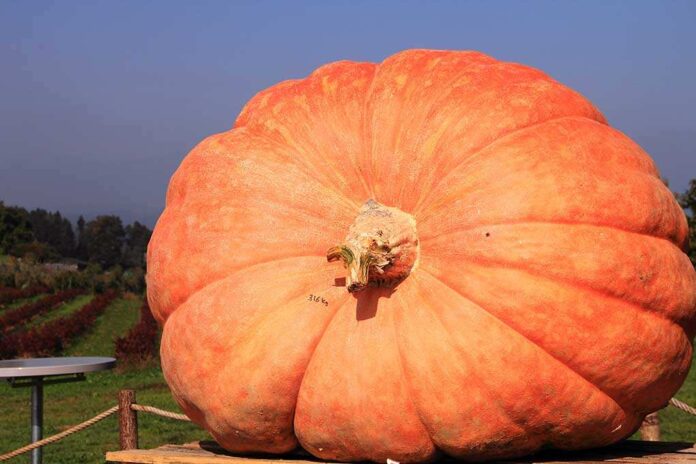
Your pumpkin might be hiding a toxic secret, raising alarms about the safety of this autumn staple.
Story Snapshot
- Recent lab tests reveal toxic substances in pumpkins.
- Health risks are particularly concerning for children and pregnant women.
- Regulatory responses include advisories and potential recalls.
- Consumer trust and industry practices face increased scrutiny.
Unexpected Health Risks
Recent investigations have uncovered a troubling reality: some pumpkins and pumpkin-based products contain elevated levels of toxic substances, including heavy metals like lead and cadmium, and pesticide residues. These contaminants pose significant health risks, especially to vulnerable populations such as children and pregnant women. Pumpkins, long cherished for their culinary and decorative uses during the fall season, are now under scrutiny as concerns about their safety grow.
The issue emerged as several consumer advocacy groups and independent laboratories began testing pumpkins for these contaminants. The findings have been concerning enough to prompt regulatory agencies to issue advisories and, in some cases, initiate product recalls. This has left consumers questioning the safety of a food item that is deeply embedded in seasonal traditions.
Regulatory and Advocacy Responses
Regulatory bodies, including the U.S. Food and Drug Administration (FDA) and the European Food Safety Authority (EFSA), have responded by announcing investigations into the presence of these harmful substances in pumpkins. These agencies are reviewing current safety thresholds and considering stricter regulations to protect public health. Meanwhile, consumer advocacy groups are calling for greater transparency and more stringent enforcement of existing standards to ensure consumer safety.
The stakes are high for growers, retailers, and consumers alike. Pumpkins, often considered a safe and healthy food choice, are now viewed with suspicion. This challenge underscores the need for comprehensive testing and regulation to prevent such issues from arising in the future and to restore consumer confidence.
Impact on Industry and Consumers
The discovery of toxic substances in pumpkins has significant short-term and long-term implications. In the immediate future, consumers are exercising increased caution, which could lead to a decline in pumpkin sales. Retailers and brands associated with contaminated products face potential economic losses and damage to their reputations.
In the long term, this situation could lead to tighter regulatory standards for heavy metals and pesticides in produce. There may also be a growing demand for organic or certified-safe pumpkins, as consumers seek assurance that their food choices are free from harmful contaminants. This could incentivize farmers to adopt more sustainable and transparent agricultural practices.
Expert Opinions and Future Directions
Experts in food safety emphasize the importance of regular testing and transparent reporting to prevent such issues. Toxicologists warn that even low-level, chronic exposure to heavy metals can have cumulative health effects, particularly in children. Researchers highlight the role of soil composition and agricultural practices in heavy metal uptake by pumpkins, suggesting that more comprehensive risk assessments are needed.
There are diverse viewpoints on the safety of current levels of contaminants. Some industry representatives argue that the levels of toxic substances found in pumpkins are within safe limits for most consumers. However, advocacy groups counter that these “safe” limits may not be adequate to protect vulnerable populations. The debate continues as regulatory standards evolve in response to new data.