Madison officials are managing a tense protest encampment after a fatal police shooting while keeping the peace and the lights on.
Story Snapshot
- Protesters set up a memorial and encampment after a fatal police shooting in Madison.
- City services at the site reflect risk management, not endorsement of tactics.
- Boards and protest art continue a local pattern of political messaging on public space.
- Police responses to other Madison encampments show a range of enforcement tools.
What Sparked The Encampment And Why It Matters
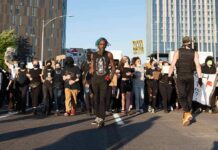
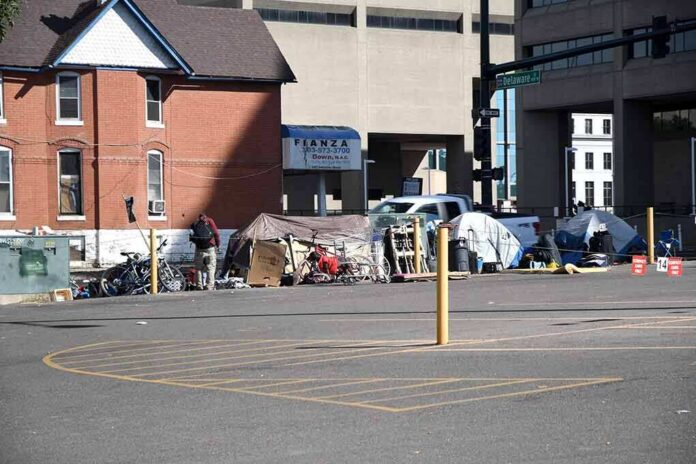
Protesters gathered after a man was fatally shot by police in Madison. Demonstrations followed, and organizers built a visible memorial and encampment. The site holds signs, messages, and objects that demand answers and push police accountability. This matches a well-worn arc in Madison. After high-profile police force, the city often sees protest sites that blend grief and politics. Reporters and officials then debate how to protect speech, reduce harm, and keep streets open.
The encampment’s political nature is clear from the messages on display. Madison has a history of protest art on boards across downtown. During the 2020 cycle, plywood outside stores filled with raw slogans like “BLM,” “I Can’t Breathe,” and calls to charge officers. The current site draws on that visual language again. Using boards as canvases is not new here. It signals that the space is a living forum for speech and memory, not only a camp.
City Involvement: Management Versus Endorsement
City workers have supplied basic public services around the encampment. Trash pickup, lighting, and safety barriers help prevent fires, collisions, and fights. That is standard city practice when crowds gather. It limits risk to bystanders and nearby homes. It does not mean leaders endorse any tactic. Madison has taken similar managed approaches at other sites while still keeping enforcement options open. The goal is to hold the line on safety first, rights second, and disruption last.
Municipal risk managers often thread this needle: keep people from getting hurt while staying within the law. That means controlled access, clear lanes for emergency vehicles, and sanitation. It also means ongoing talks with protest liaisons. Those steps allow time for investigations and for grief to cool. Cities that ignore these basics tend to face worse harm and faster escalation. The public pays for chaos either way, so preventing it upfront is the conservative choice.
How Madison Typically Balances Protest And Order
Madison’s recent record shows a spectrum. On the University of Wisconsin–Madison campus in 2024, police dismantled a tent encampment, arrested participants, and removed structures when policy lines were crossed. Dozens were detained, and police described injuries to officers as they cleared the mall. The university cited rules on camping and safety. That shows the city and its partners can and will act when negotiation fails or risks grow too high.
Downtown, storefront boards became a known canvas during earlier unrest. They carried both art and blunt tags. Residents disliked the look, but the wood also protected glass and signaled a season of protest that later passed. The city’s task was to help businesses survive while allowing speech to breathe. Most boards came down as calm returned. That history explains why officials now try to channel expression into safer forms rather than ban it outright on day one.
Claims Of Weapons And The Safety Line
Some outlets and posters have claimed protesters built barricades and used boards with nails to secure the site. Claims like that raise the stakes, since weapons cross a bright public safety line. Lawful protest ends where clear threats begin. If police confirm weapons or traps, the city should and likely will remove them and make arrests. The proper test is simple: protect speech, stop force. Any official action must rest on verified facts, not rumor.
Residents want calm streets, safe storefronts, and a fair probe of the shooting. The city’s measured support services reflect that order-first mindset. Keep fire lanes open, keep the trash down, light the corners, and talk. If the facts shift, shift the response. That approach values both accountability and community safety. It also avoids a false choice between crackdown and surrender. The smarter course is firm rules, open ears, and quick action when lines are crossed.
Sources:
twitchy.com, wpr.org, isthmus.com, reddit.com, fox6now.com, wisconsinexaminer.com
© restoreamericanglory.com 2026. All rights reserved.