
France’s president told local officials to be ready to ban protests after fires, mass arrests, and attacks on city halls shook the Republic.
Story Snapshot
- Hundreds of thousands marched; violence hit several cities the same night.
- City halls and public buildings were attacked; Limoges City Hall burned.
- President Macron told prefects to protect sites and ban gatherings if needed.
- Officials blamed a violent fringe; most protesters were peaceful.
The Night Order Buckled And Why Bans Landed On The Table
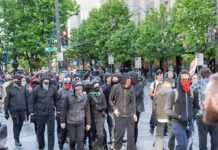
Demonstrations drew about 550,000 people nationwide, with crowds in Paris and across France voicing anger over living costs and schools. As night fell, masked groups torched property, looted stores, and attacked public buildings. Paris police reported hundreds of arrests; national counts rose through the weekend as reports arrived from multiple cities. Fire at Limoges City Hall collapsed part of its roof, a vivid sign that vandals hit symbols of state authority, not just shop windows.
President Emmanuel Macron convened an emergency response and told prefects to work with mayors to protect public buildings and businesses. He said they should prohibit certain gatherings when needed to stop violence and secure critical sites. The Paris police prefect then used the public-order law to block parts of planned routes while letting modified marches proceed. That approach shows a tight rope: hold space for peaceful assembly, but deny safe harbor to people who come to smash and burn.
What Was Attacked, Who Was Arrested, And What That Signals
Reports describe assaults on city halls, damage to police facilities, and arson against civic sites, along with looting and street clashes. Limoges City Hall suffered severe fire damage that shocked local officials and residents. Police in Paris and other cities detained large numbers of suspects, though totals varied across outlets as the situation changed hour by hour. The government cast the violent actors as a radical, highly aggressive minority seeking direct confrontation with police and the state.
The scale and spread made this a national order problem, not a single-town riot. Yet the core institutions of democracy—elections, the legislature, and courts—kept running. That matters for the line between hard nights and system breakdown. The facts support a serious public-order emergency. They do not prove an existential political collapse. The difference guides what tools the state should use—and when targeted bans can be justified without crossing into blanket repression.
The Law-And-Order Playbook Meets Free Assembly
Macron’s stance paired two ideas: hear the anger and enforce order. He said those who attacked town halls, prefectures, and shops would face the full force of the law, while stressing that peaceful protesters are not the enemy. Prefects received clear instructions to guard buildings and, if risk warranted, to stop specific protests or segments of routes. That is textbook public-order management: narrow, time-bound limits where violence is likely, not a national shutdown of assembly.
https://twitter.com/DeItaone/status/2112164549520470517
Critics warn that even targeted bans can creep. That risk is real anywhere officials claim broad discretion. The counter is transparency and precision. The Paris orders spelled out which sections were off limits and allowed an adjusted march to move forward. That balance fits common sense and conservative values: protect life, property, and civic sites first; prosecute criminals; maintain the right to speak and assemble for the many who do so peacefully.
What To Watch Next As France Resets The Streets
Two tests will decide how this ends. First, prosecution must stick to provable crimes tied to actual offenders. Selective justice or sweeping dragnet charges would backfire and fuel rage. Second, the government promised talks with students, teachers, and unions to address costs, schools, and services. Those meetings must produce real steps, or the streets will fill again. Order without answers is a pause button; answers without order invite a repeat show.
Sources:
telegraph.co.uk, bbc.co.uk, gpb.org, cnbc.com, bbc.com, cnn.com, elysee.fr, euronews.com
© restoreamericanglory.com 2026. All rights reserved.