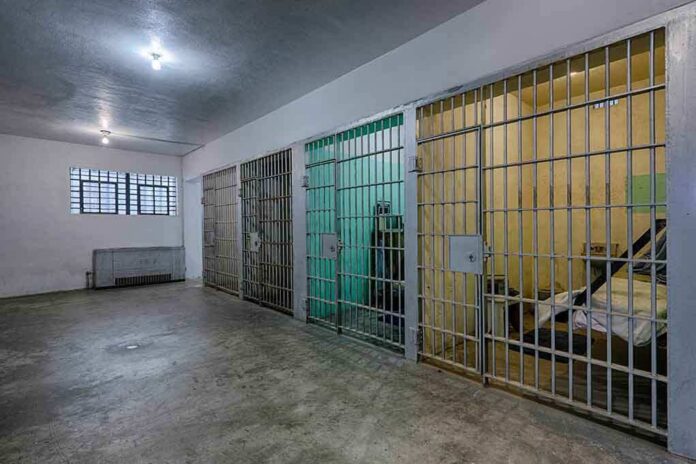
Germany’s prisons now hold a population that looks nothing like the country outside their walls, with foreign nationals filling nearly half the cells despite making up a small slice of the general public.
Story Snapshot
- Foreign nationals made up 44.8% of Germany’s roughly 60,000 prisoners as of March 2026, based on data from all 16 state justice ministries.
- That share has climbed steadily for years, rising from far lower levels roughly a decade ago.
- Foreign nationals make up only about 15% of Germany’s resident population, creating a wide gap between the two figures.
- Some states report foreign inmates crossing 50% or even 58% of local prison populations.
What The New Numbers Actually Show
A review by the Neue Osnabrücker Zeitung pulled figures from every German state justice ministry and found more than 27,000 foreign or stateless people behind bars this year. That works out to 44.8% of all inmates, including people awaiting trial in pretrial detention. The count treats dual citizens as German, meaning the true foreign-born share of the prison system could be even higher than the headline number suggests.
The gap becomes even starker when compared to Germany’s overall population. Foreign residents account for roughly 15% of the country’s people, according to federal statistics cited alongside the prison data. That means foreign nationals sit in German prisons at nearly three times their share of the general public, a ratio that has held steady even as total prisoner counts have shifted year to year.
A Trend That Didn’t Appear Overnight
This overrepresentation isn’t new, but it has grown sharper. Germany’s own Federal Ministry of Justice reported that in 2022, non-German suspects made up 37.4% of all criminal suspects, or 29.9% when immigration-law violations were excluded, still well above their population share at the time. Earlier academic research tracked the foreign share of prisoners climbing from 25% in 1994 to roughly 30% by 2017.
City-level numbers paint an even starker picture. Reports citing the same national survey found foreign nationals make up close to 60% of prisoners in Hamburg and Berlin. In Heilbronn, official prison records from May 2025 showed foreign nationals at 54.5% of inmates, outnumbering German citizens inside that single facility. Some states have reported foreign prisoner shares as high as 58%.
What The Numbers Cost Taxpayers
Housing tens of thousands of foreign inmates isn’t cheap. One report tracking costs across German states put the annual taxpayer bill for foreign prisoners at roughly €2 billion, drawing on data from an Austrian news outlet’s investigation. That figure covers housing, food, security staff, and legal proceedings tied to non-German inmates, a cost German lawmakers now face as the prison population keeps shifting.
Context matters when reading these figures. Definitions of “foreign national” vary by report, and whether a count includes pretrial detainees can swing the percentage several points in either direction. Still, across nearly every dataset reviewed, from federal ministry reports to independent journalism to academic studies, the same pattern holds: foreign nationals occupy German prison cells at rates far beyond their share of the population.
Why This Matters Beyond Germany’s Borders
Germany isn’t an isolated case. Broader European data shows foreign inmates made up 31% of the continent’s total prison population back in 2015, a figure that had already climbed 12 percentage points in the prior decade. That trend has only continued as migration flows into Europe have grown, making Germany’s numbers part of a larger story playing out across the continent’s justice systems.
For American readers watching immigration debates at home, Germany’s experience offers a blunt data point. Open-border policies carry consequences that show up years later in courtrooms and cell blocks, not just border crossings. Conservative voices have long argued that unchecked migration strains public safety systems, and Germany’s prison statistics give that argument hard numbers rather than speculation. The trend line, not just the snapshot, is what should concern policymakers on both sides of the Atlantic.
Sources:
europeanconservative.com, brusselssignal.eu, pmc.ncbi.nlm.nih.gov, schengenvisainfo.com, ground.news, zeit.de, rmx.news, journals.uchicago.edu, bmjv.de, medium.com, rm.coe.int
© restoreamericanglory.com 2026. All rights reserved.